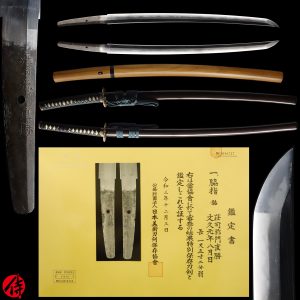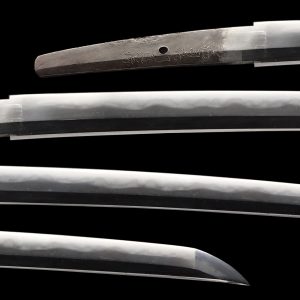
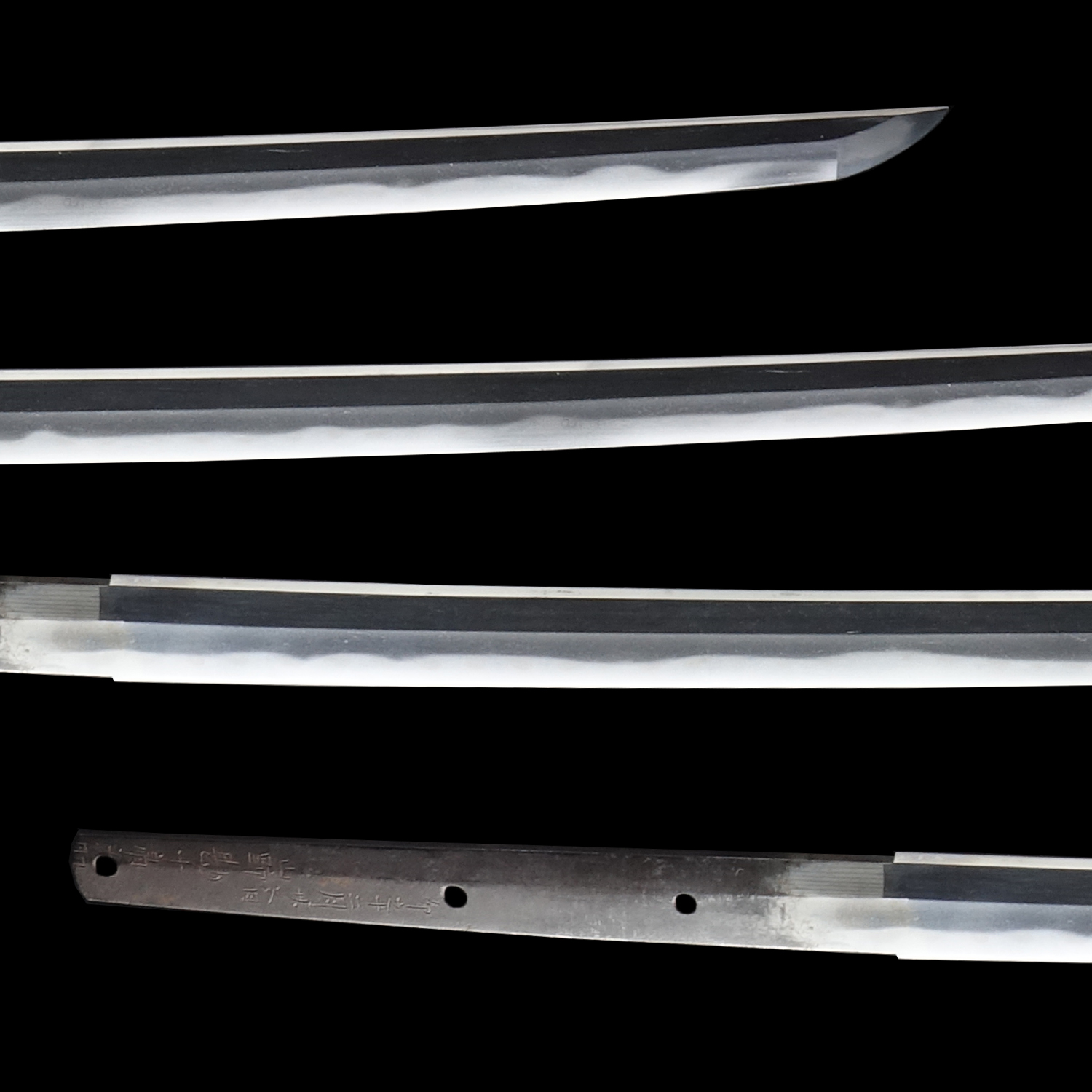
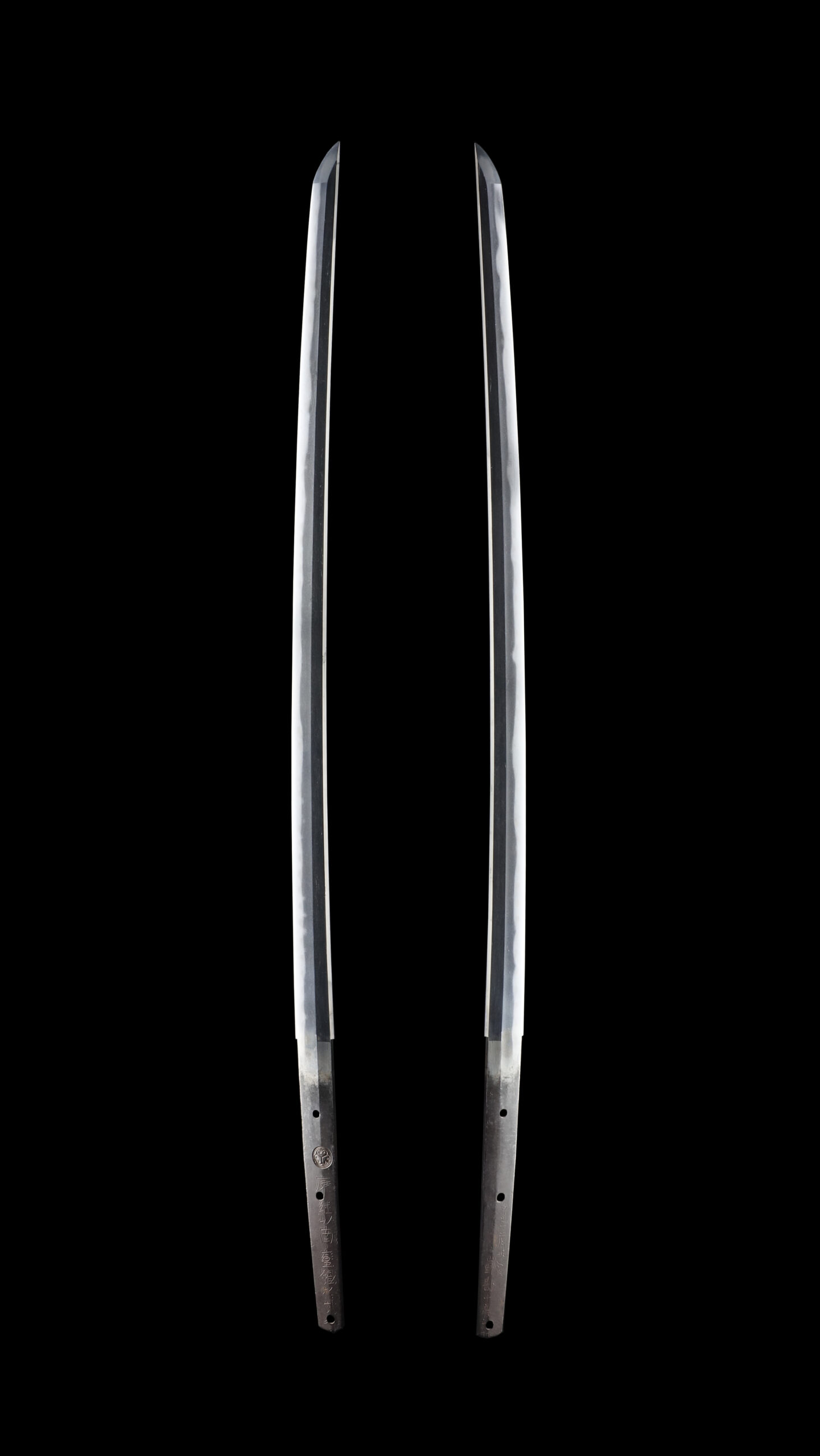
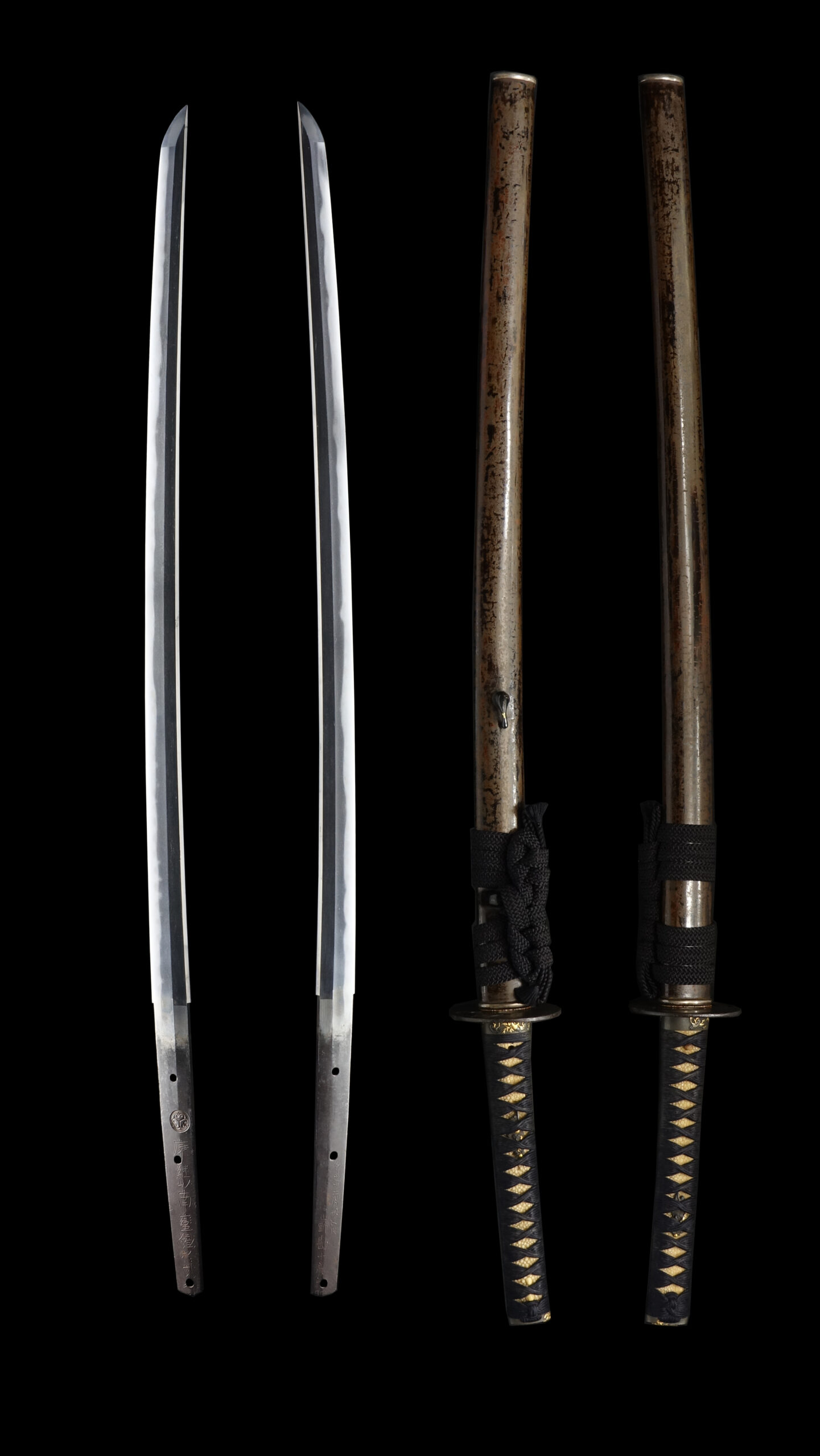
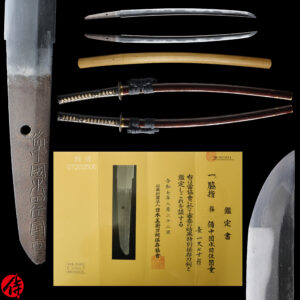
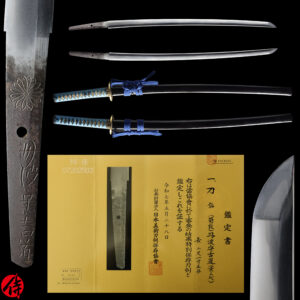

Antique Japanese Sword Katana Signed by the third-gen Edo Yasutsugu with Tokubetsu Hozon Certificate
【Description】
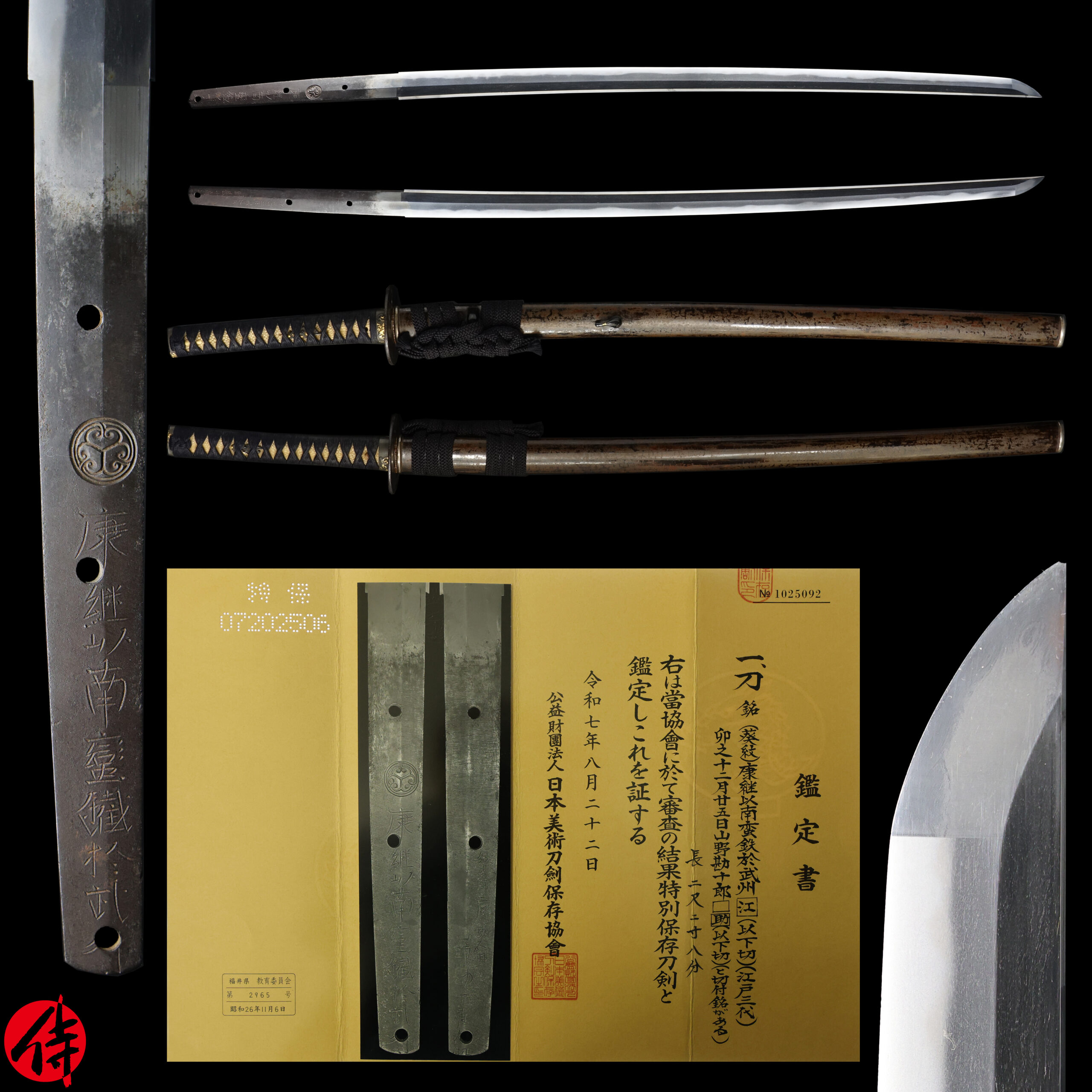
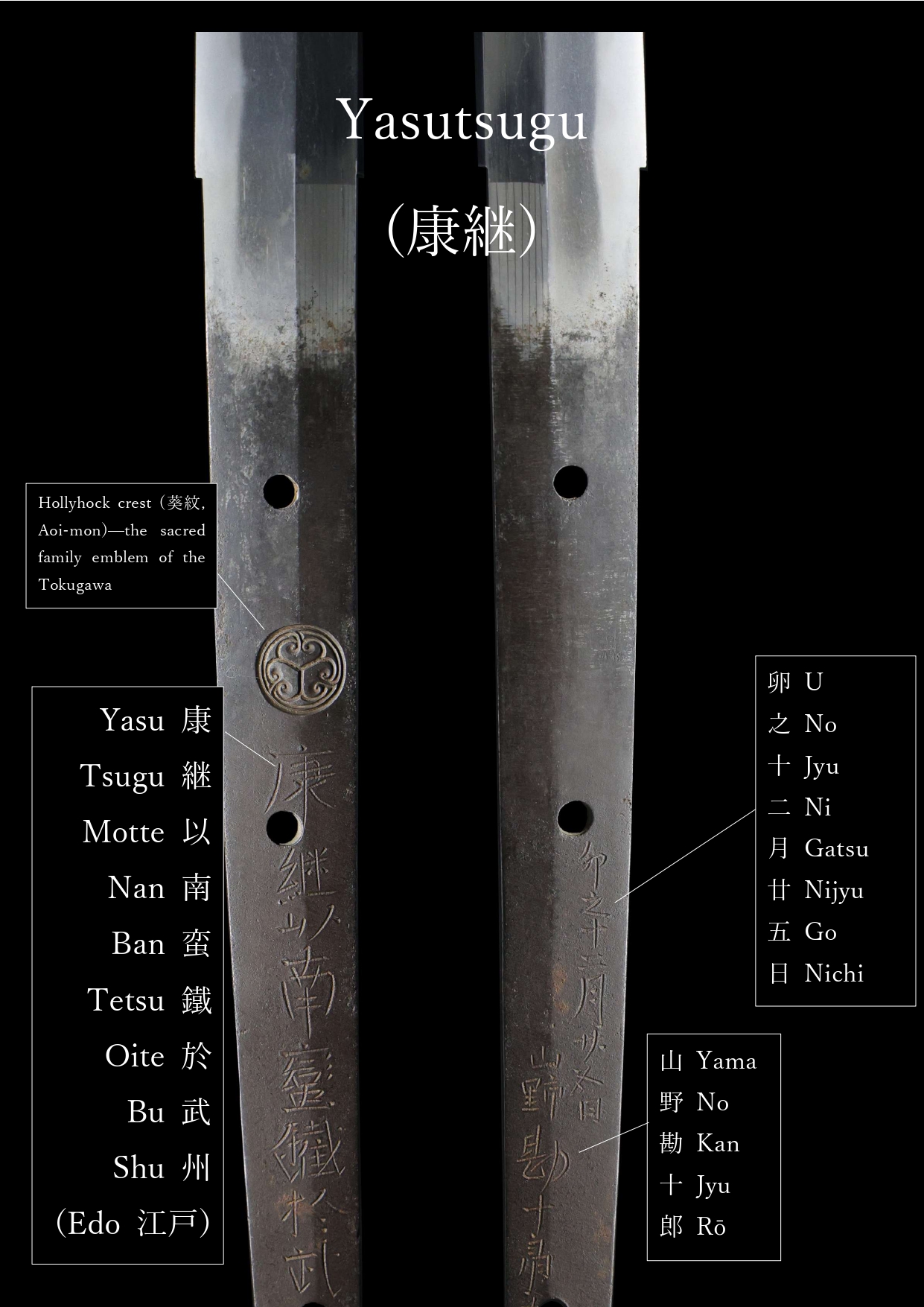
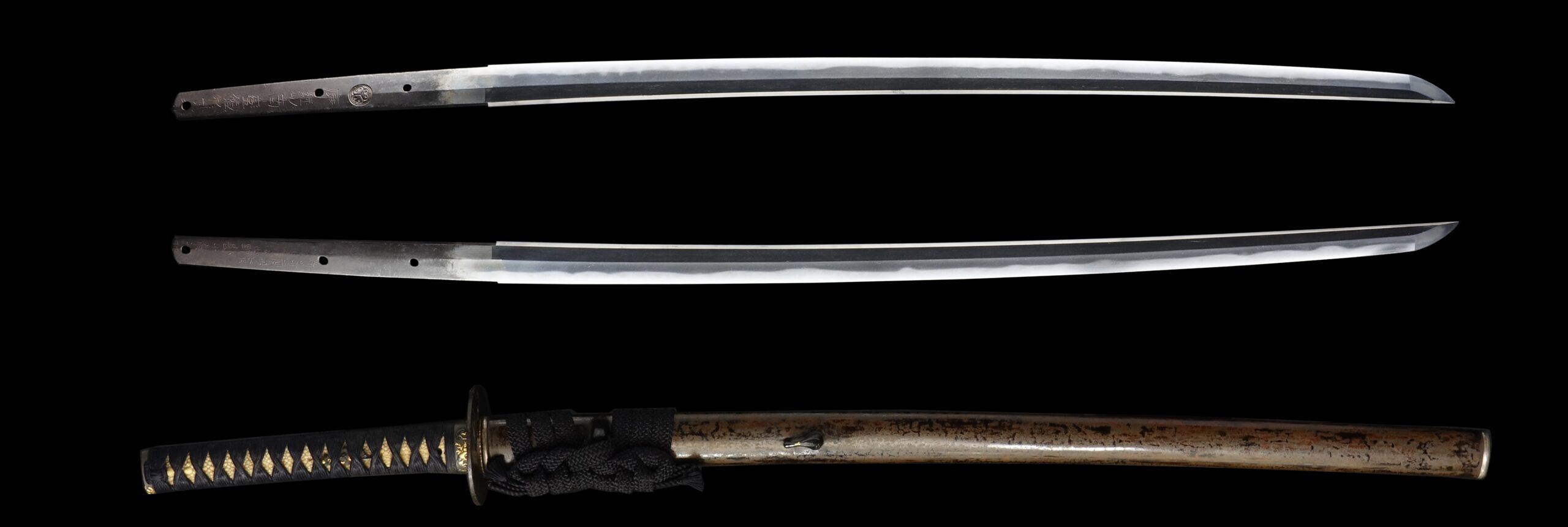
This blade was forged by the third-generation Edo Yasutsugu (江戸三代康継), according to the appraisal of the NBTHK. The signature further states that it was made using foreign carbon steel (Nanban Tetsu, 南蛮鉄). He was active during the Kanbun–Enpo era of the early Edo period (1661–1680) and was the eldest son of the second-generation Yasutsugu, who continued forging swords until around 1645 and passed away in 1646.
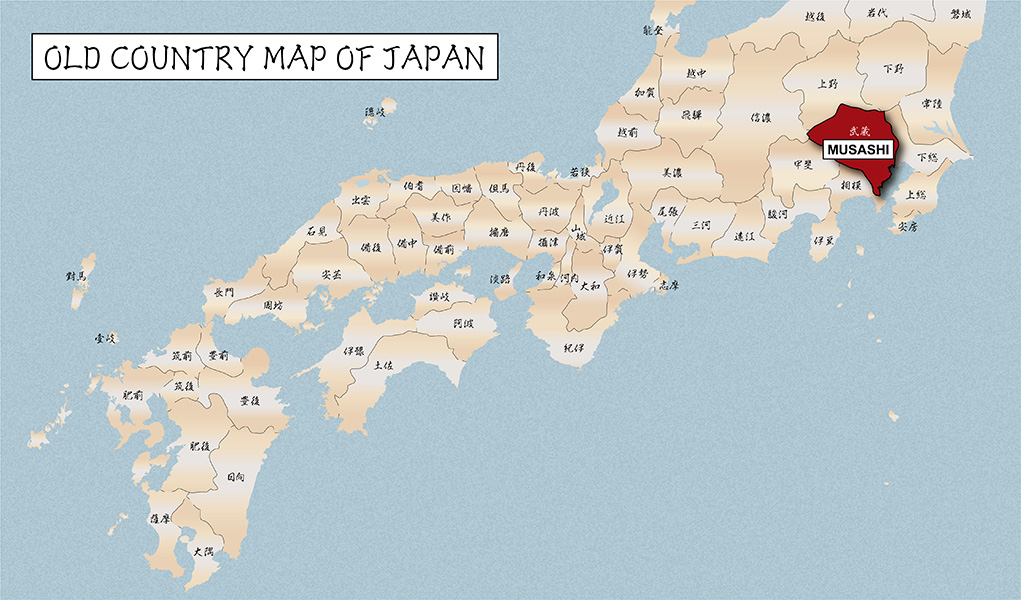
The founder of the lineage, the first-generation Yasutsugu, is said to have been born in Shimosaka Town, present-day Shiga Prefecture, in the late Muromachi period (late 16th century). He built his early career there until the beginning of the Keicho era (1596). Due to the relocation of the lord he served, he later moved to Echizen Province, where his talent came to the attention of Matsudaira Hideyasu, the third son of Tokugawa Ieyasu and the feudal lord of Echizen during the early Edo period.
With Hideyasu’s patronage, the first-generation Yasutsugu established the Echizen Shimosaka school, whose reputation soon spread nationwide. Upon Hideyasu’s recommendation, Yasutsugu was appointed Okakae-kaji (お抱え鍛冶), an official swordsmith exclusively forging blades for the Tokugawa shogunal family. His work was highly esteemed by both the first and second Tokugawa shoguns, Tokugawa Ieyasu and Tokugawa Hidetada.
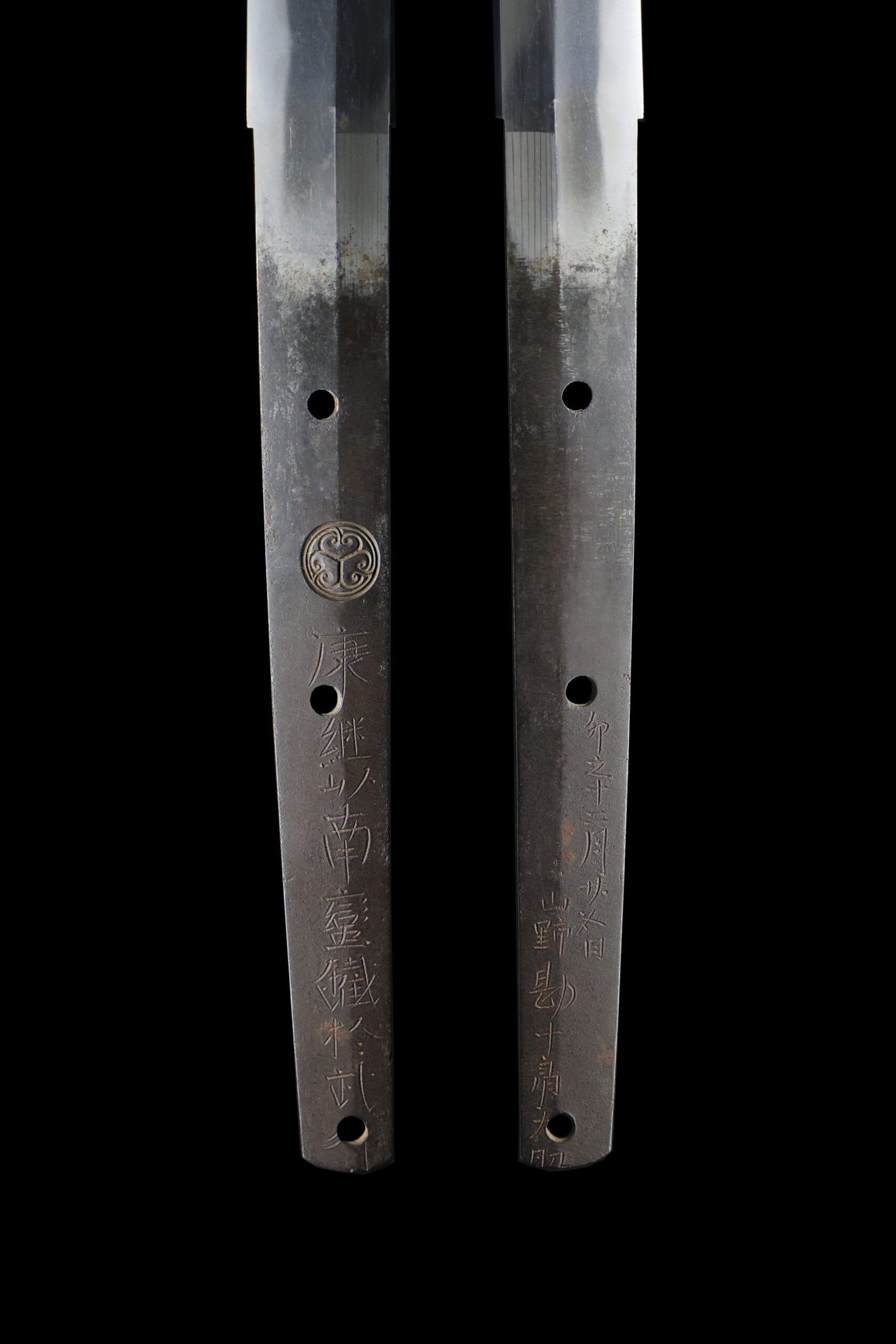
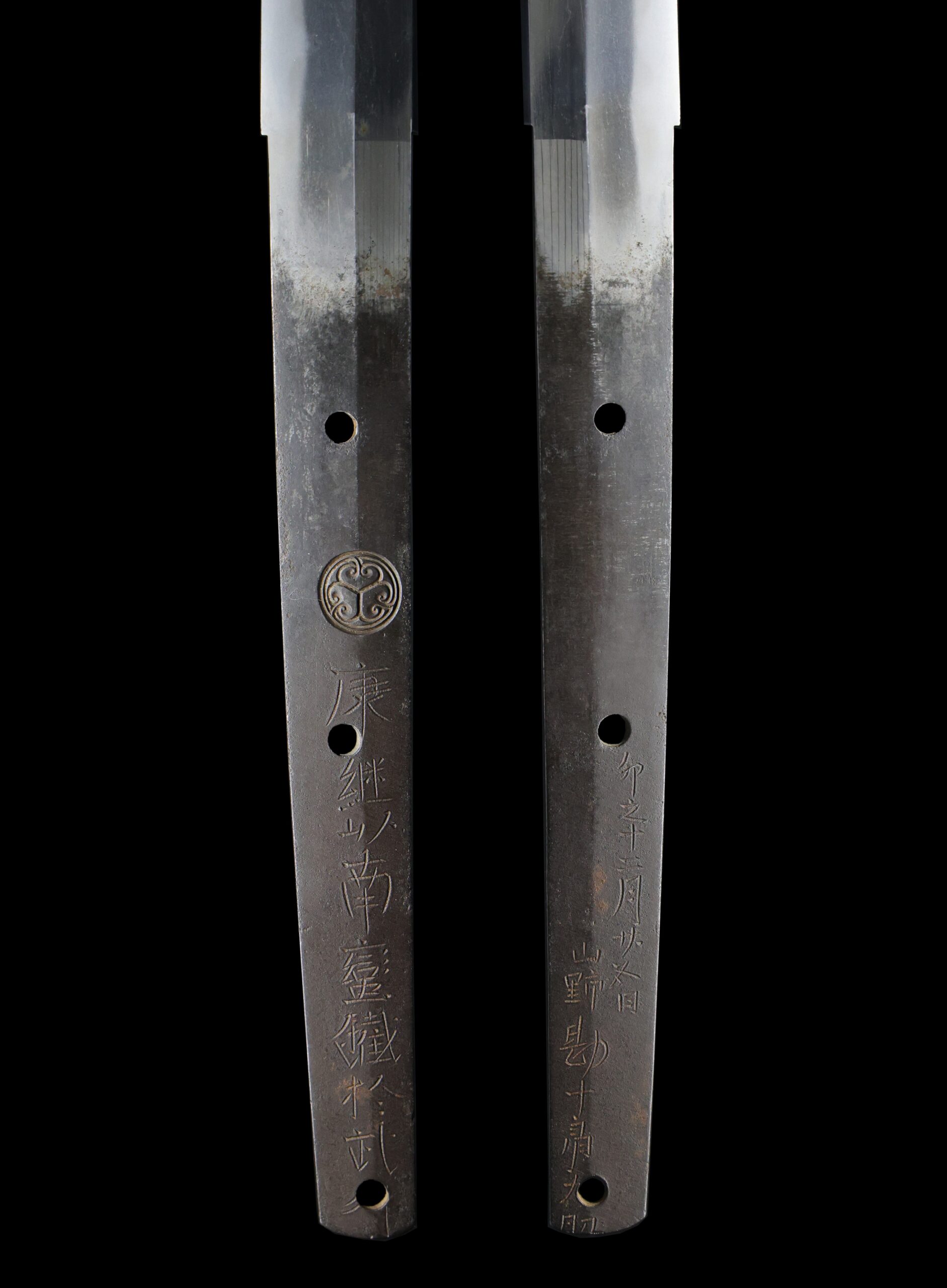
In recognition of his exceptional skill and trustworthiness, the first-generation Yasutsugu was granted the character “康” (Yasu) directly from Tokugawa Ieyasu, an extraordinary honor that prompted him to adopt it as part of his swordsmith name. Furthermore, he was permitted to inscribe the hollyhock crest (葵紋, Aoi-mon)—the sacred family emblem of the Tokugawa—on the tang of his blades.
At the time, the Aoi-mon was a powerful symbol of shogunal authority, and only a very small number of swordsmiths were ever allowed to use it. This privilege clearly demonstrates that Yasutsugu was regarded not merely as a skilled craftsman, but as a swordsmith of the highest rank, entrusted with embodying the authority and dignity of the Tokugawa regime.
The first-generation Yasutsugu passed away in 1621, after which his eldest son succeeded him as the second-generation Yasutsugu. As mentioned earlier, the second generation died in 1646. The third-generation Edo Yasutsugu was the eldest son of the second generation, and his personal name was Umanosuke (右馬助).
When the second-generation Yasutsugu died in the third year of Shōhō (1646), Umanosuke was only 17 years old. Due to his youth, a succession dispute arose within the Yasutsugu school. The disciples of the second generation, as well as officials of the shogunate’s arms office, supported Umanosuke as the rightful successor. However, Shirōemon (四郎右衛門)—the third son of the first-generation Yasutsugu and younger brother of the second generation—asserted his own claim to the school and its property.
The dispute was ultimately resolved in an unusual manner: the Yasutsugu lineage recognized two third-generation Yasutsugu. Umanosuke was formally appointed as the legitimate heir and became the third-generation Yasutsugu in Edo, while Shiroemon established the Echizen Yasutsugu school. From this point onward, the lineage split into two branches—Edo Yasutsugu and Echizen Yasutsugu. Prior to this division, Yasutsugu smiths customarily alternated their forging activities between Edo and Echizen each year, but this tradition came to an end following the settlement of the dispute.
The Edo Yasutsugu line continued for twelve generations from the third-generation Edo Yasutsugu, while the Echizen line lasted for nine generations. The workmanship of the third-generation Yasutsugu closely follows the style of the first and second generations, and his craftsmanship is regarded as exceptionally refined and highly accomplished among Japanese sword scholars and connoisseurs.
Saidan Mei (Cutting Inscription)
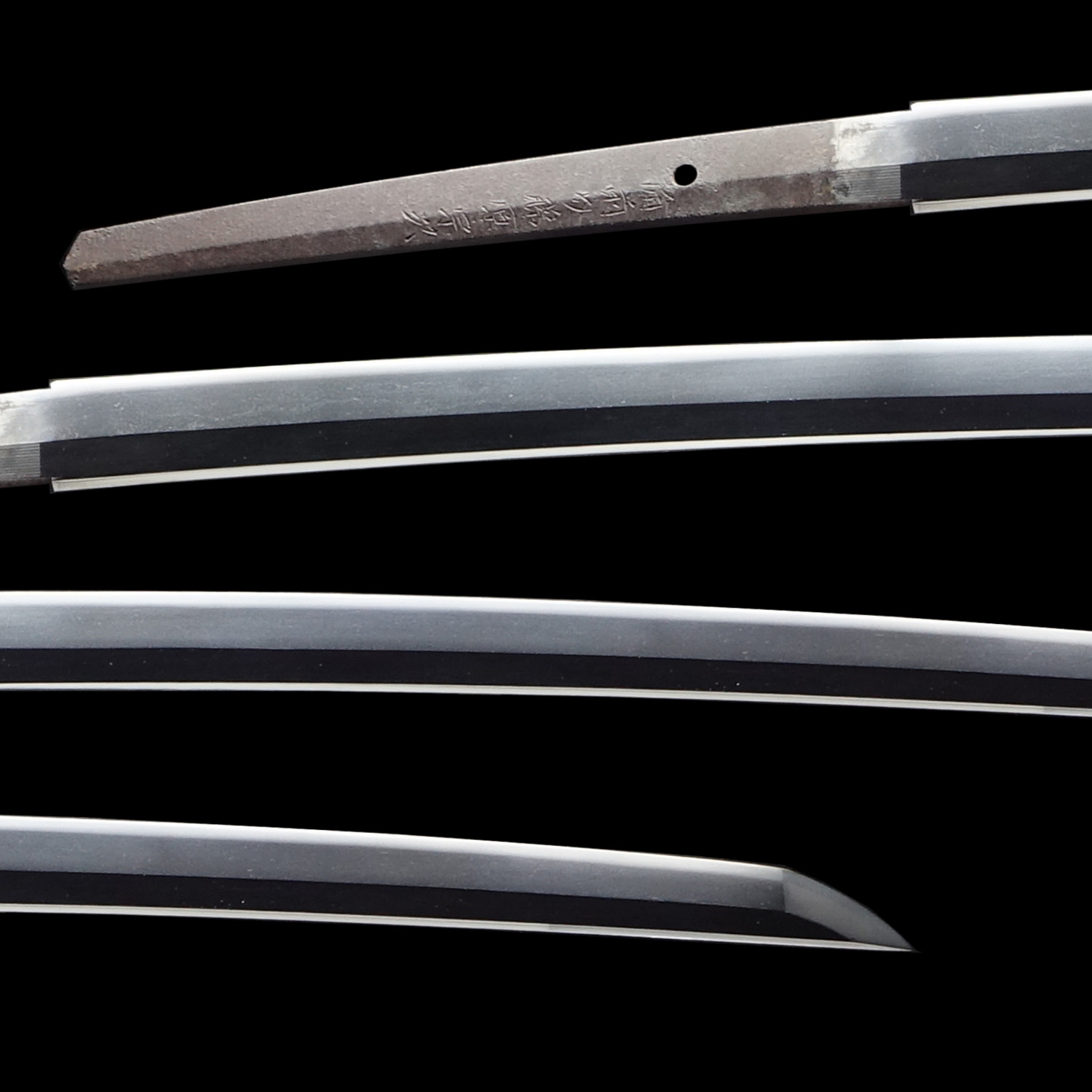
This sword bears a Saidan-mei (裁断銘), or cutting test inscription. A Saidan-mei is an inscription carved into a blade to record the result of an official cutting test conducted during the Edo period. Such tests were performed to evaluate the sword’s cutting performance and were an important factor in determining a blade’s reputation and value.
During the Edo period, cutting tests were carried out on approved test materials, which could include bundled materials or, in some cases, the bodies of executed criminals. These tests were conducted by officially appointed specialists, and when a blade demonstrated exceptional cutting ability, the tester’s name was sometimes engraved on the tang or blade itself.
The cutting test name carved on this sword is Yamano Kanjūrō (山野勘十郎). Kanjūrō was active around the Kanbun era (circa 1661–1673). He was appointed to perform cutting tests under official orders related to swords carried by the Tokugawa shogunate, including swords worn by the shōgun, bestowed as gifts, or presented as official offerings. This role was known as “O-tameshi goyo”, meaning an officially sanctioned cutting test duty.
In later periods, this role was taken over by the Yamada Asaemon (山田浅右衛門) family, who became the most famous executioners and sword testers in Edo Japan. Yamano Kanjūrō is considered one of the earlier figures to hold this authoritative position.
From the Kanbun period onward, some Japanese swords were inscribed not only with the swordsmith’s name but also with a Saidan-mei, indicating that a recognized tester such as Yamano Kanjuro had personally evaluated the blade and confirmed its cutting performance.
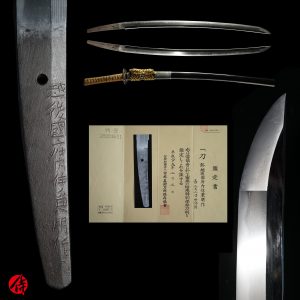
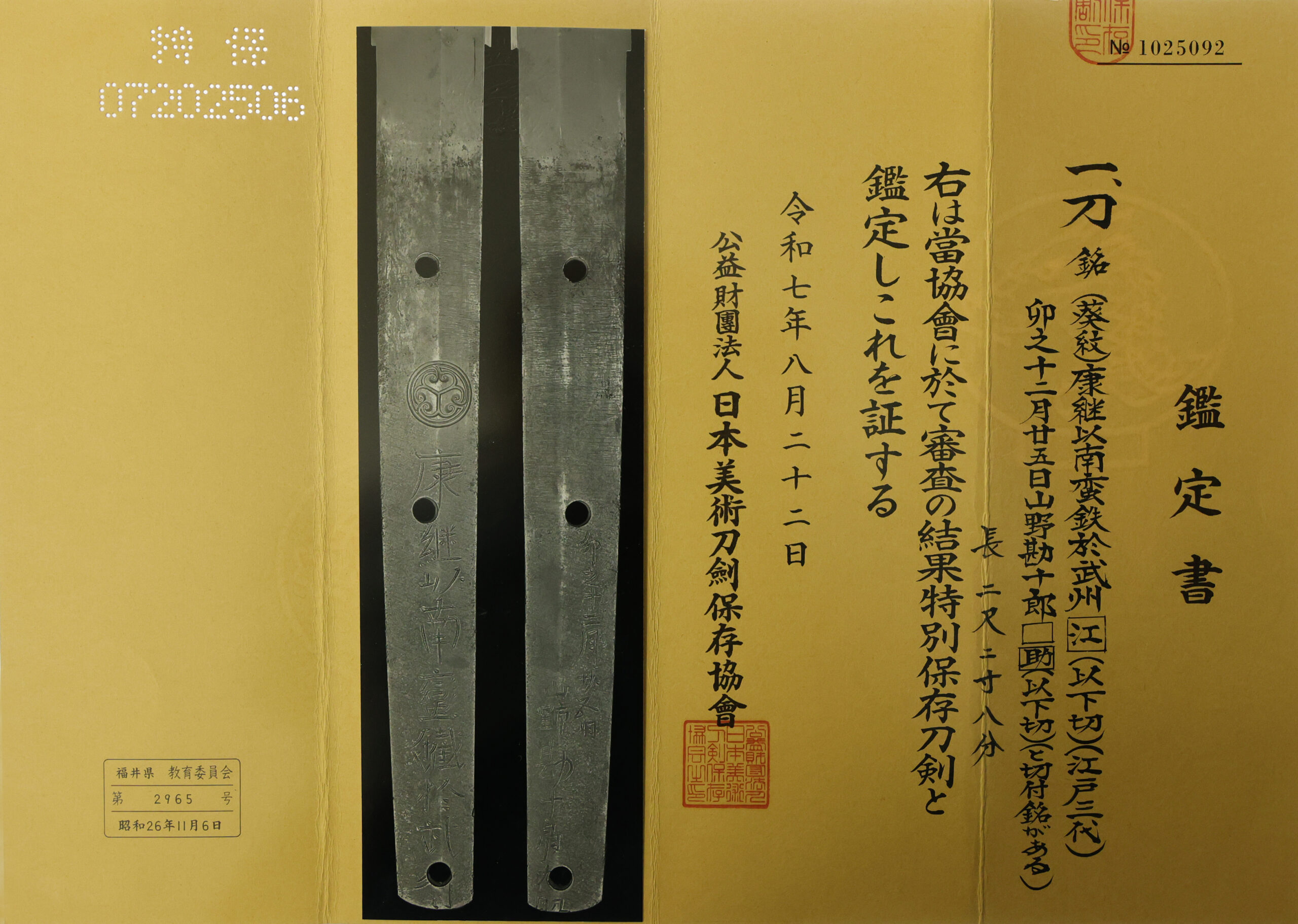
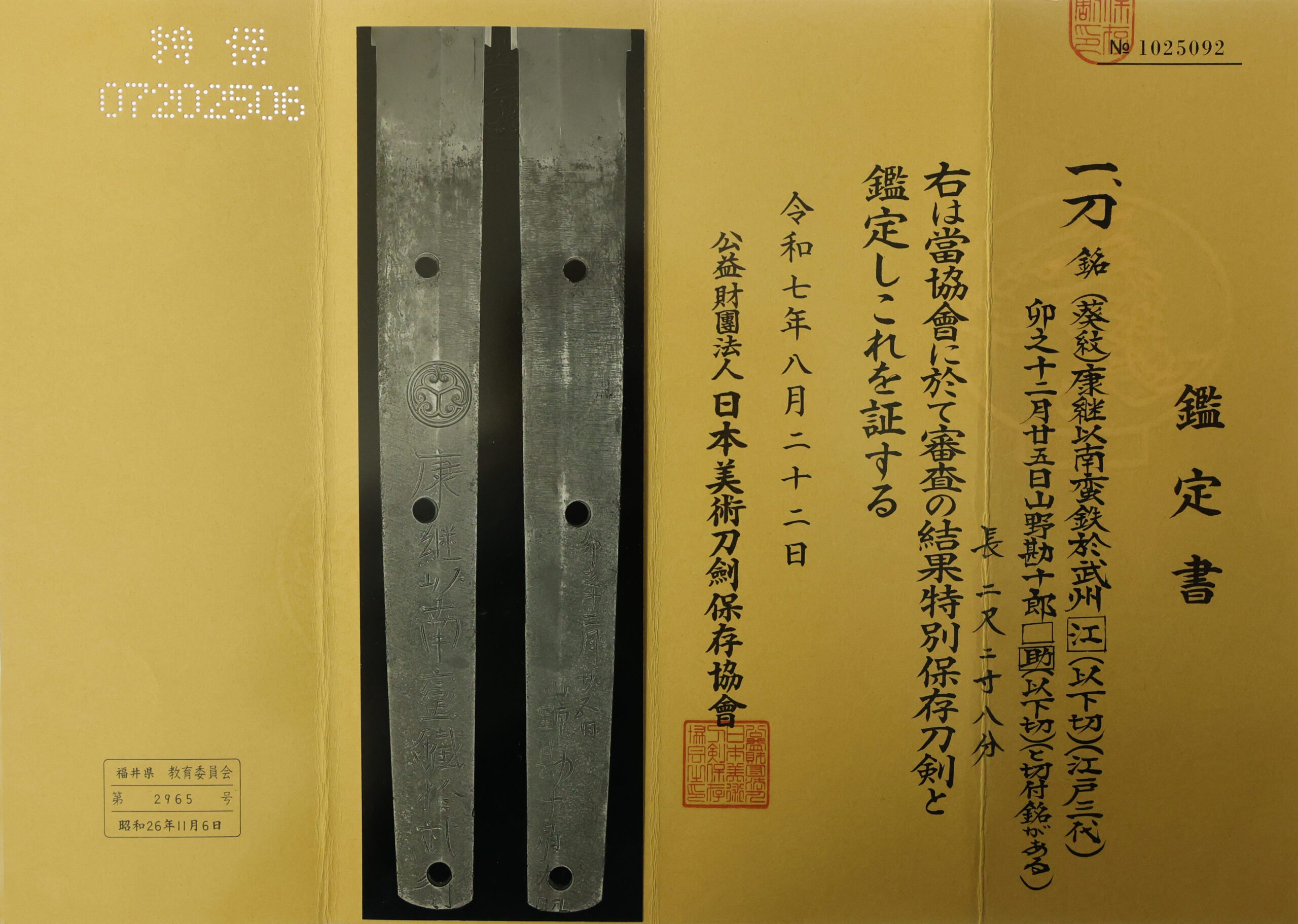
It is appraised as a Tokubetsu Hozon Token (特別保存刀剣) issued by NBTHK (Nihon Bijutsu Touken Hozon Kyokai:日本美術刀剣保存協会). This authentication paper was only given to authentic Japanese swords, especially well preserved and high quality with artistic value.
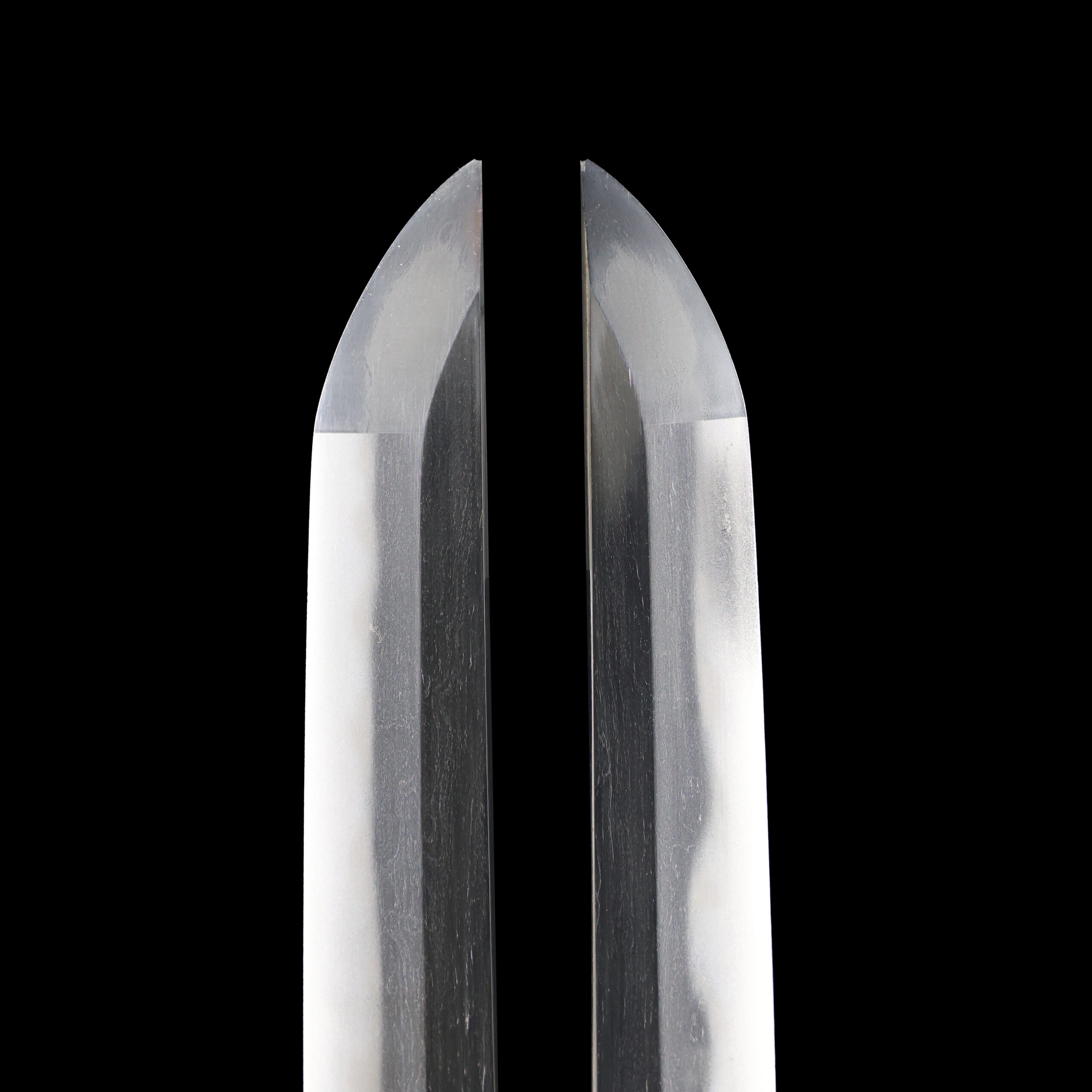
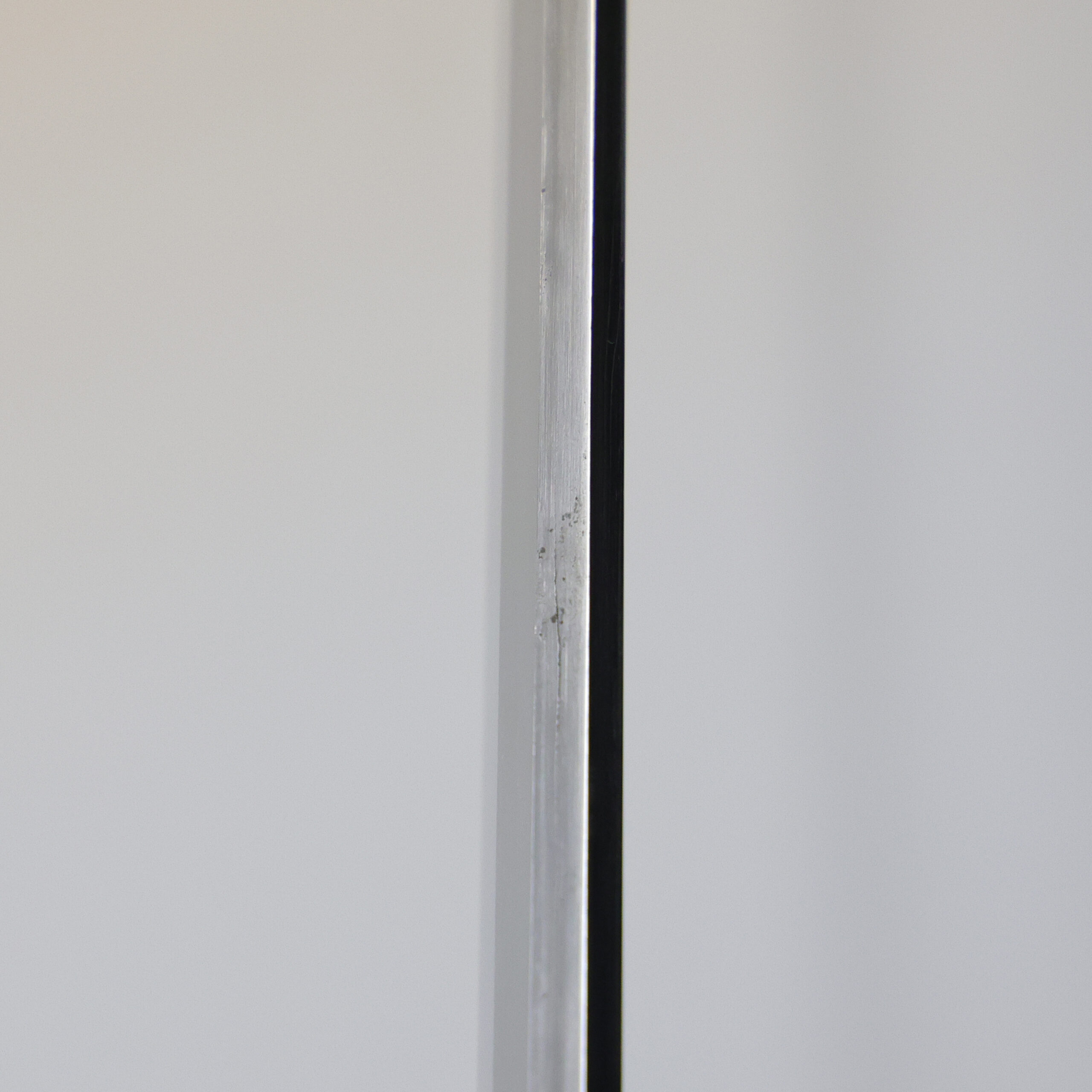
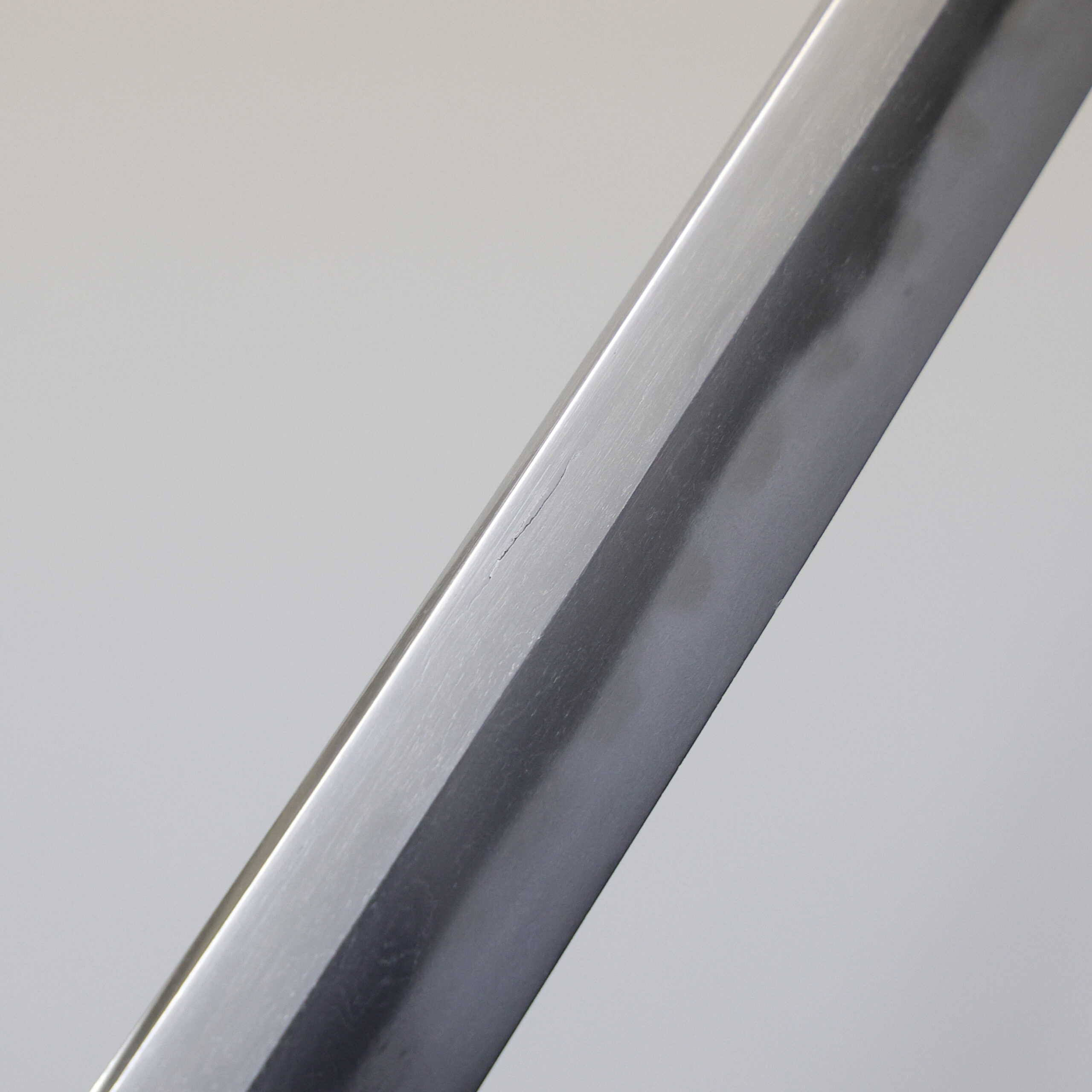
*Please note that the blade shows a couple of Kitae-kizu, on the blade and a minor chip at the tip, and minor surface rust in limited areas. For further details regarding the condition, please feel free to contact us.
【Blade】
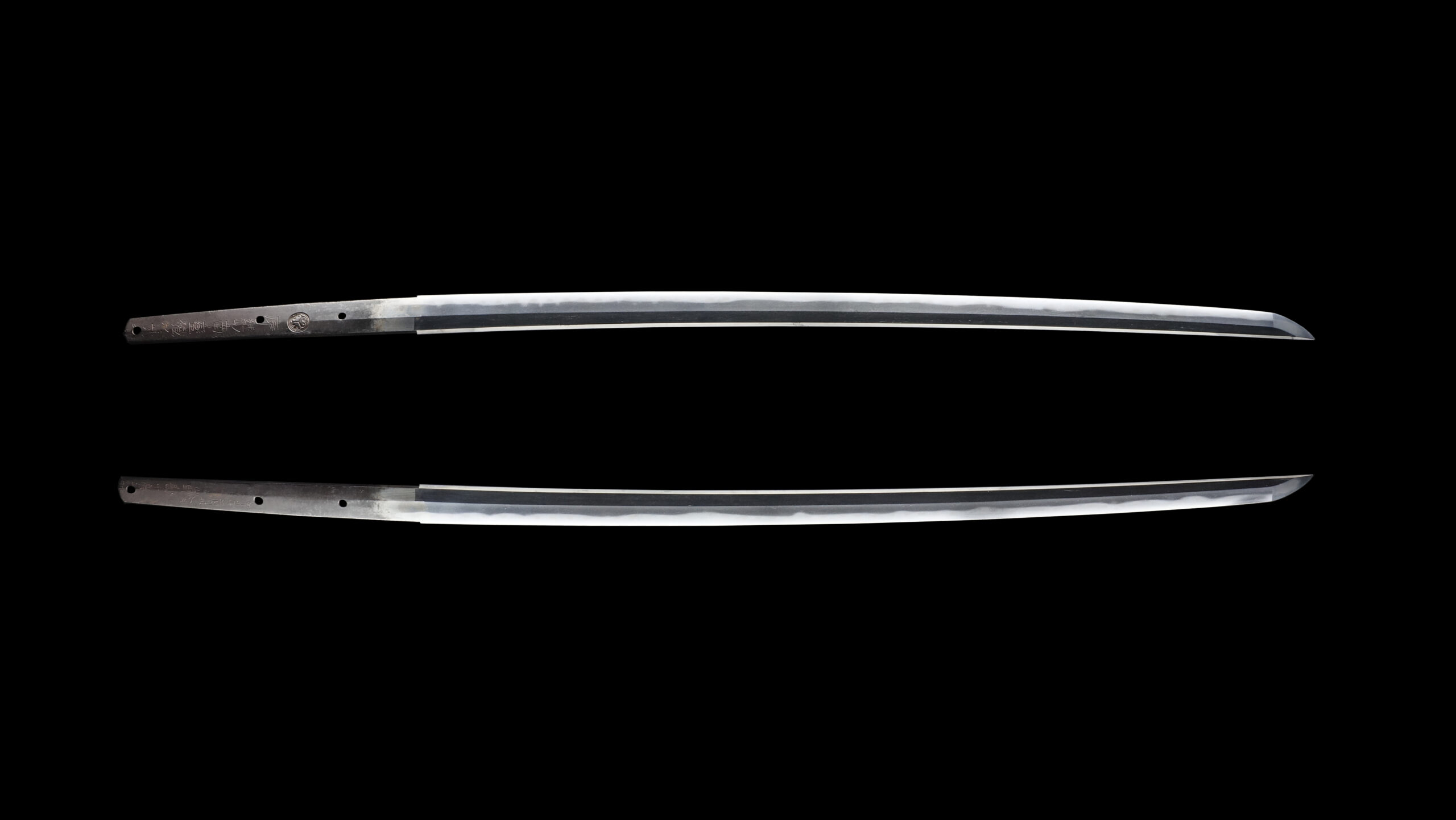
Cutting Edge Length(Nagasa):69.3 cm (27.2 inches)
Curvature(Sori):0.75 cm (0.29 inches)

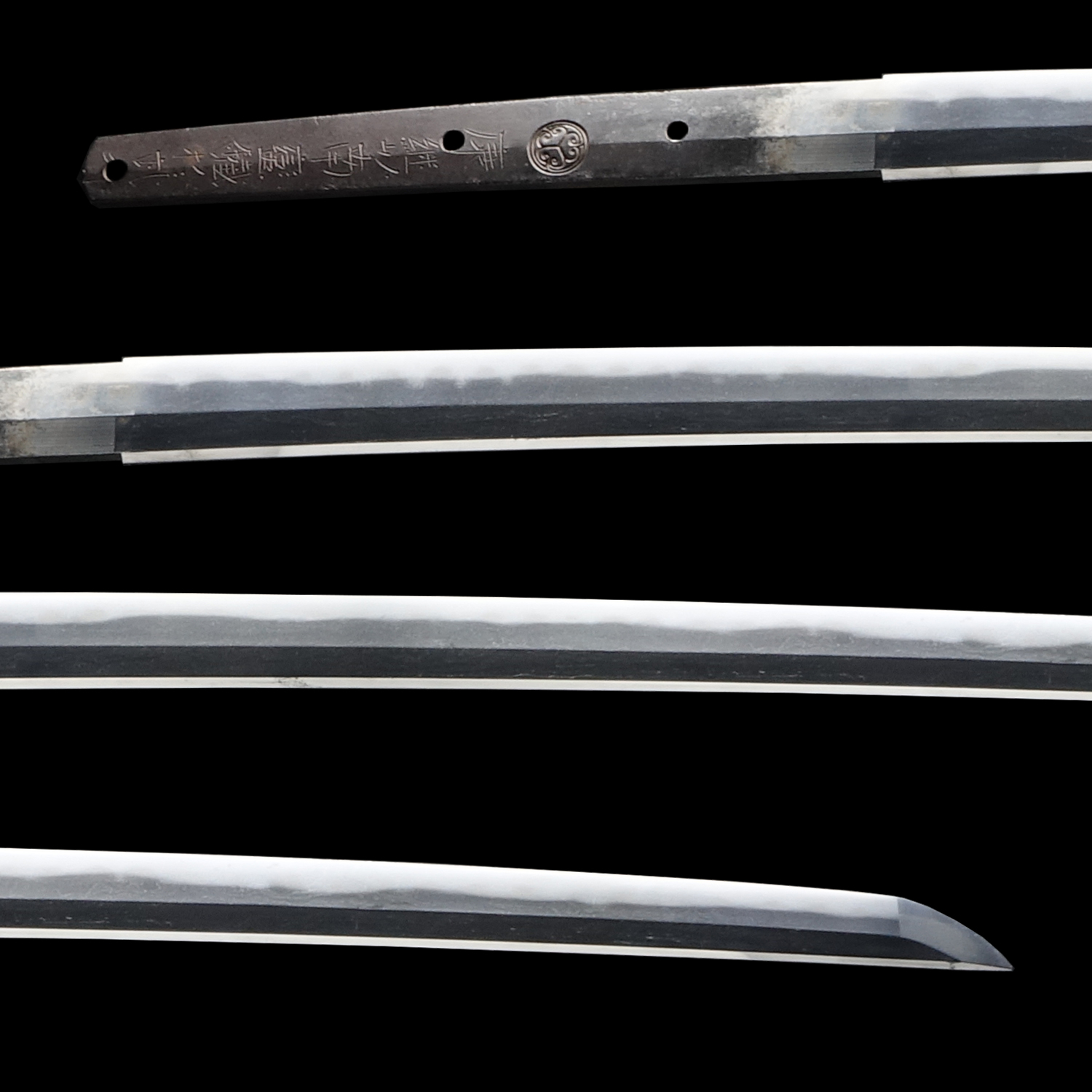
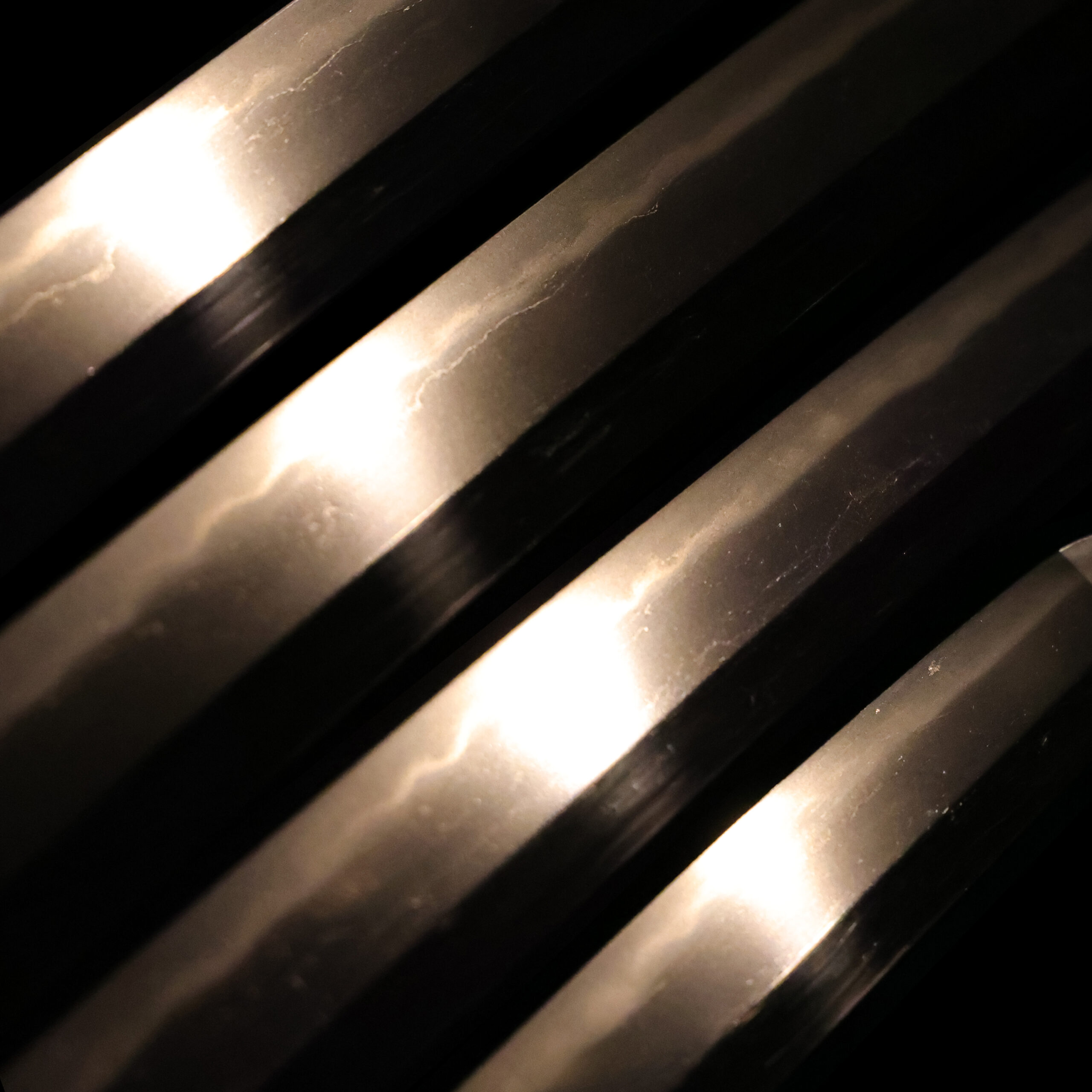
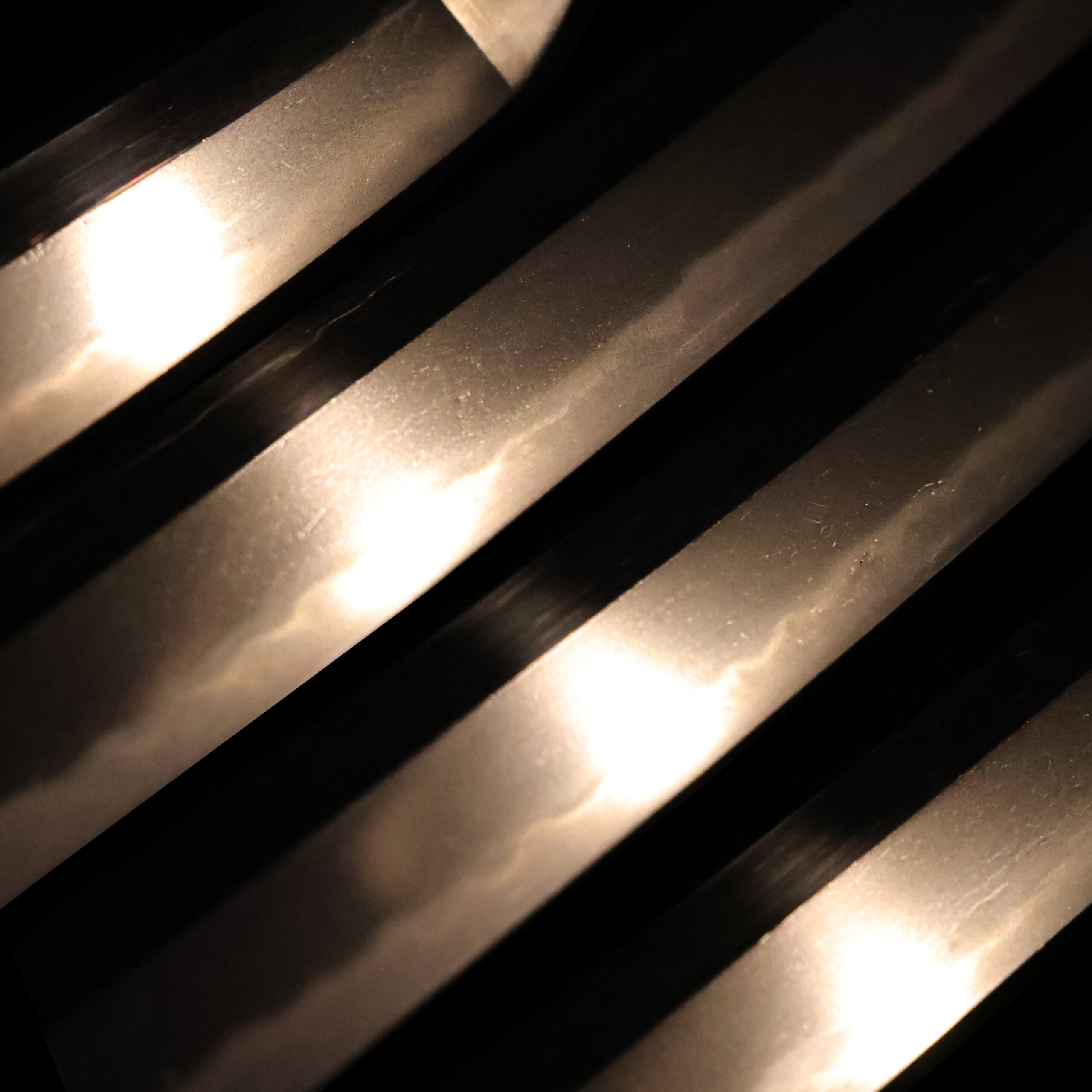
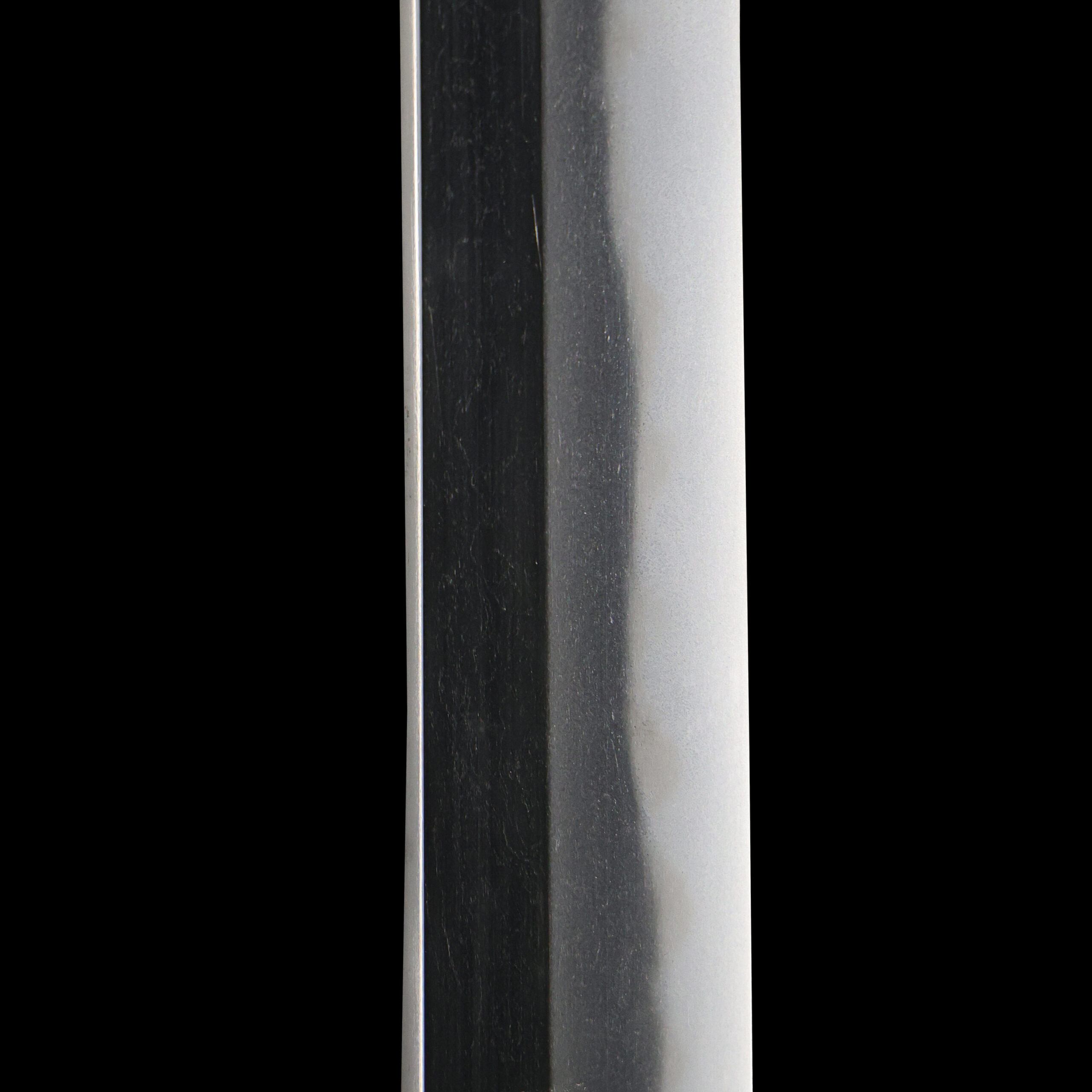
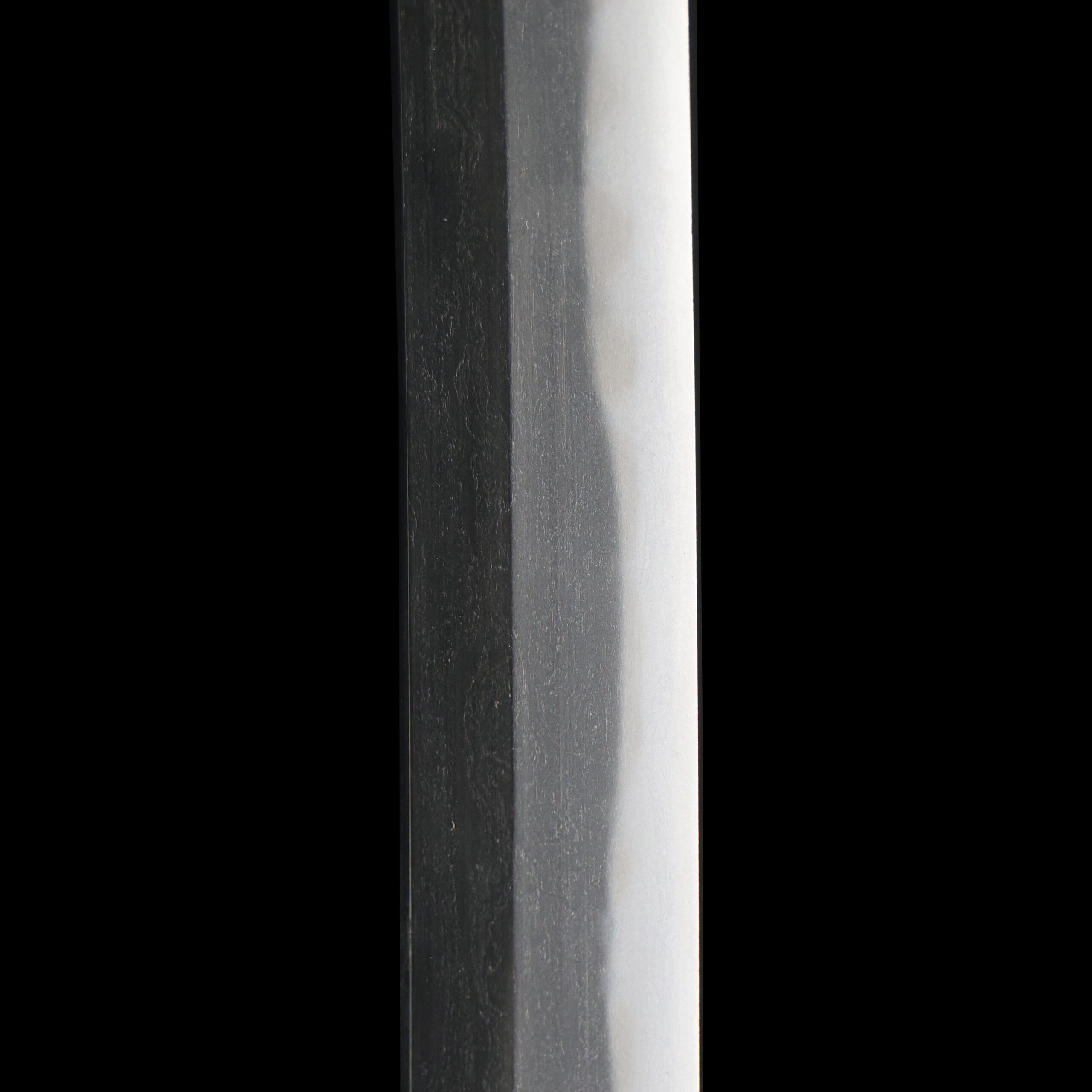
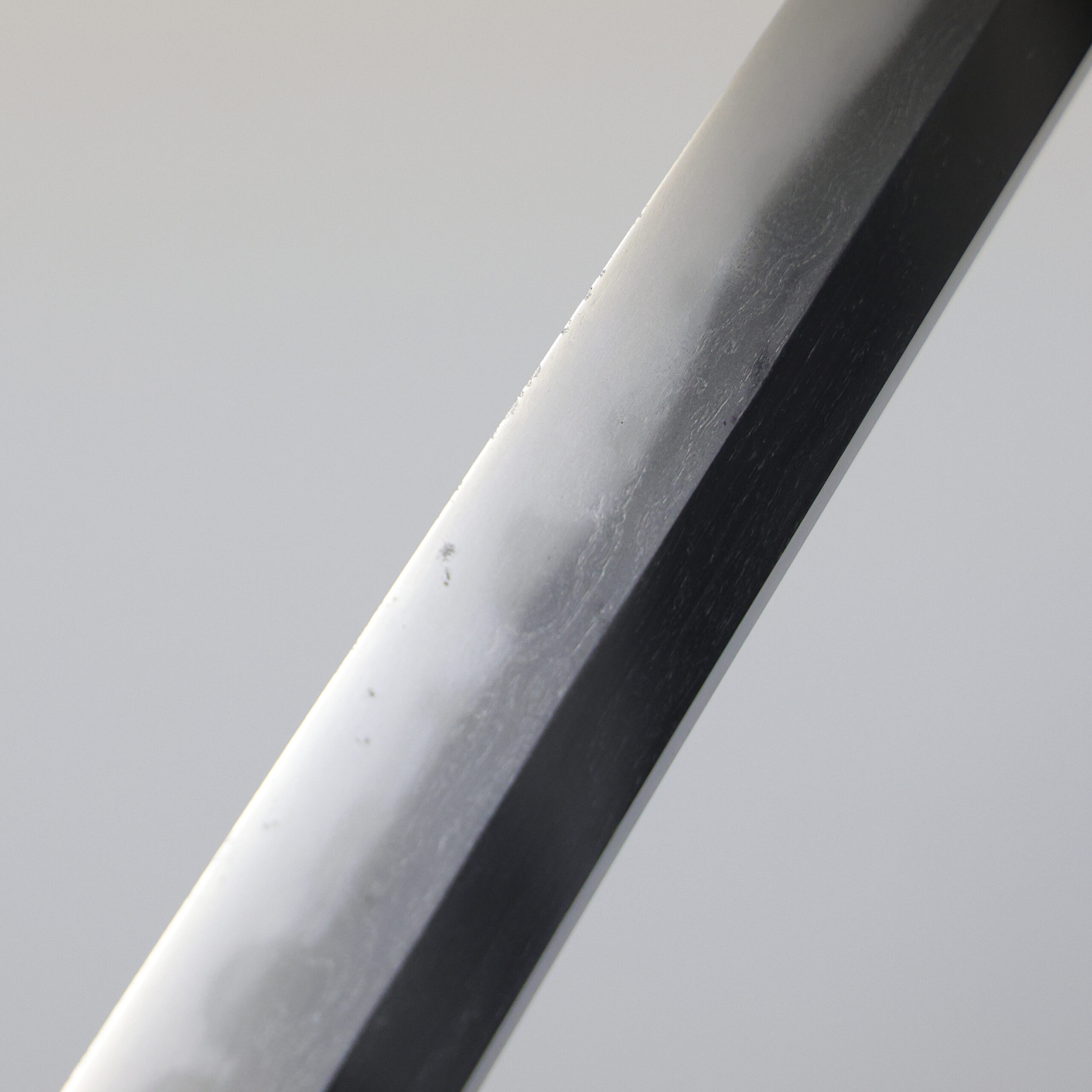
Hamon:
The crystalline structure which forms along the cutting edge of a blade as a result of the hardening process
Jimon(Jihada):
visible steel surface pattern created by folding and hammering during forging process
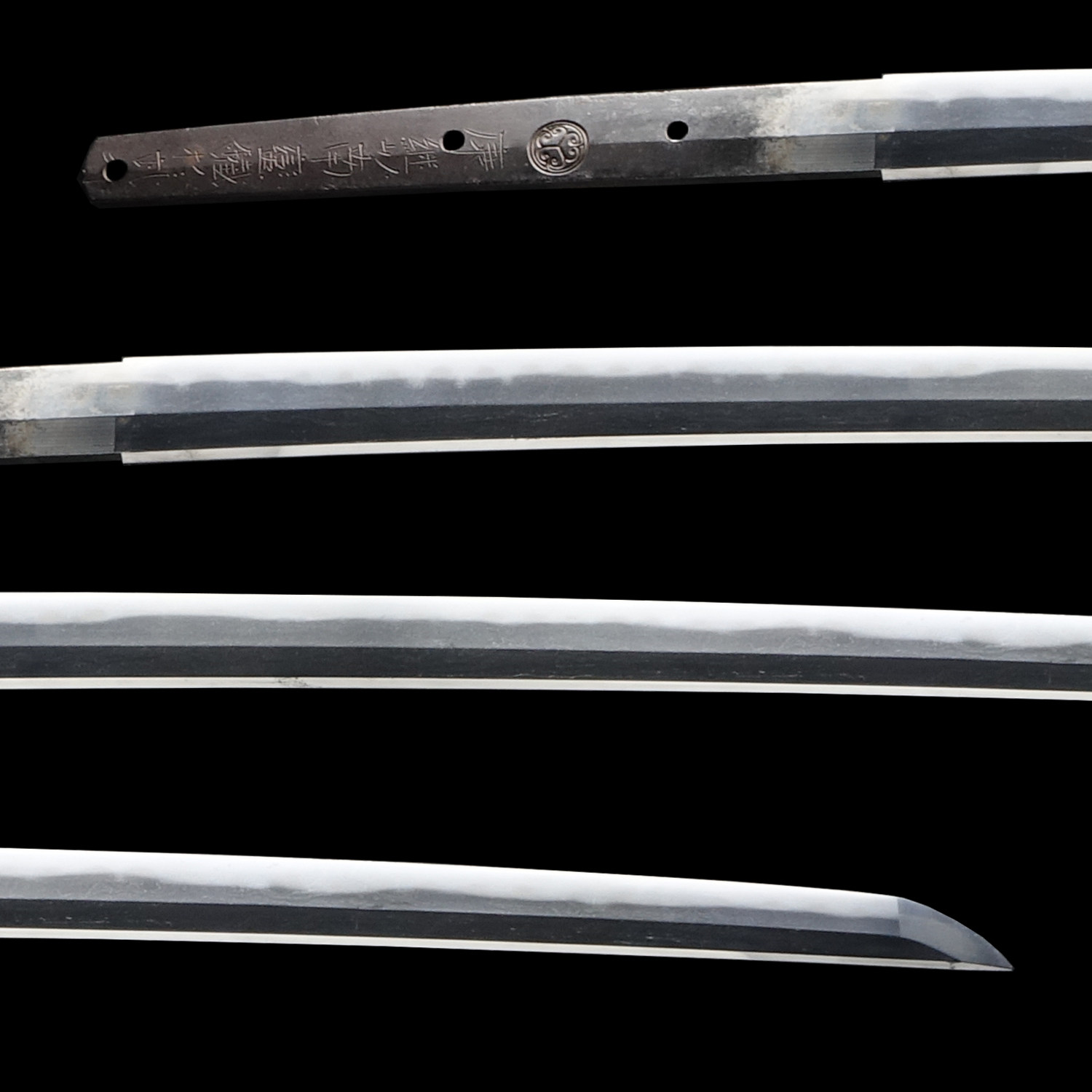
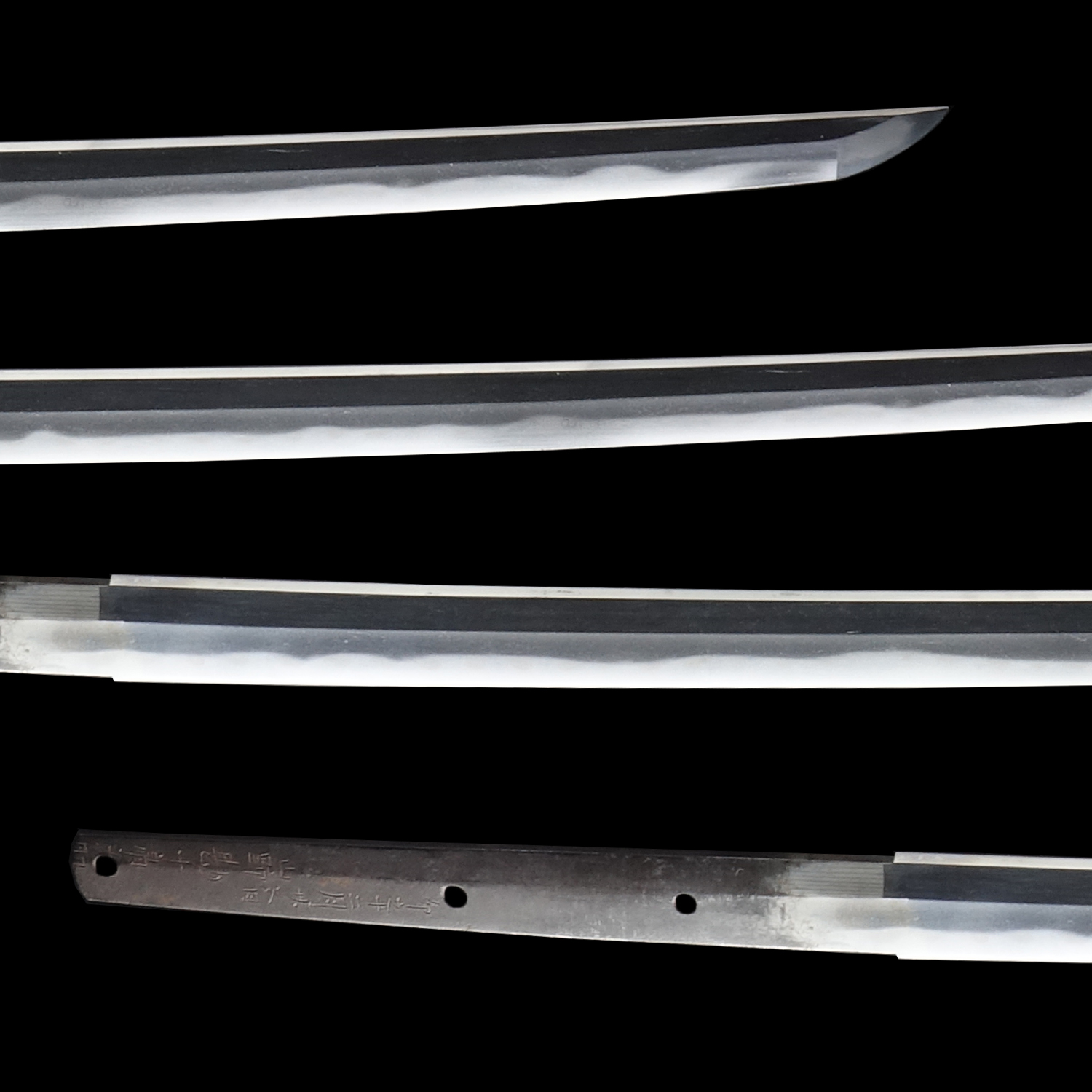
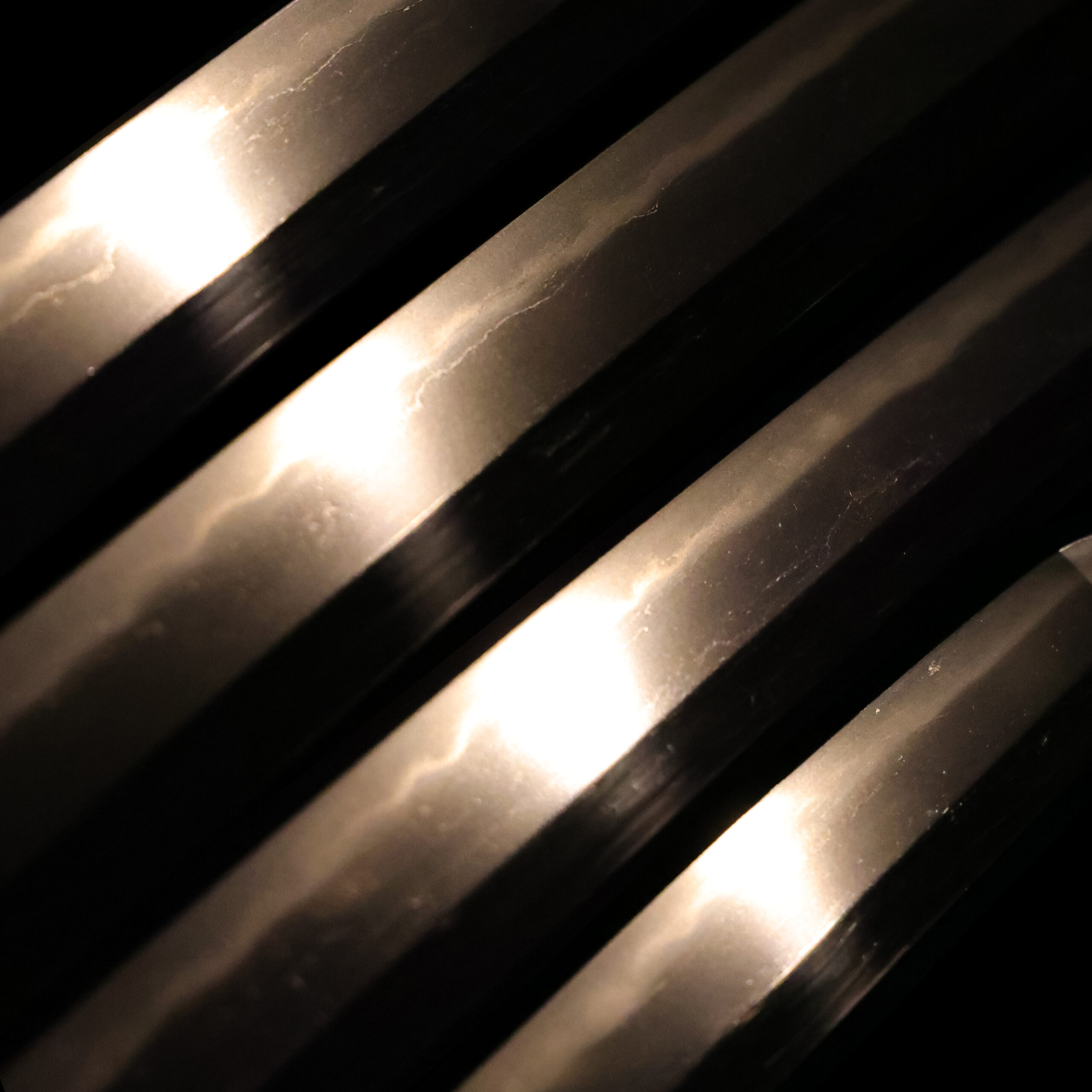
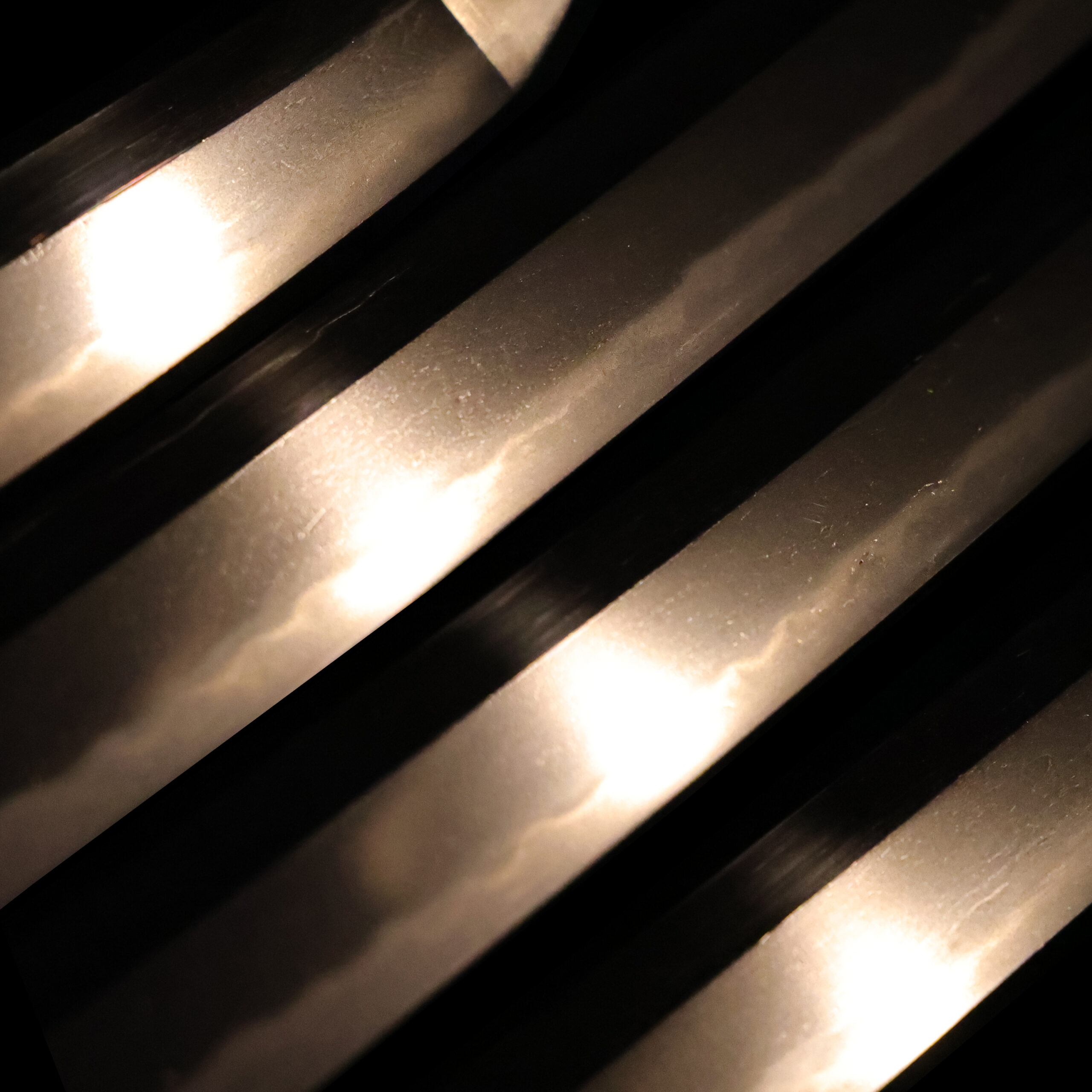
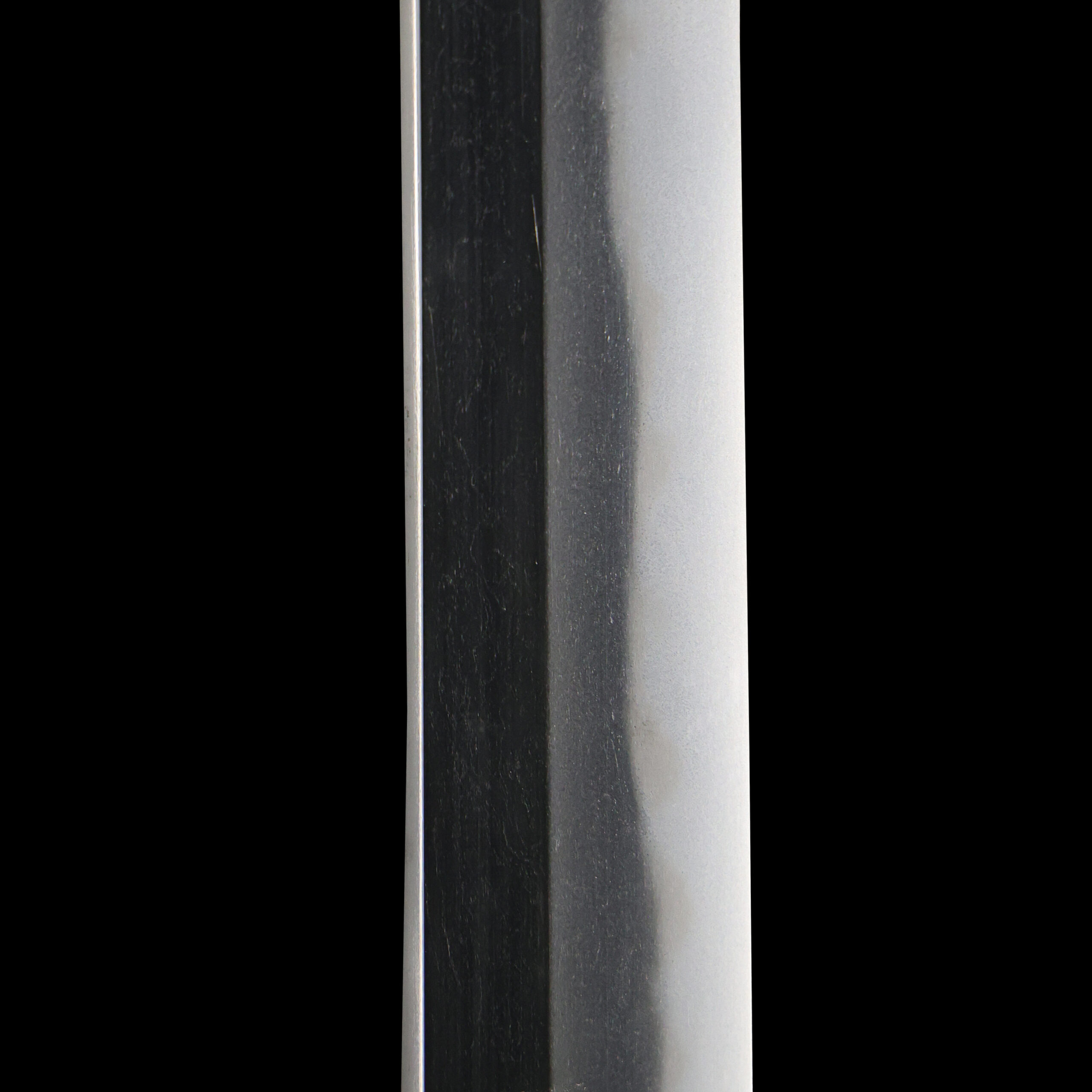
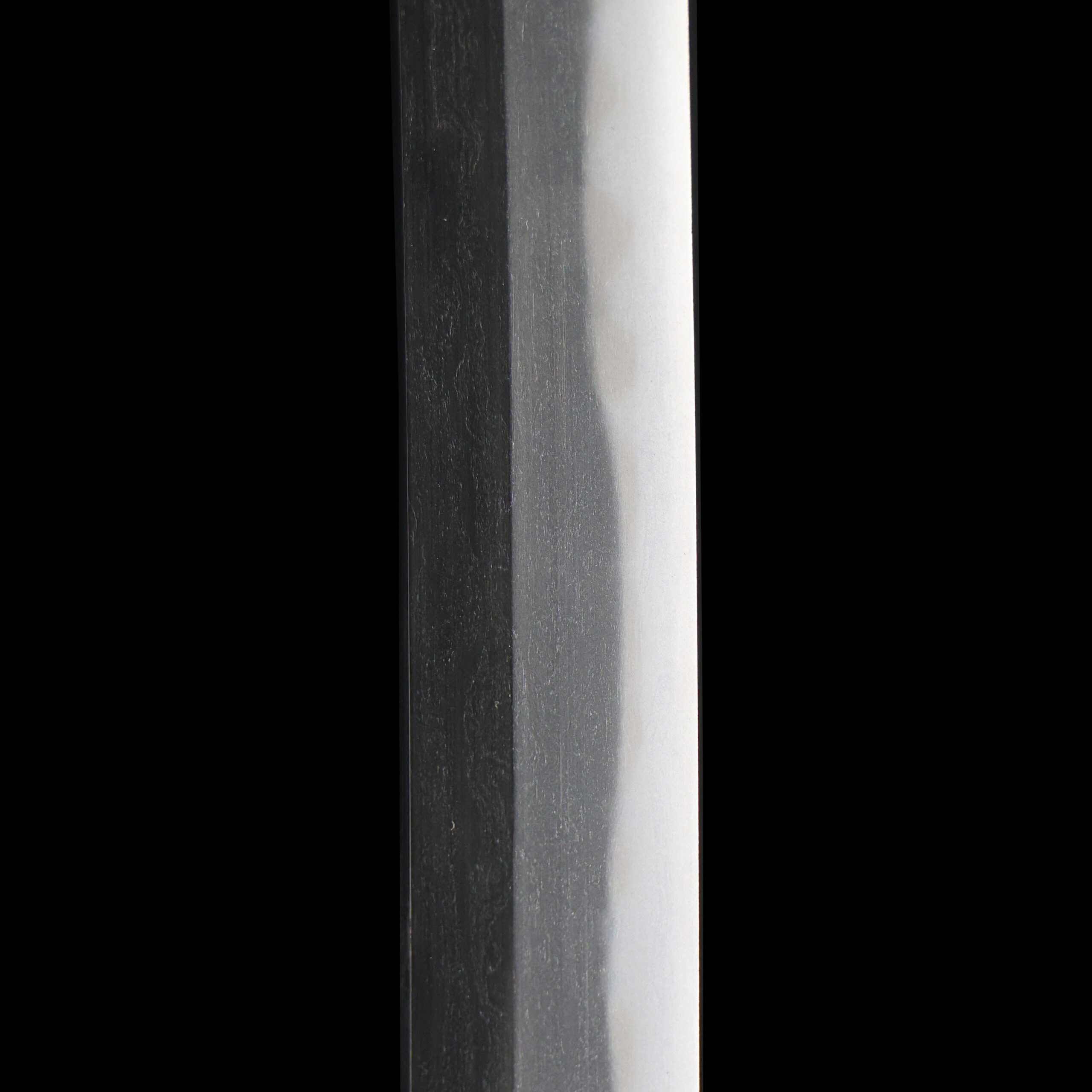
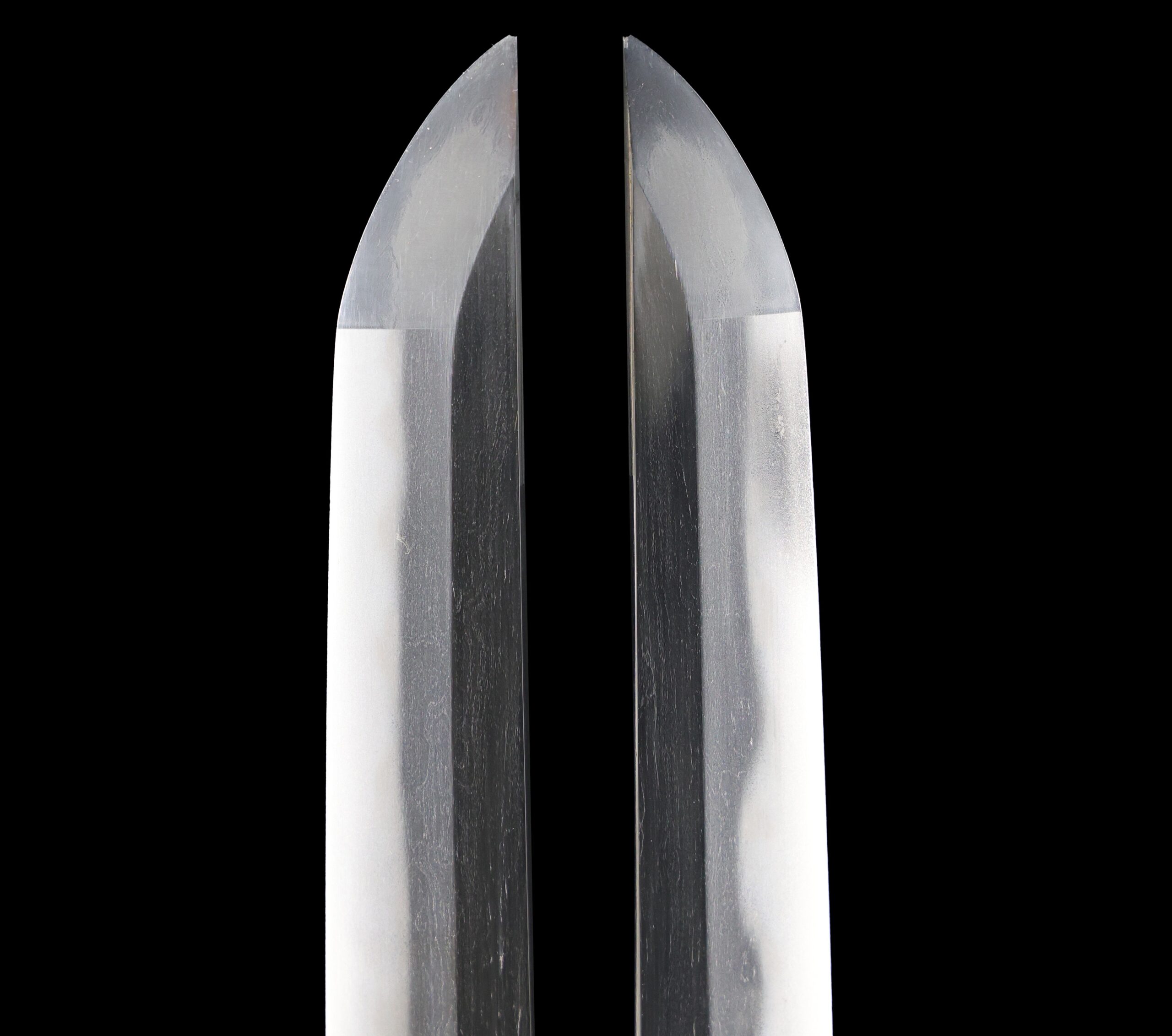
Kissaki:Kissaki is the tip of the Japanese sword.
Nakago:Nakago is the tang of the Japanese sword.
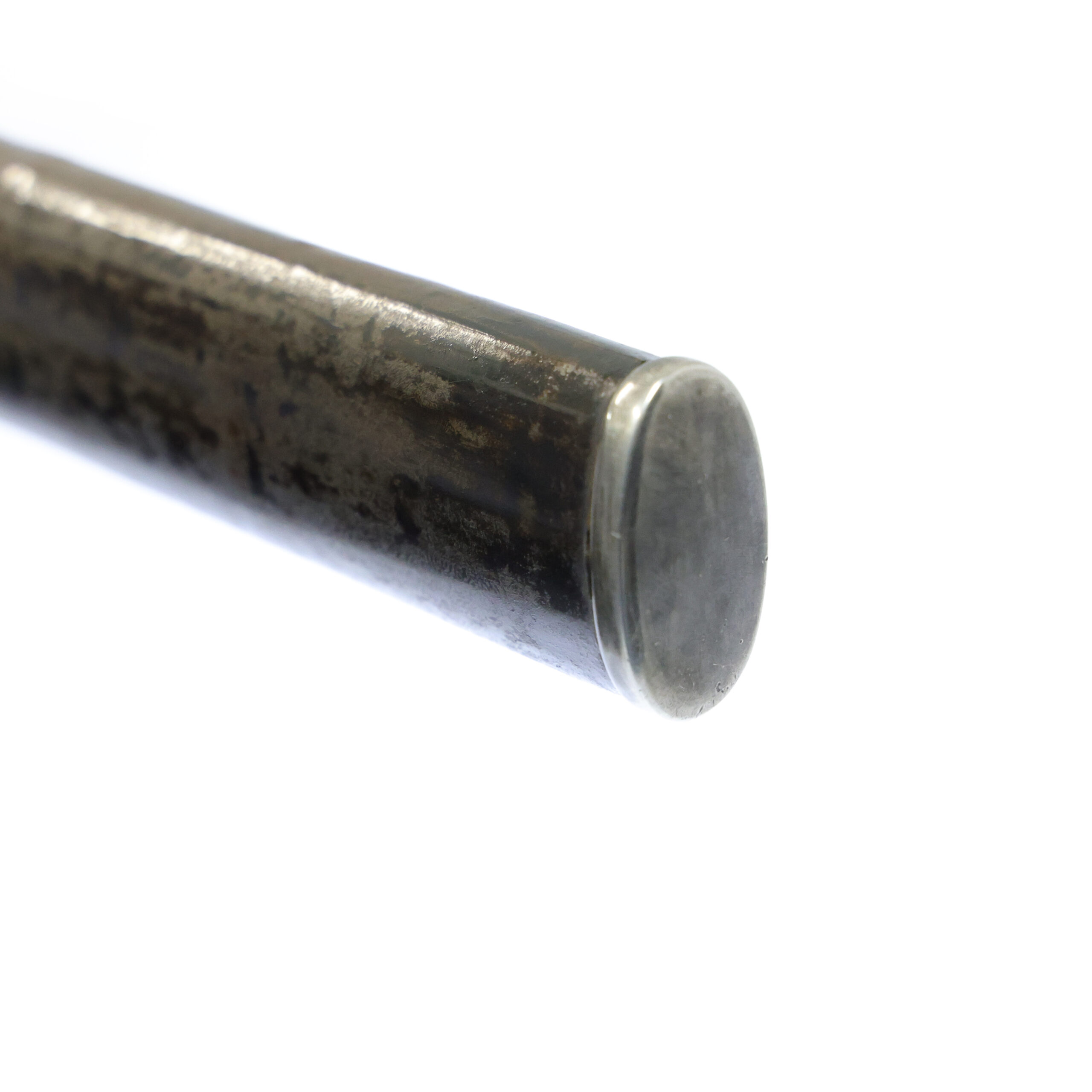
Japanese swordsmiths left the black rust on the tang because it prevents red rust while the tang is in its handle. And the discoloration of the tang was created over time, and it is a great indicator for a Japanese sword specialist to estimate when the sword was forged.
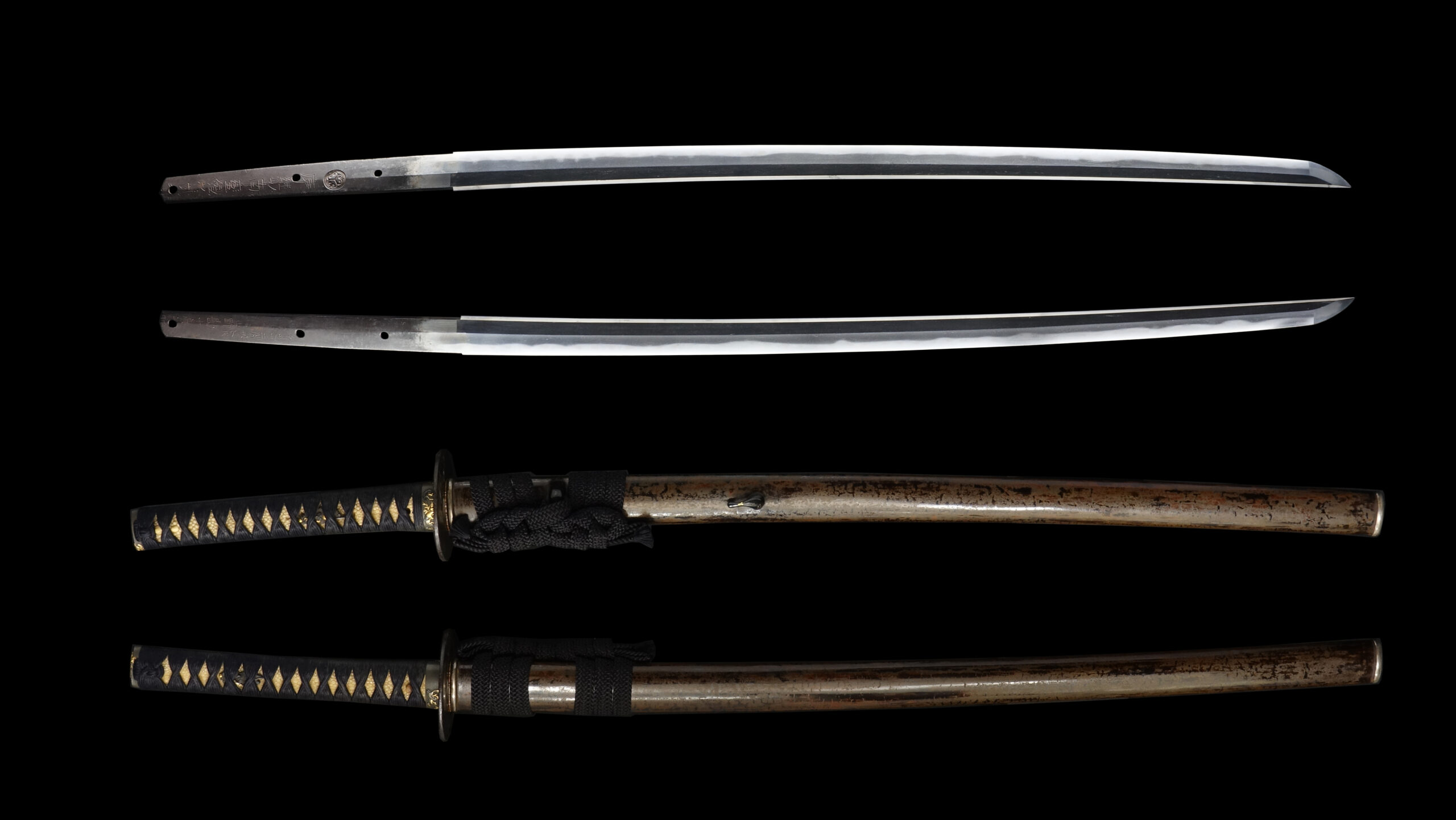
Koshirae:Koshirae is the mounting of the Japanese sword. There are several parts that consist of Koshirae such as Saya (Scabbard), Tsuka (Handle), Tsuba (Handguard).
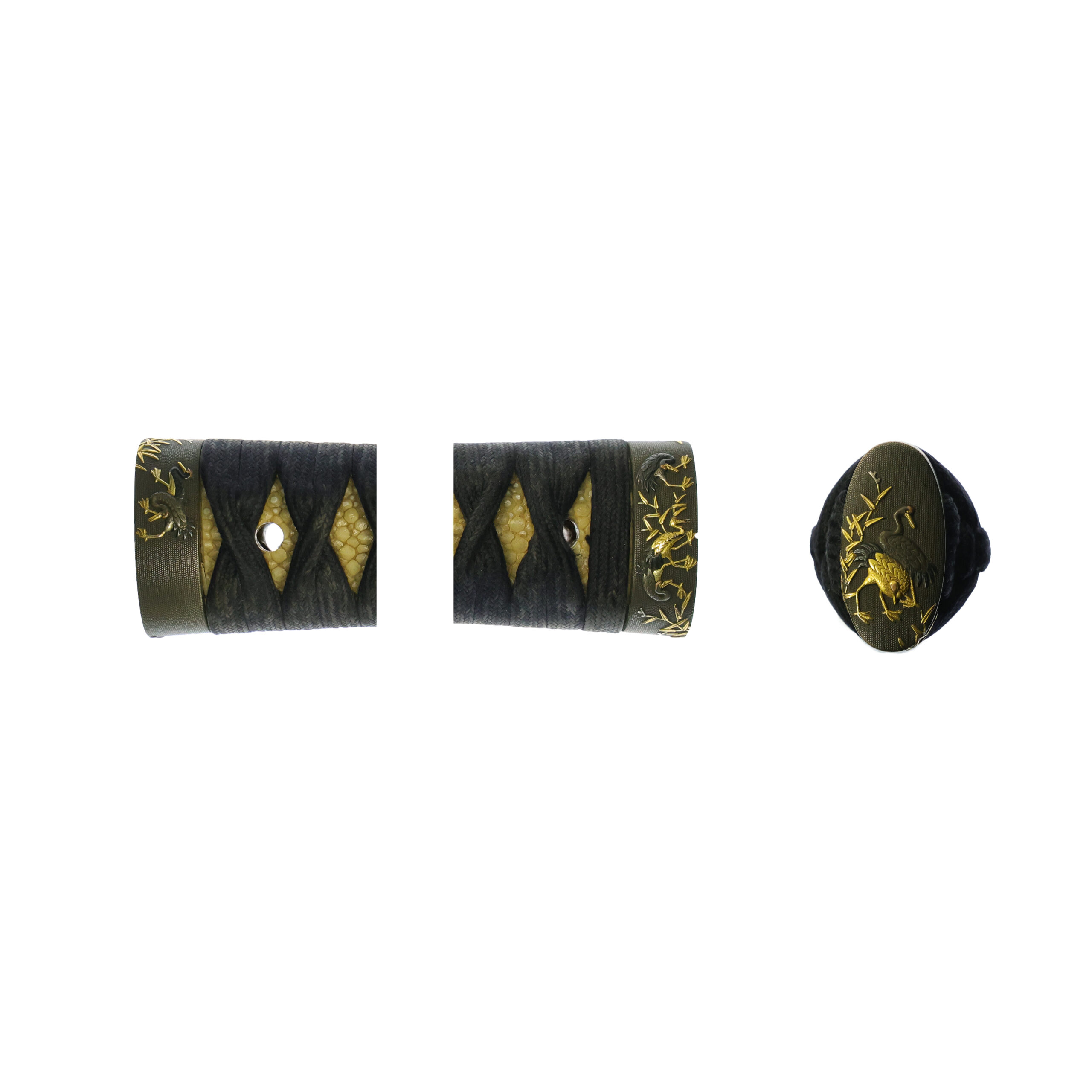
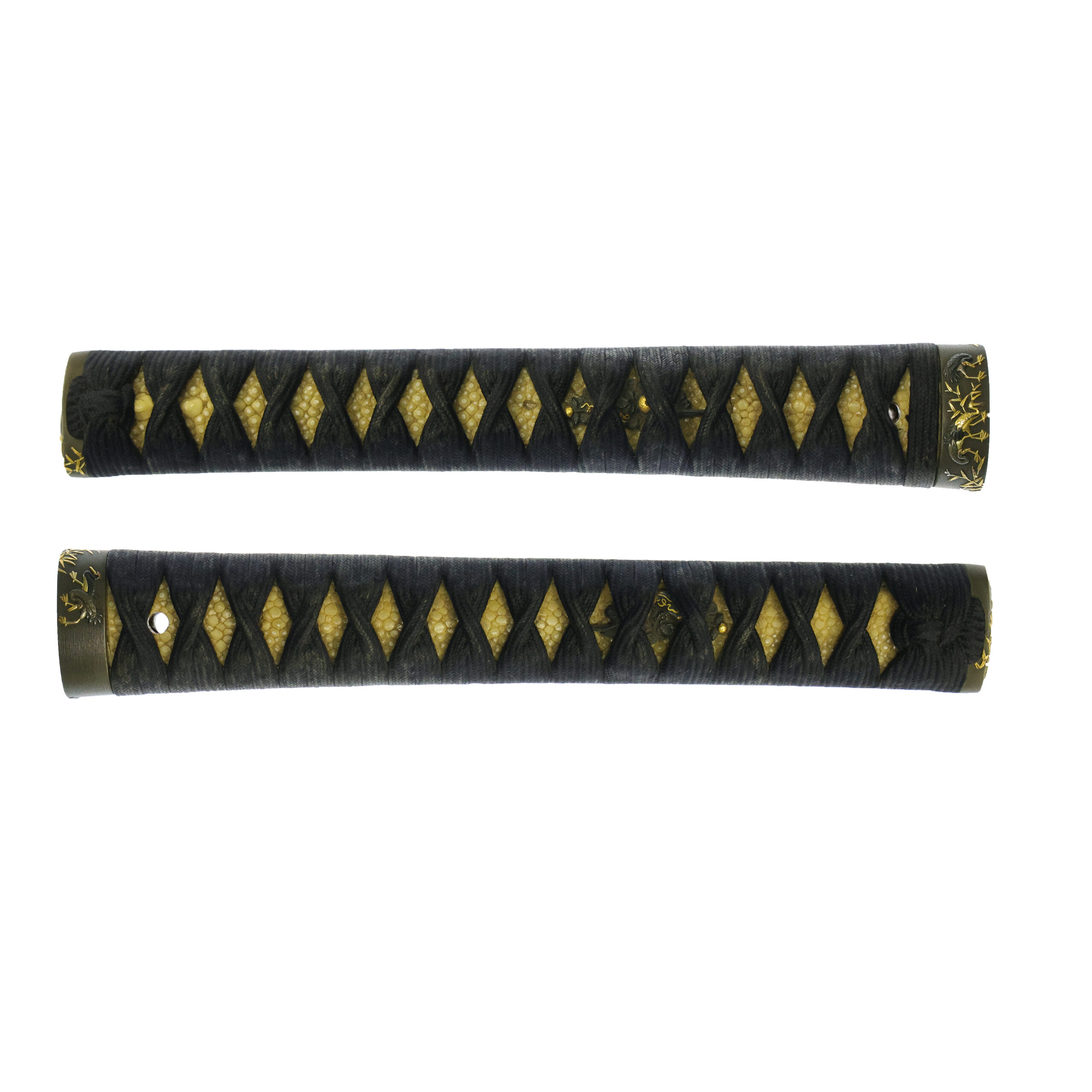
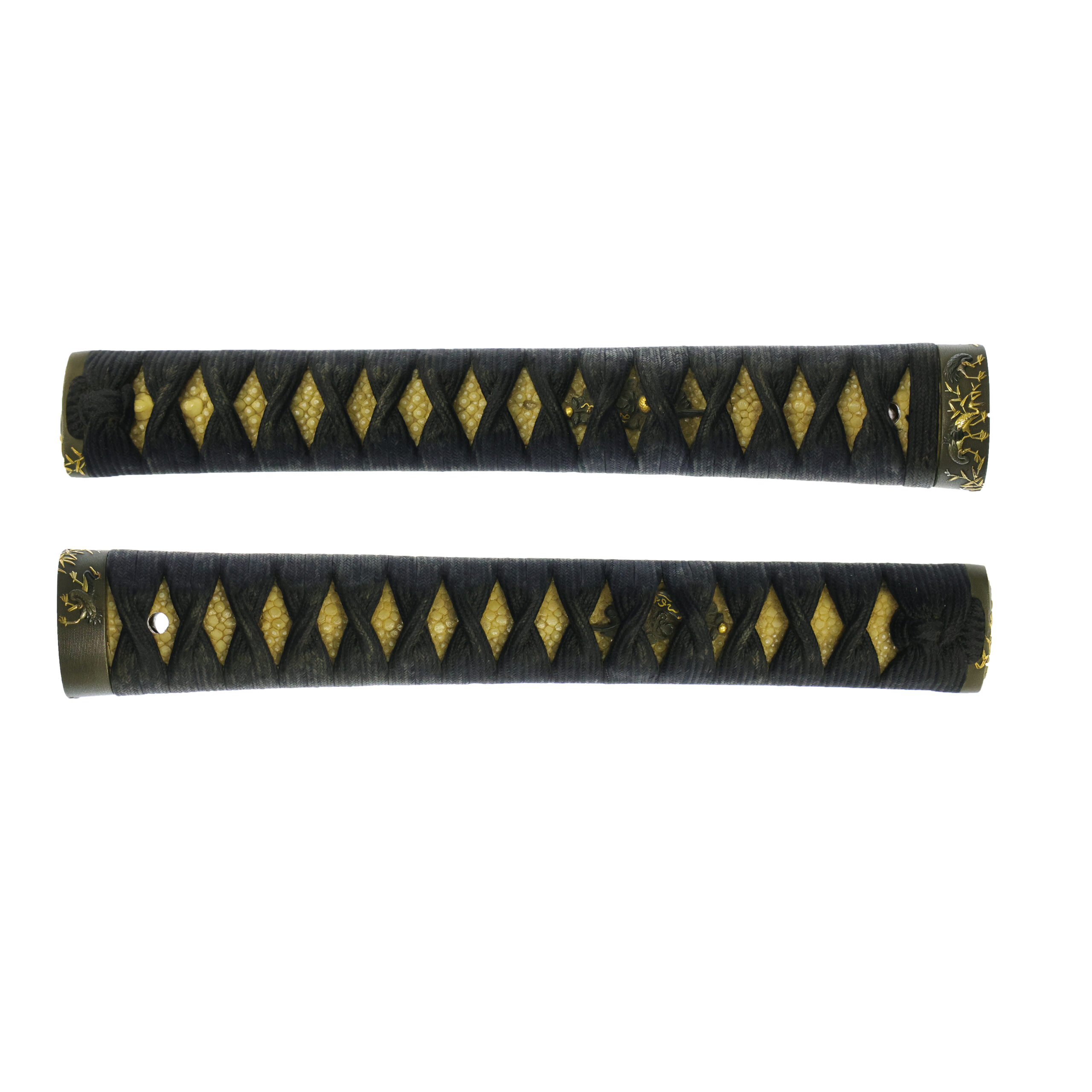
Fuchi-Kashira:A pair of matching sword fittings that cover the upper and bottom parts of its sword hilt.
The bird depicted on this fuchi–kashira is believed to be a red-crowned crane (丹頂, tancho), identifiable by the distinctive red patch on the top of its head.
During the Edo period (1603–1868), red-crowned cranes were found not only in Hokkaidō but also across many regions of Japan, including the Kantō area. At that time, the crane was a familiar presence and held special status. It was even included in the shogunate’s exclusive ceremonial hunts known as “Tsuru Onari”, a highly formalized form of falconry reserved for the Tokugawa shōguns.
From the Meiji period onward, however, the population declined sharply due to overhunting and the loss of wetlands caused by land development. The species became so rare that it was once believed to have gone extinct in Japan. Historically, the crane was regarded as a symbol of authority and prestige. While the shogunate carefully protected it, poaching was strictly prohibited and severely punished.
This close and complex relationship between humans and cranes—ranging from reverence and protection to strict control—is frequently depicted in ukiyo-e woodblock prints and other historical artworks, reflecting the bird’s cultural and symbolic importance in pre-modern Japan.
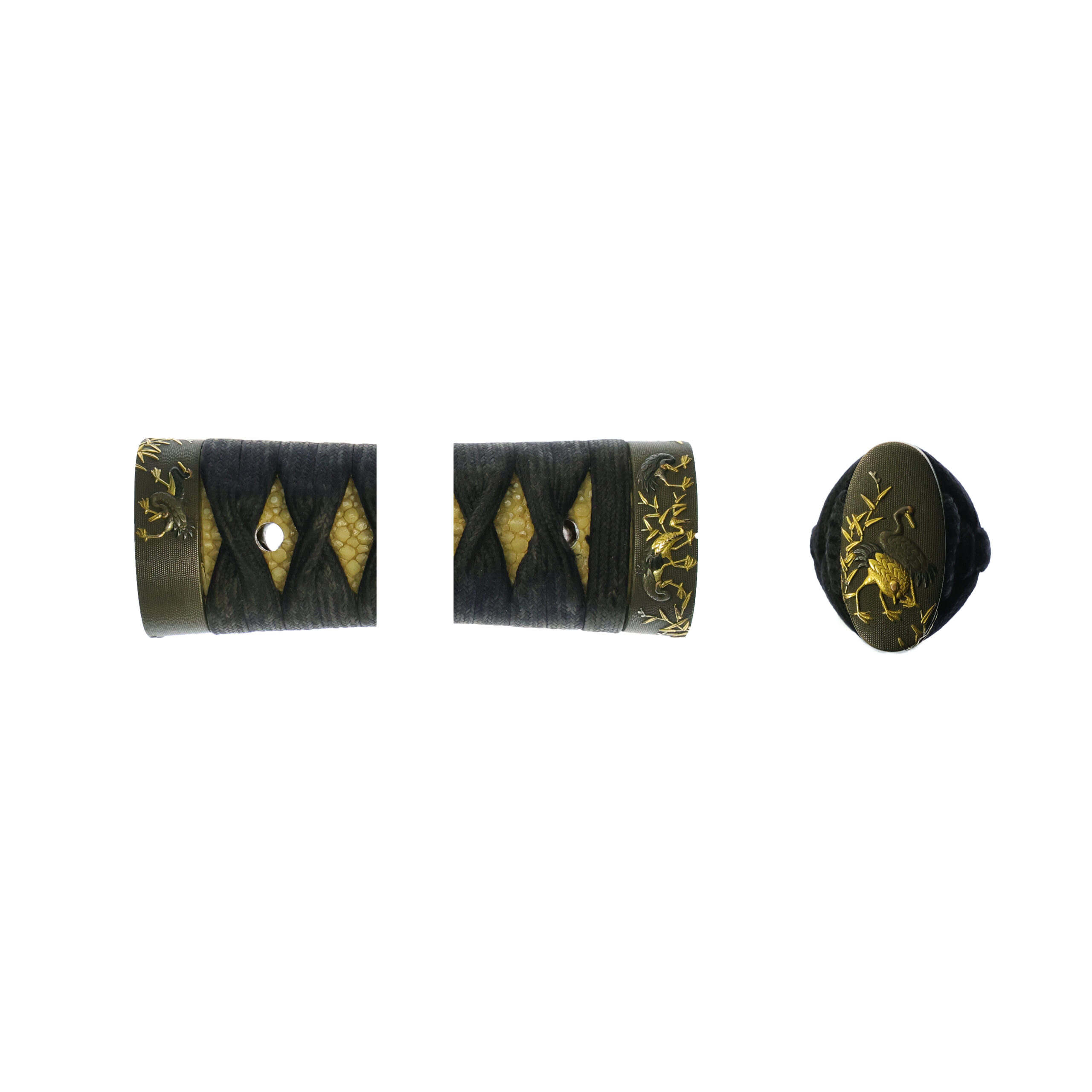
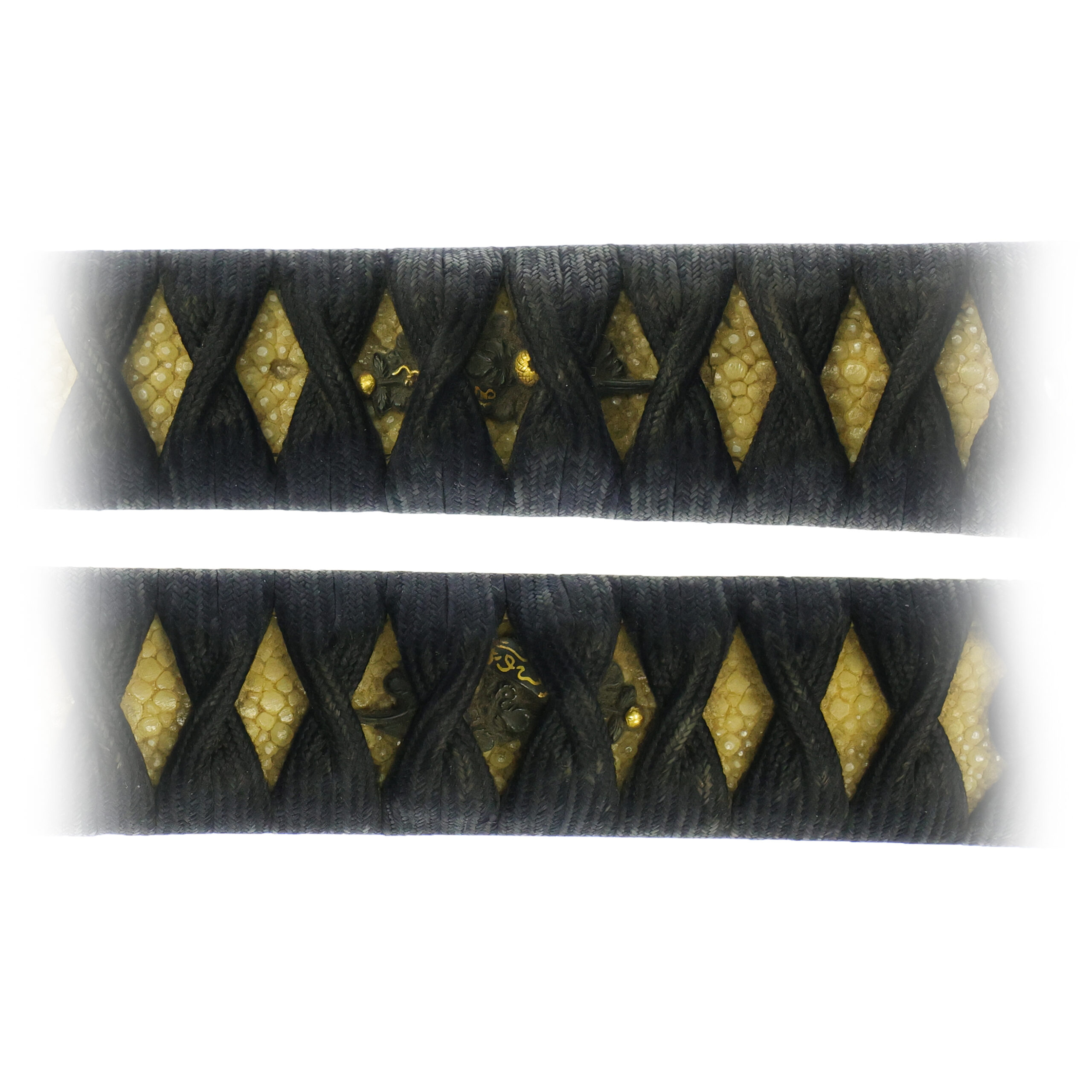
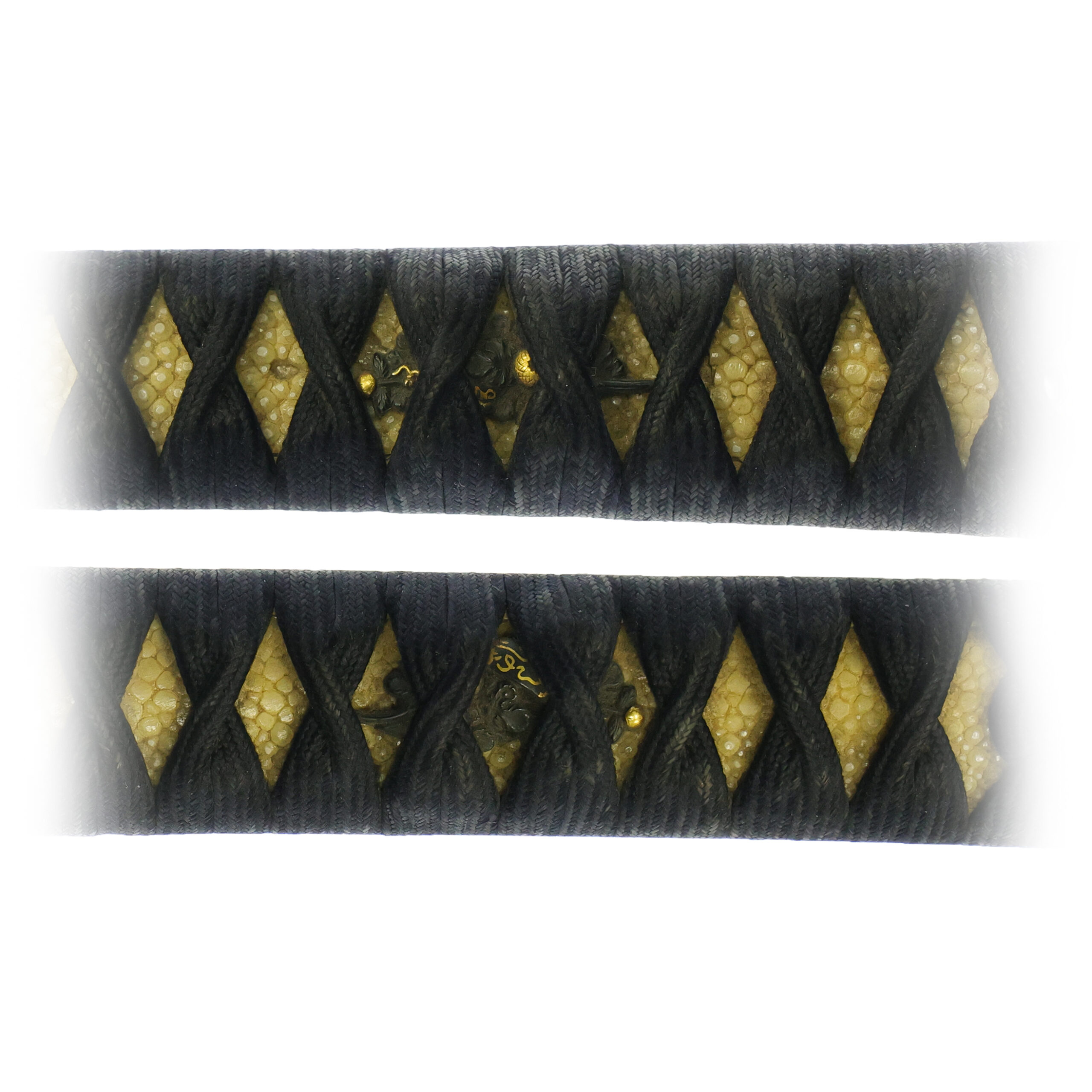
Tsuka and Menuki:Tsuka is the handle of the Japanese sword and Menuki is its decoration.
The theme of this Menuki’s design is likely Kiku Karakusa (菊唐草), which is the combination of Kiku (菊, chrysanthemum) and Karakusa (唐草, arabesque) pattern.
Chrysanthemum is one of the flowers that symbolize fall, and people have appreciated it very much since ancient times. A long time ago, the chrysanthemum was used as a medicine to obtain a long life in China, and it was brought to Japan with this thought in the Nara period (648-781). As its petals form radially, the chrysanthemum has been likened to the sun. That is why this flower pattern is treated as the symbol of perpetual youth and longevity or good health. “Kiku no Gomon (菊の御紋)” is a kind of chrysanthemum pattern, and it has been used as the crest of the Emperor and the royal family in Japan, so it is well-known as a noble pattern.
Karakusa is a pattern in which stems and leaves of vines are twined and make curves. Since ivy has a strong vitality and grows up without interruption, people regarded this design as a symbol of prosperity and longevity. Vine is called Tsuru (蔓) in Japanese, and it has another pronunciation; “Man.” There is a word 万 (it is also read Man), which means ten thousand. In the Karakusa pattern, leaves and vines are connected like Obi (帯, belt). The word “帯” can also be read “Tai.” Due to its pronunciation, the term “代 (Tai)” is associated. From this word-association game, an idiom 万代 is associated, and it means a thousand generations. In other words, we could imagine that people used this design wishing prosperity and longevity for their clans for a long time.
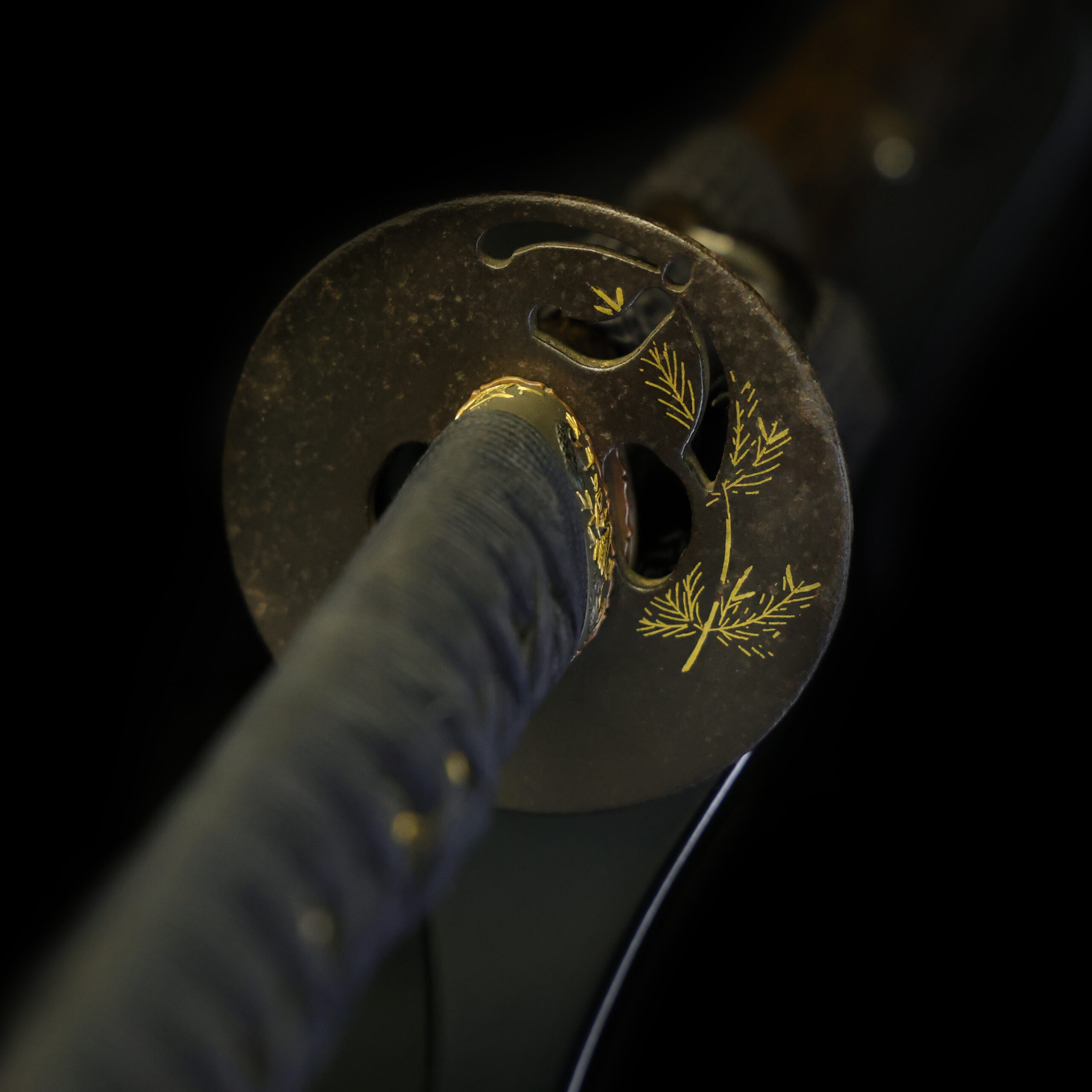
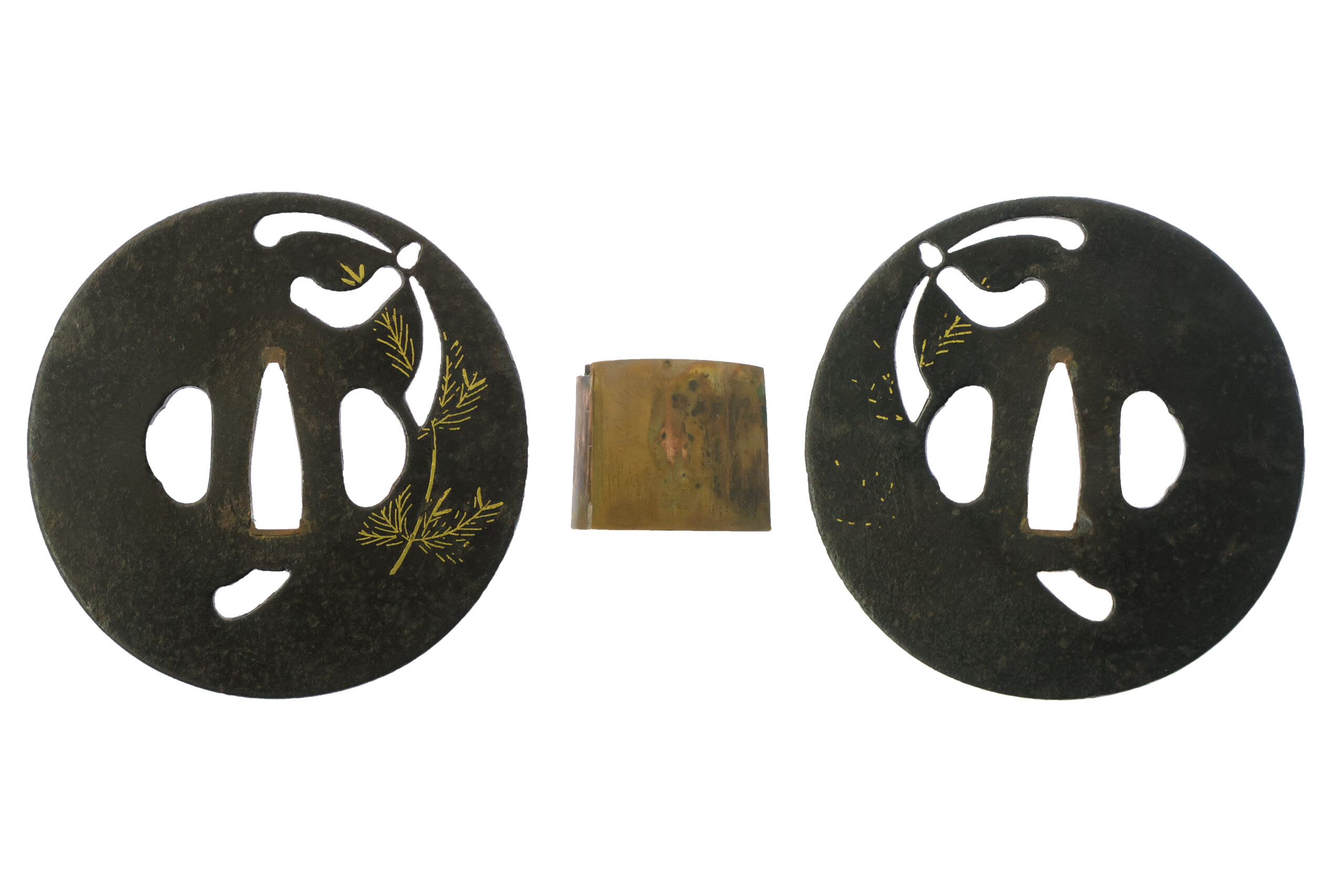
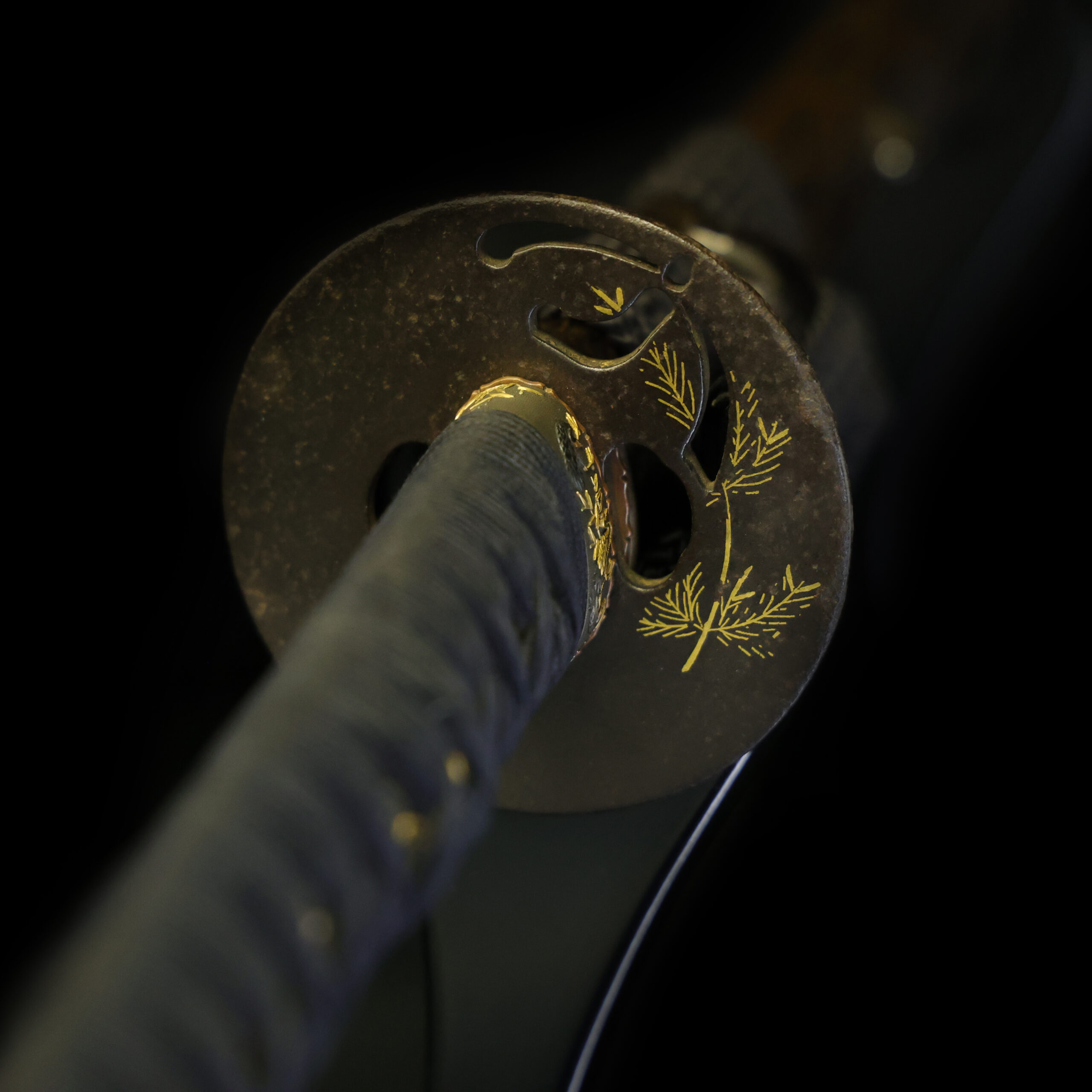
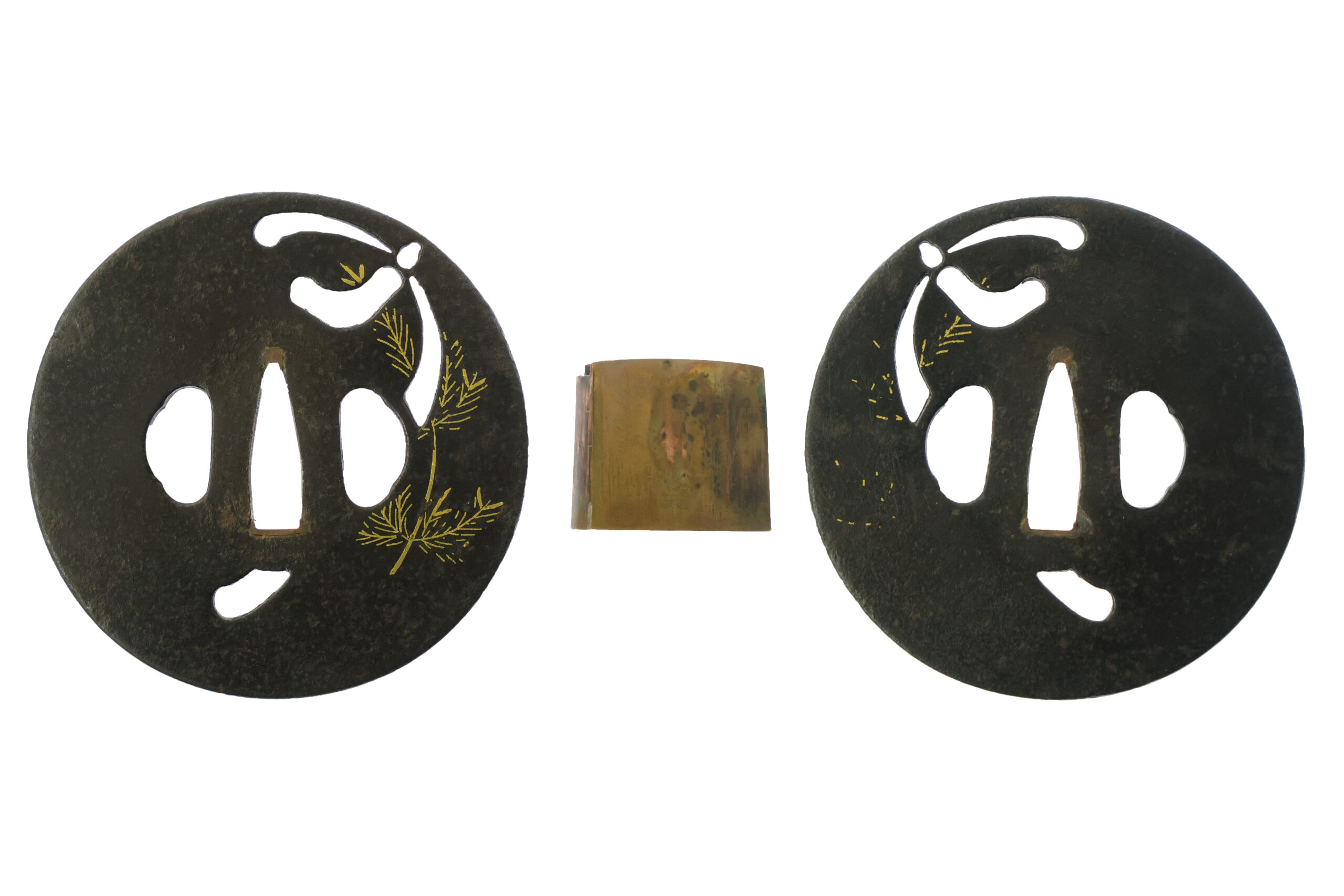
Tsuba and Habaki:Tsuba is the handguard for the Japanese Sword and Habaki is the equipment to make the blade not touch its scabbard inside. It prevents the blade from getting rusty and chipped.
This Tsuba feature a matsuba chirashi (松葉散らし, scattered pine needles) rendered in fine gold inlay. Pine needles have long been regarded as auspicious symbols because even when they wither, fall from the tree, or break, the two halves remain together. For this reason, the design has been cherished as a kisshō monyō (吉祥文様, auspicious motif) symbolizing strong bonds and inseparable ties. It has traditionally been used in decorative arts and sword fittings to express wishes for longevity, unwavering friendship and love, and harmony between husband and wife.
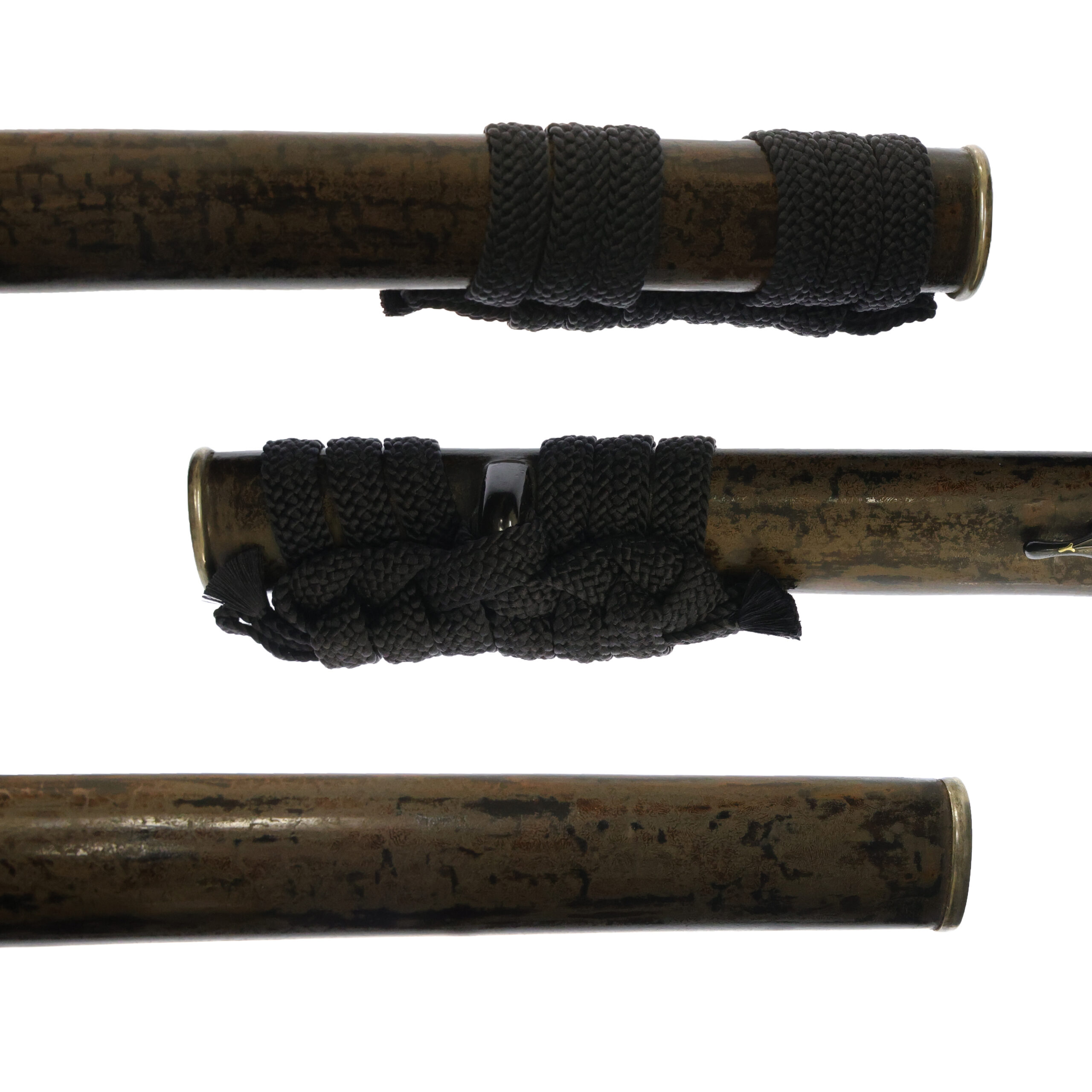
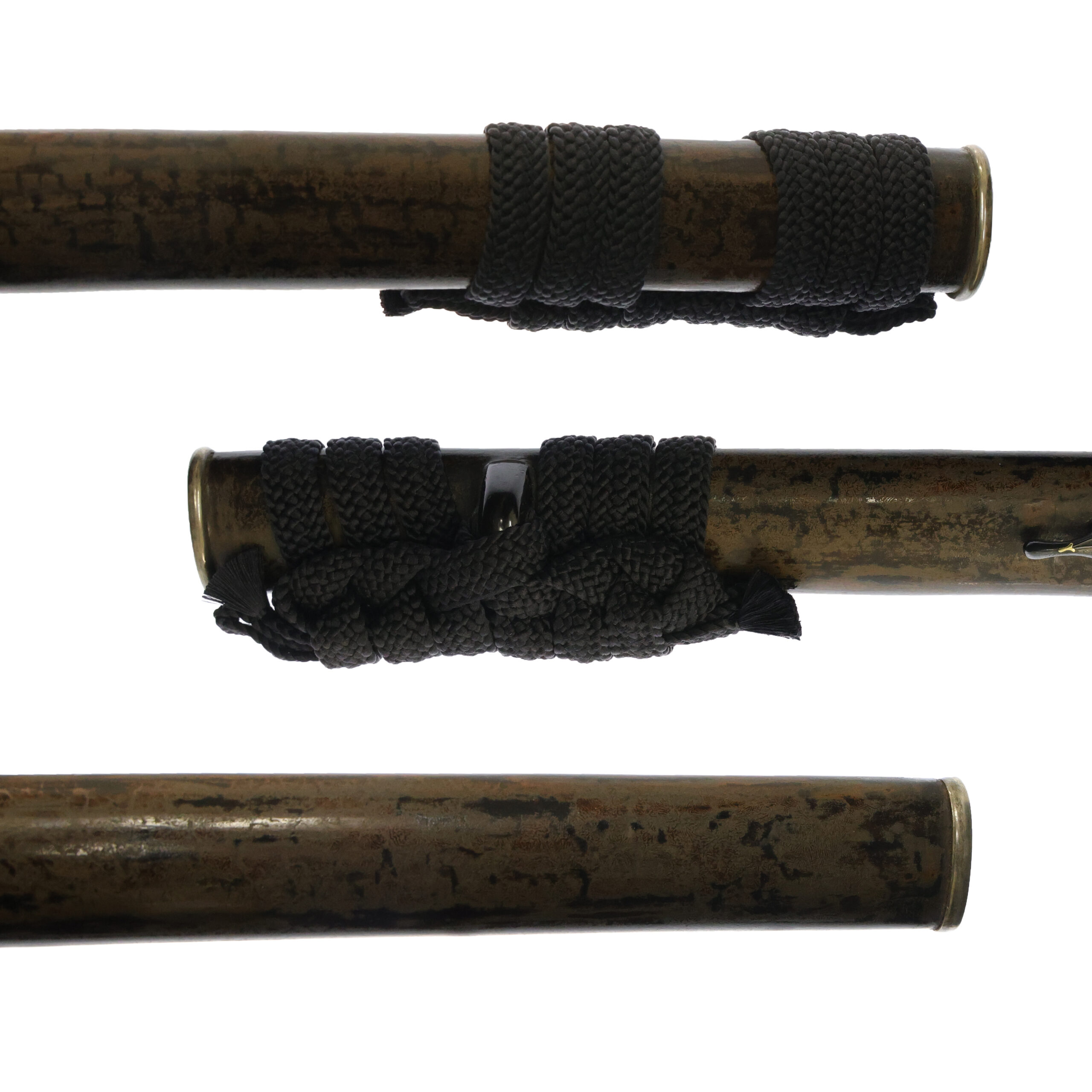
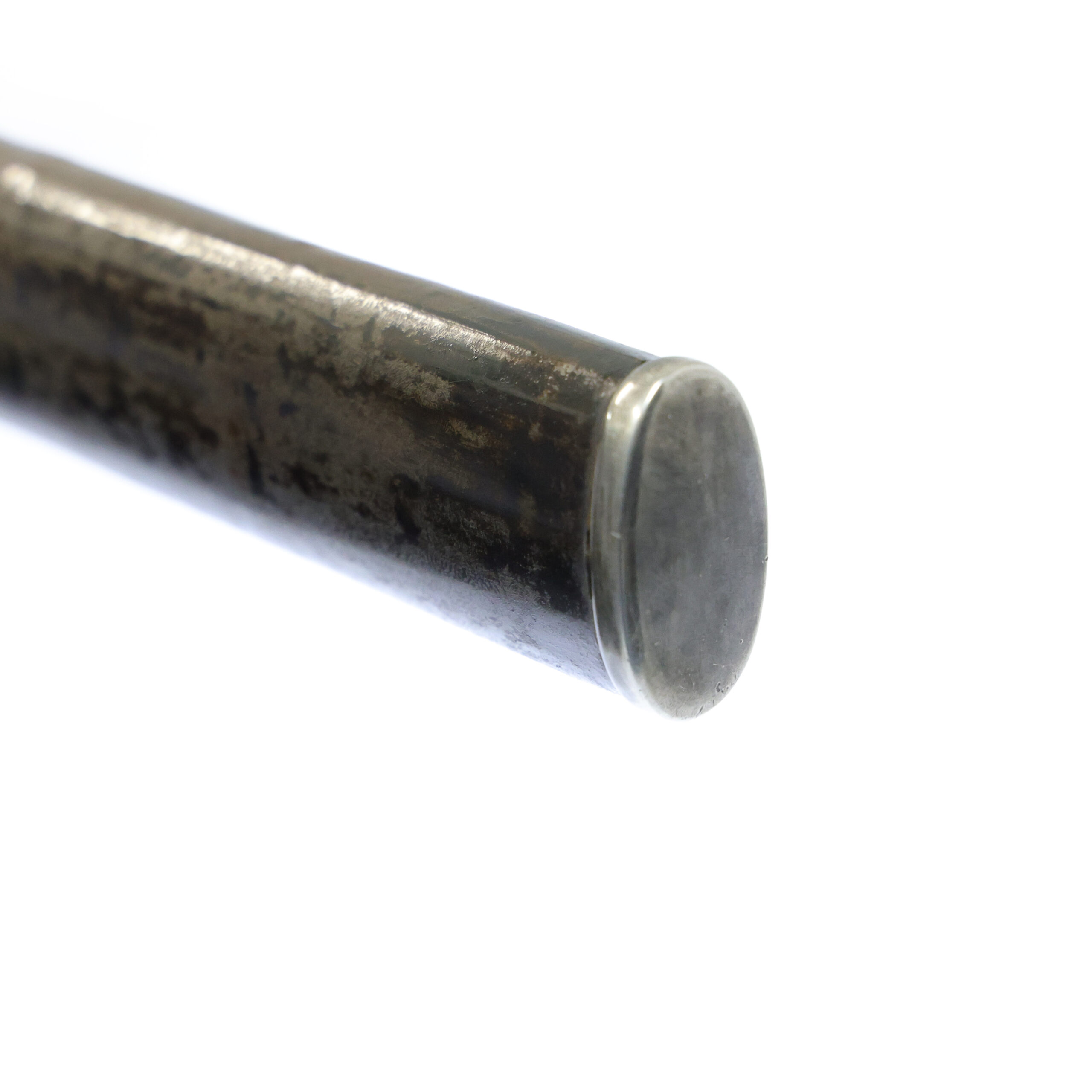
Saya:Saya is the scabbard for the Japanese sword.
Authentication Paper:NBTHK TOKUBETSU Hozon Certificate for the blade (No. 1025092)
NBTHK, also known as Nihon Bijutsu Touken Hozon Kyokai (the Society for the Preservation of the Japan Art Sword), is one of the oldest Japanese sword appraising organizations in modern-day Japan. They authenticated the blade on August 22nd in the 7th year of Reiwa (2025). They appraised it as Tokubetsu Hozon Touken, the blade especially worth preserving for Japanese society. The purchaser will receive this original certificate as well. We can also translate what is written into English and make a PDF file for your record if you request.
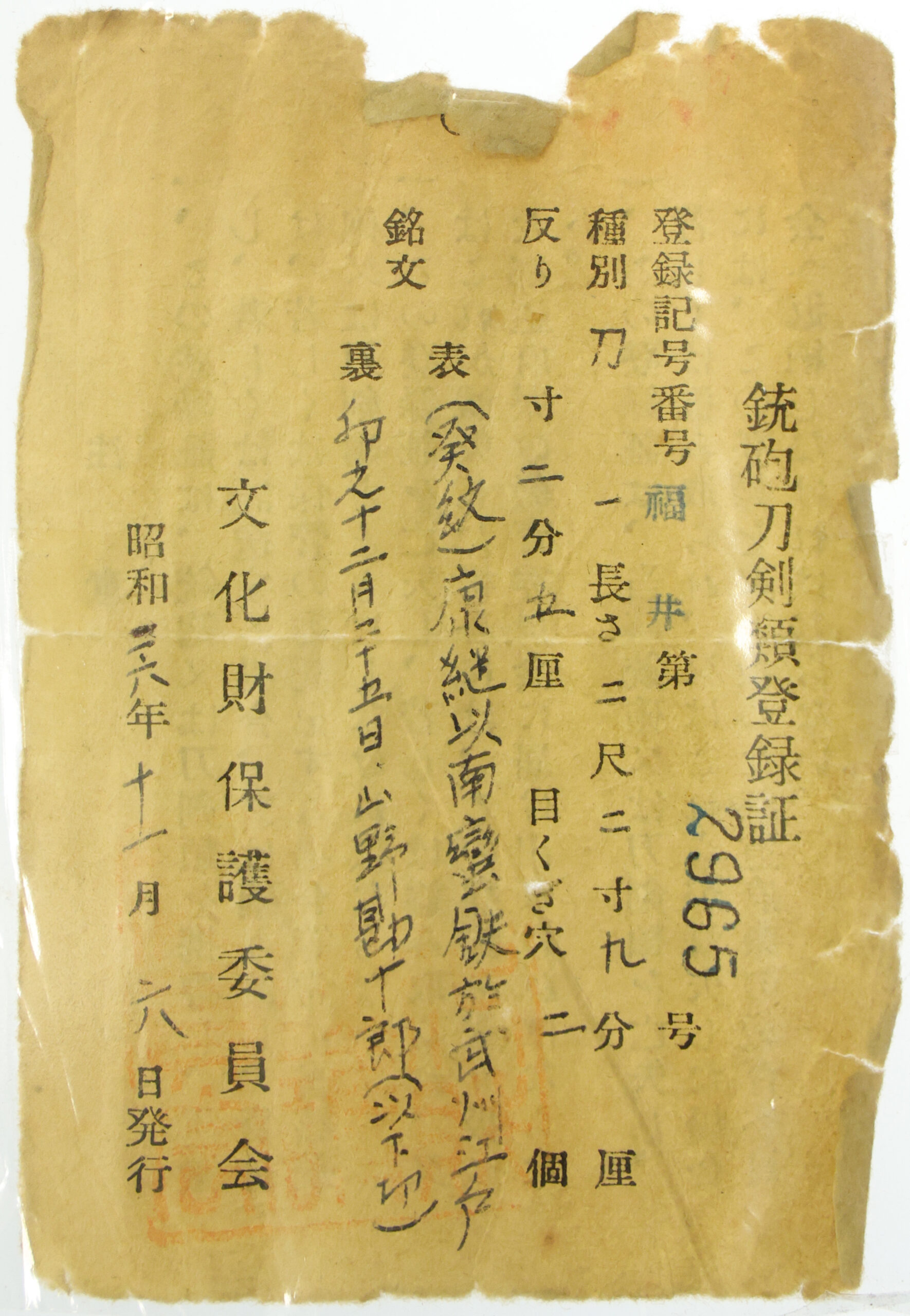
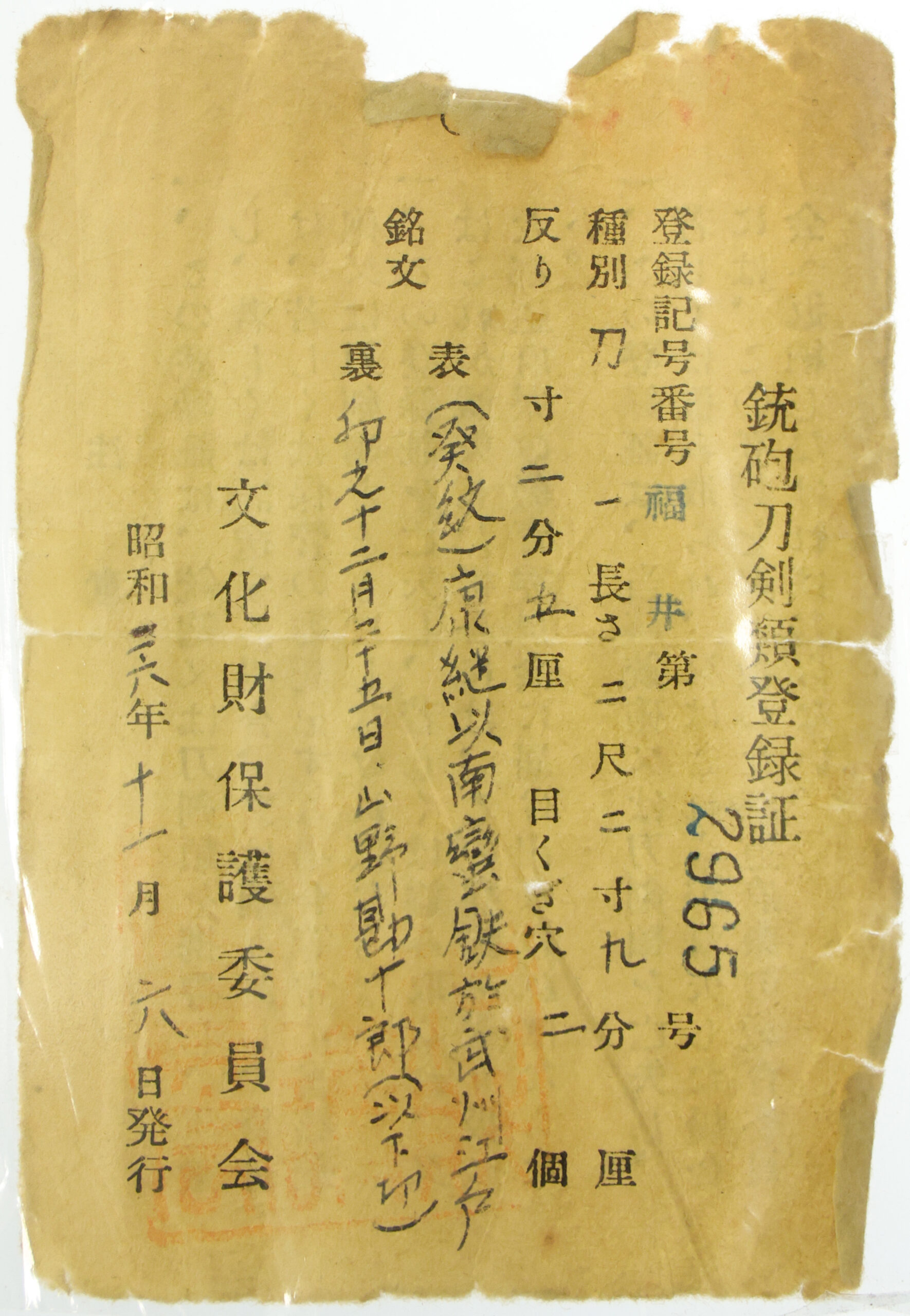
Registration Number : Fukui 2965
The Board of Education in Fukui prefecture issued a registration paper for this sword. It is called Jyu Hou Token Rui Tourokusho (銃砲刀剣類登録証). Bunkacho (The Agency for Cultural Affairs) acknowledges a Japanese sword with this paper as a work of art.
The sword needs to be traditionally hand-forged and made of Tamahagane carbon steel to be registered in the system. With this paper, its owner in Japan can legally own an authentic Japanese sword. Based on this registration number, we will apply for its export permit.
This paper will need to be returned to the board of education when the sword is being shipped abroad, but you can receive a copy of it. An English translation of this registration paper is available on request.
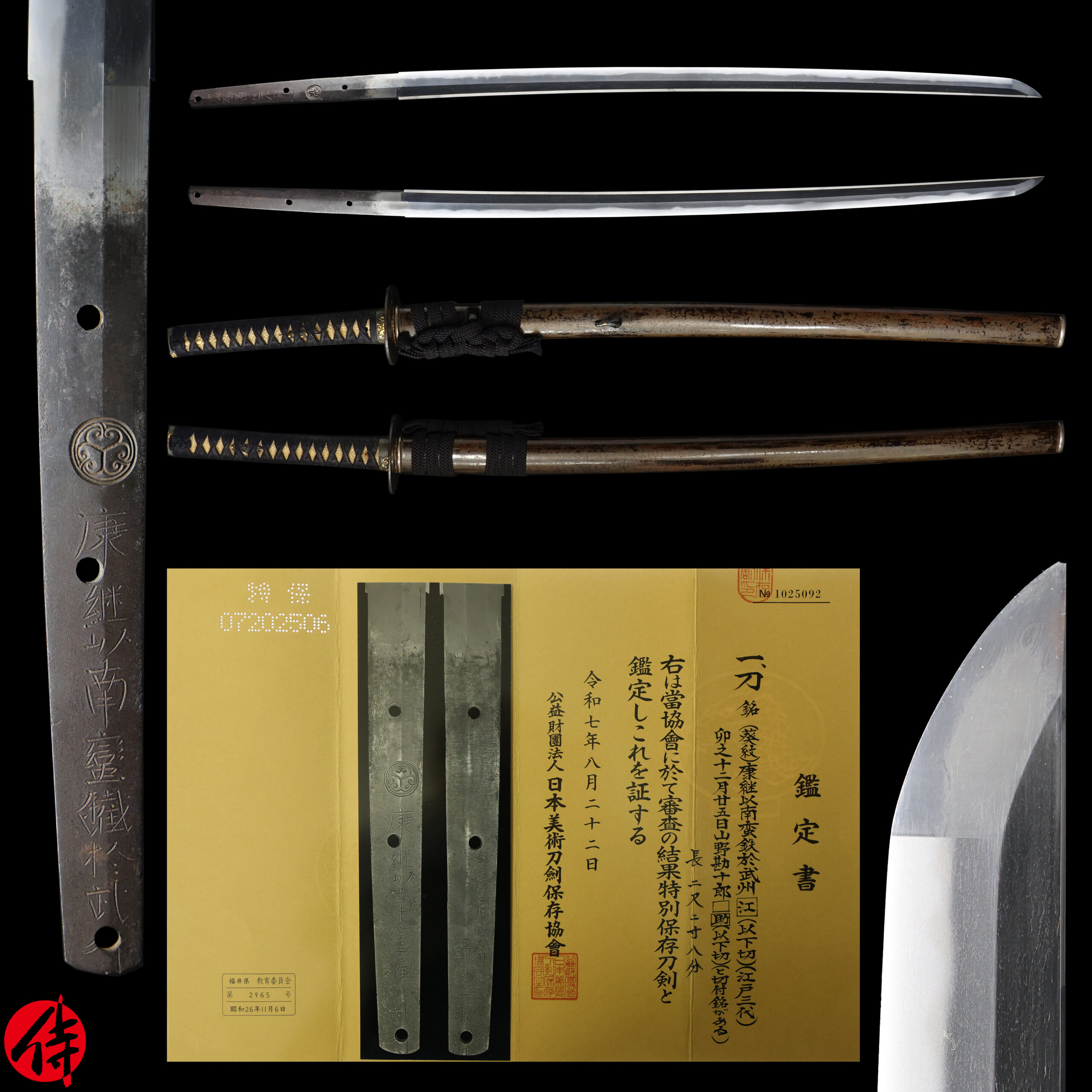
—————————————————————–
【About us】
Samurai Museum is located in Tokyo, Japan, exhibiting antique artifacts related to the Samurai history. Samurai Museum Shop is the place for those who are interested in Japanese culture and craftsmanship. We deal with antique Samurai swords/armor, traditional crafts made in Japan and so on.

【Japanese Sword& Export Process】
The Japanese swords we deal with are hand-forged edged swords made in Japan. It was made from the traditional carbon steel called TAMAHAGANE(玉鋼). Samurai Museum is familiar with the proper legal procedure for an antique/ authentic Japanese sword to be exported from Japan. We have sent more than 1000 Japanese swords for the past few years (~2025) to amazing owners who appreciate its historical value.
Each Japanese sword is registered under the Agency for Cultural Affairs and the Board of Education in Japan. They issue a registration paper for each Japanese sword for its owner in Japan to legally possess it. The Japanese sword with its registration paper means it was traditionally hand-forged in Japan.
To legally export the sword from Japan to other countries, we will have to apply for its permit to the Agency for Cultural Affairs(Bunkacho) and return the original registration paper to the Board of Education. It normally takes around 2-4 weeks to receive this permit after submitting required documents. And we would like you to expect at least 1-1.5 months for your order to arrive at your given address after you ordered. For more detailed info, please click here.
It is allowed for residents in Japan to own authentic Japanese swords without a special license as long as they come with registration papers. Please feel free to contact us if you are a resident of Japan, whether temporarily or permanently. We will also assist you when you leave Japan and need to obtain the export permit.
【Payment Method】
We accept payment through Stripe (Credit card), PayPal, Apple Pay or ChromePay, all of which are secure payment methods. Also, you don’t need to make an account on Stripe for the checkout. If you prefer other payment method, please contact us. After confirming your payment, we will apply for an export permit. You may either pay in JPY, USD, AUD, CAD,EUR CHF or GBP. The price is set in Japanese Yen. Prices in other currencies are automatically calculated based on the latest exchange rate.

* If the amount is above 1 million JPY, Stripe or wire transfer will be the only options for payment.
【Shipping】
We have shipped authentic Japanese swords to the USA, Canada, Mexico, Germany , Belgium, France, Finland, UK,Hong Kong, Australia. If you don’t live in these countries and like to order, please contact us first before making a purchase. We offer Free International Shipping as long as we can send antique Japanese swords by EMS.
We normally ship by EMS(Express Mail Service) provided by Japan Post. We will send you a tracking number for your order as soon as we hand it to the post office. We will put 100 % insurance on the shipping document without any extra charge. Based on the total amount, there might be a duty tax or other fee for you to pay, depending on the countries. We use package cushioning to protect the item and put it in a PVC pipe, which is one of the most secure packages because of its durability.
It will normally takes 5-14 days for the item to arrive at your given address after we dispatch it. Time of delivery is estimated as accurately as possible by the carrier but does not take into account any delays beyond our control such as by inclement weather, post office holiday seasons.
* If you live in Australia and like to purchase an authentic Japanese sword, please click here to know the detail.
* If you live in the UK and like to purchase an authentic Japanese sword, please contact us first and click here to know the detail.

【Review】
Here is one of the reviews we received from a customer who purchased an authentic Japanese sword from us. For more reviews, please click here.
“My experience overall with the whole process was wonderful. I had many questions about the history and process to purchase these treasures. All my questions were answered very timely and complete. The staff is very knowledgeable and very well versed if any questions do arise.”
【How to make sure the condition】
Please keep in mind that what you are going to purchase is an antique item. We uploaded high resolution photos for you to check its condition thoroughly. If you like to see more photos with different angles, please feel free to contact us. We will be happy to send them to you so that you can make informed decision. It is essential for us to know that you are happy with your choice of a sword. and we are prepared to use the best of our ability to serve you.
【How To Contact Us】
Please contact us through email, Facebook Messenger or Live Chat if you have any questions. You can find each icon on the right side of the website. Please click one of them to reach us. We will reply to you within 1-2 business days.
【The Art of Nihonto (Japanese Sword)】
Samurai’s history is a profound, eloquent legacy of ancient Japanese warriors in which millions of people worldwide are being fascinated. If you like to find out the art of Nihonto, please click here.
【A Guide to Japanese Sword Maintenance】
After acquiring an genuine Japanese sword, it is also important to know how to take good care of it. Here is the special video for you. Mr. Paul Martin, Japanese sword expert, shows you how to give proper maintenance to your sword. By mastering how to clean the Japanese sword, its aesthetic beauty will last forever.
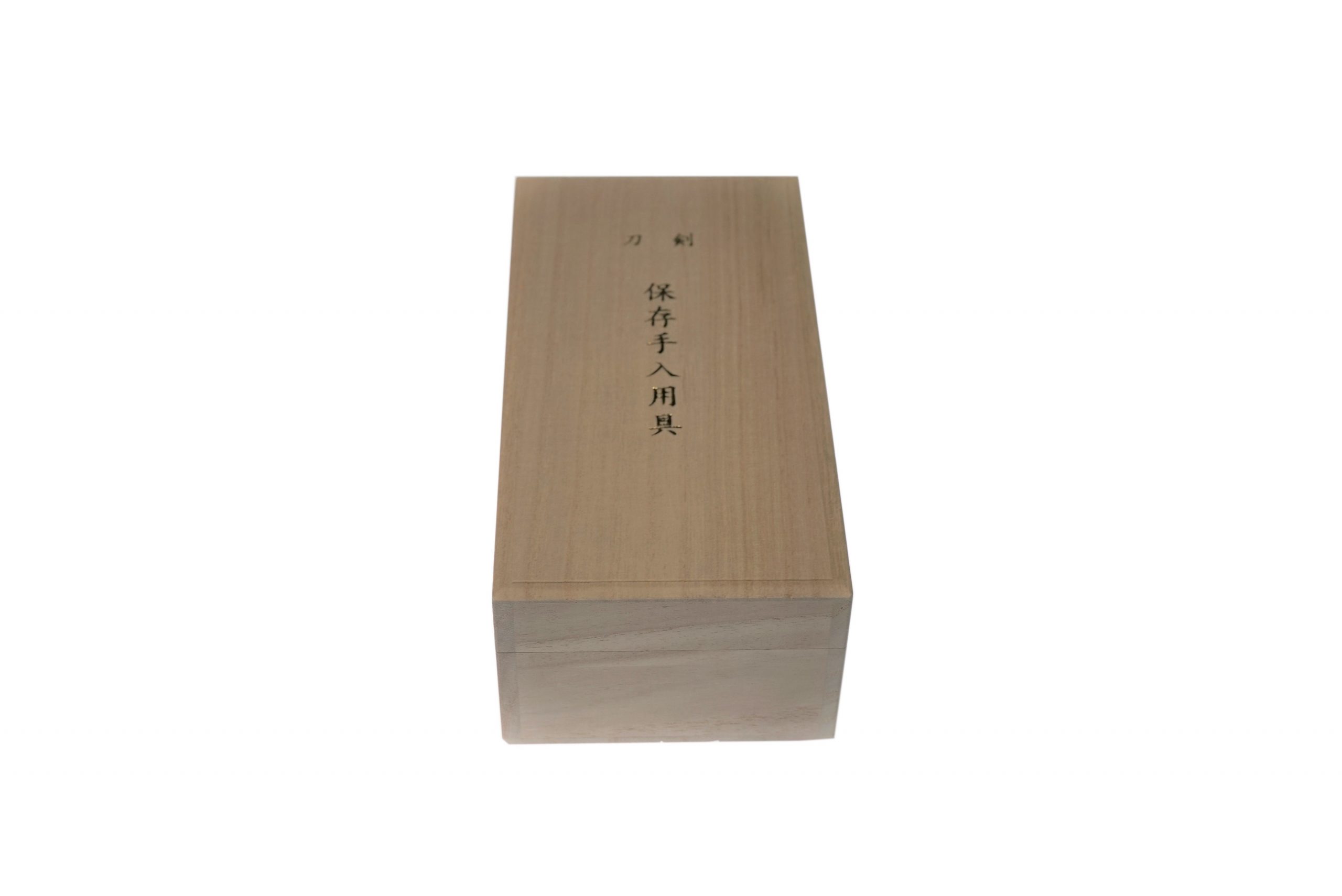
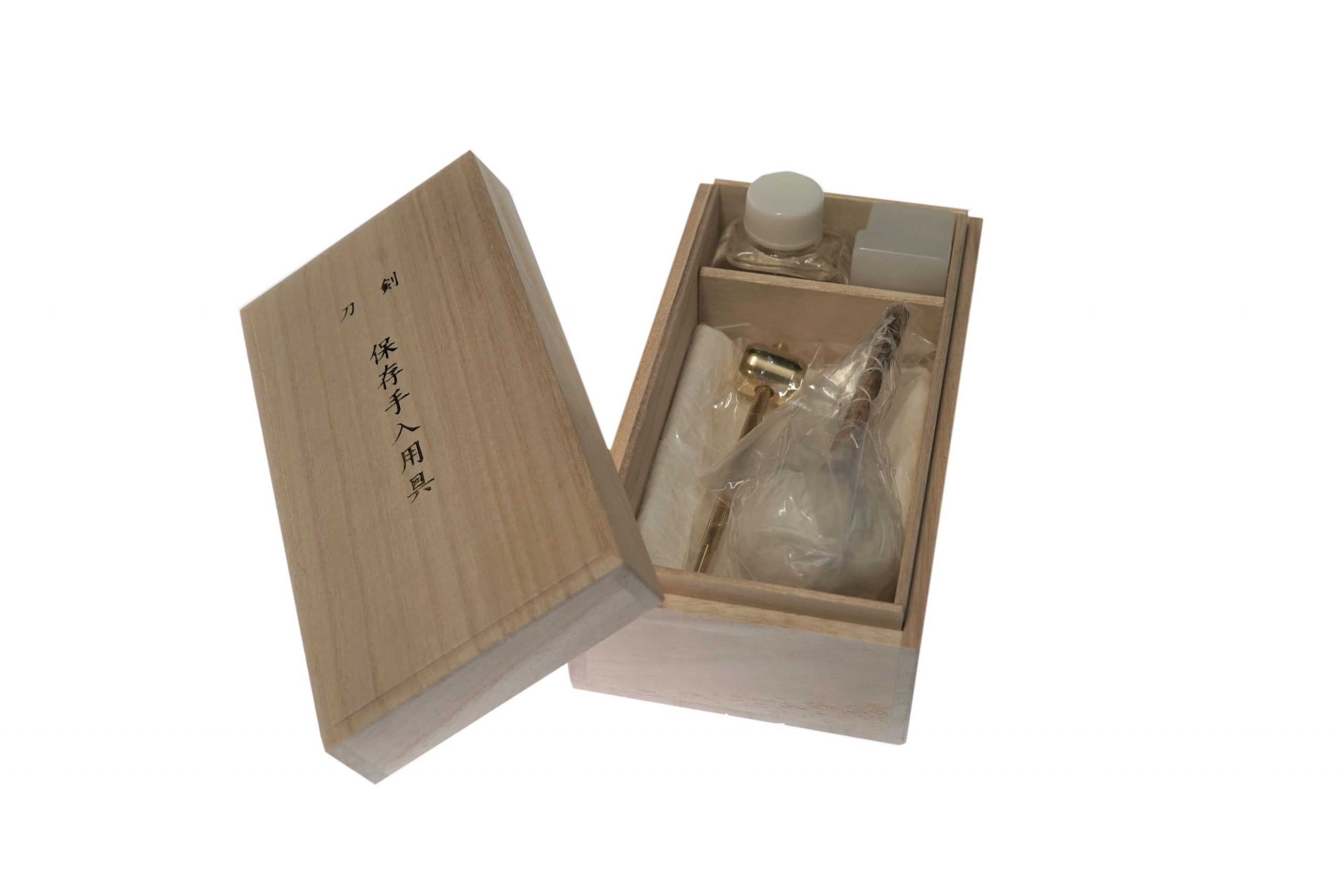
When you purchase a Japanese sword from us, you can get a Free Japanese sword maintenance kit. It comes with four tools(Choji Oil, Uchiko Whetstone Powder, Peg remover, Oil Applicator). By watching the video instruction above , you can enjoy learning how to maintain your Japanese sword while appreciating it. If you have any difficulty assembling the sword or cleaning the blade, you can feel free to contact us.
MORE ANTIQUE JAPANESE SWORD FOR SALE
SWORDS WITHOUT CERTIFICATES FOR SALE
LEARN JAPANESE SWORD TERMINOLOGY
Thank you for reading all the information on the page. If you have any difficulty choosing the right Japanese sword for you, we will be more than happy to help you find the one that speaks to you the most. Please feel free to contact us.