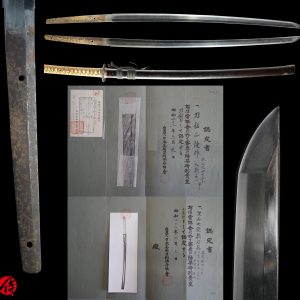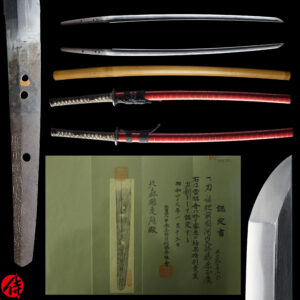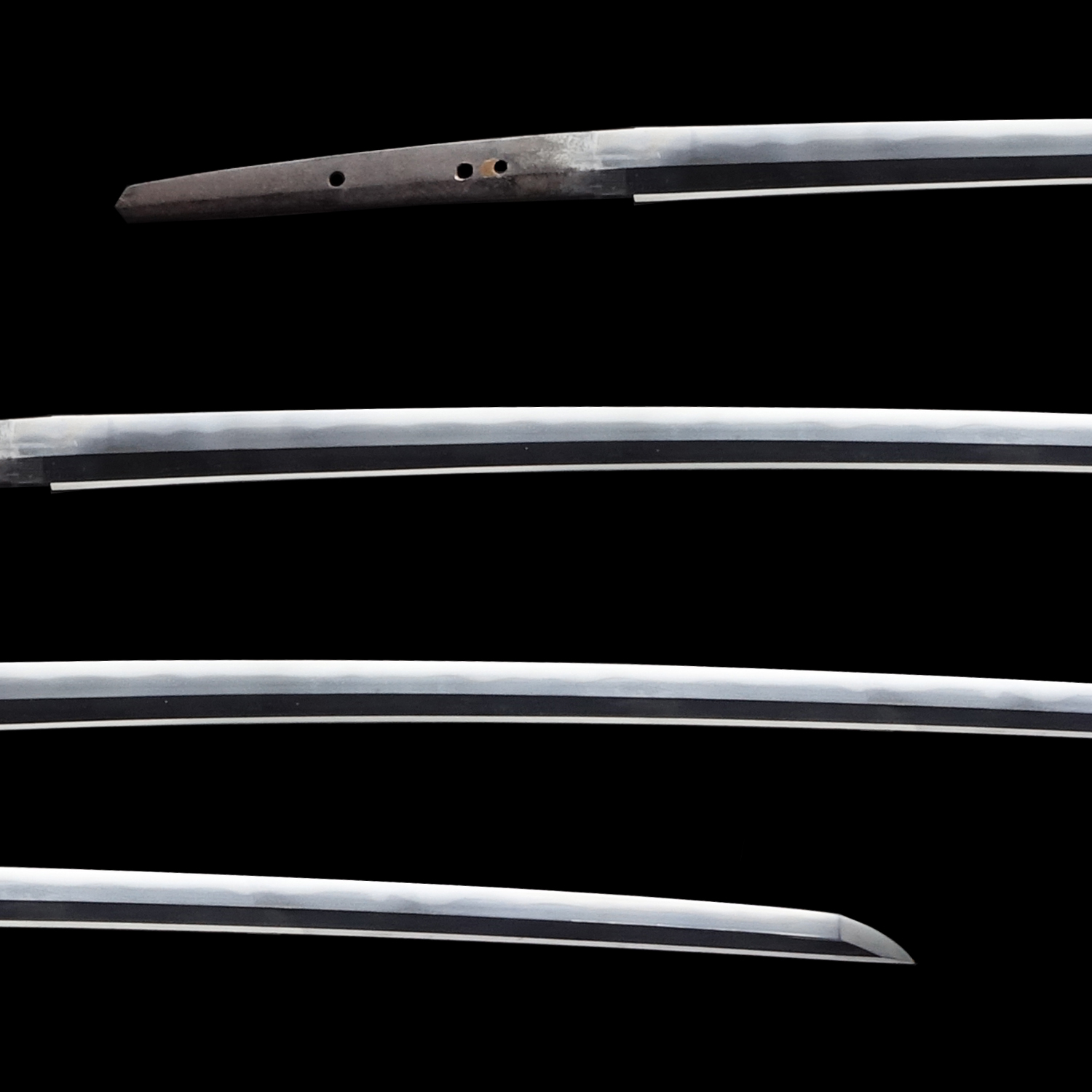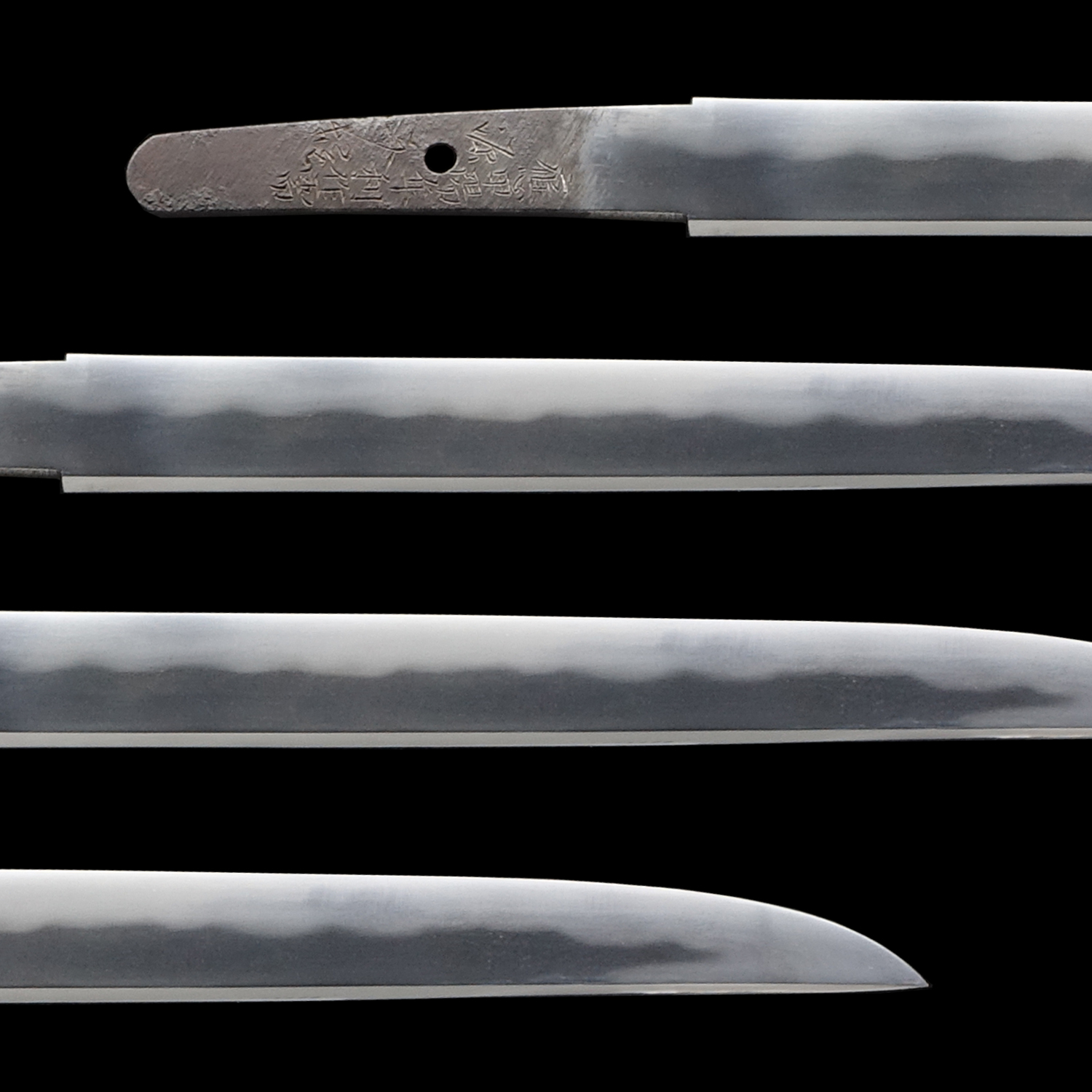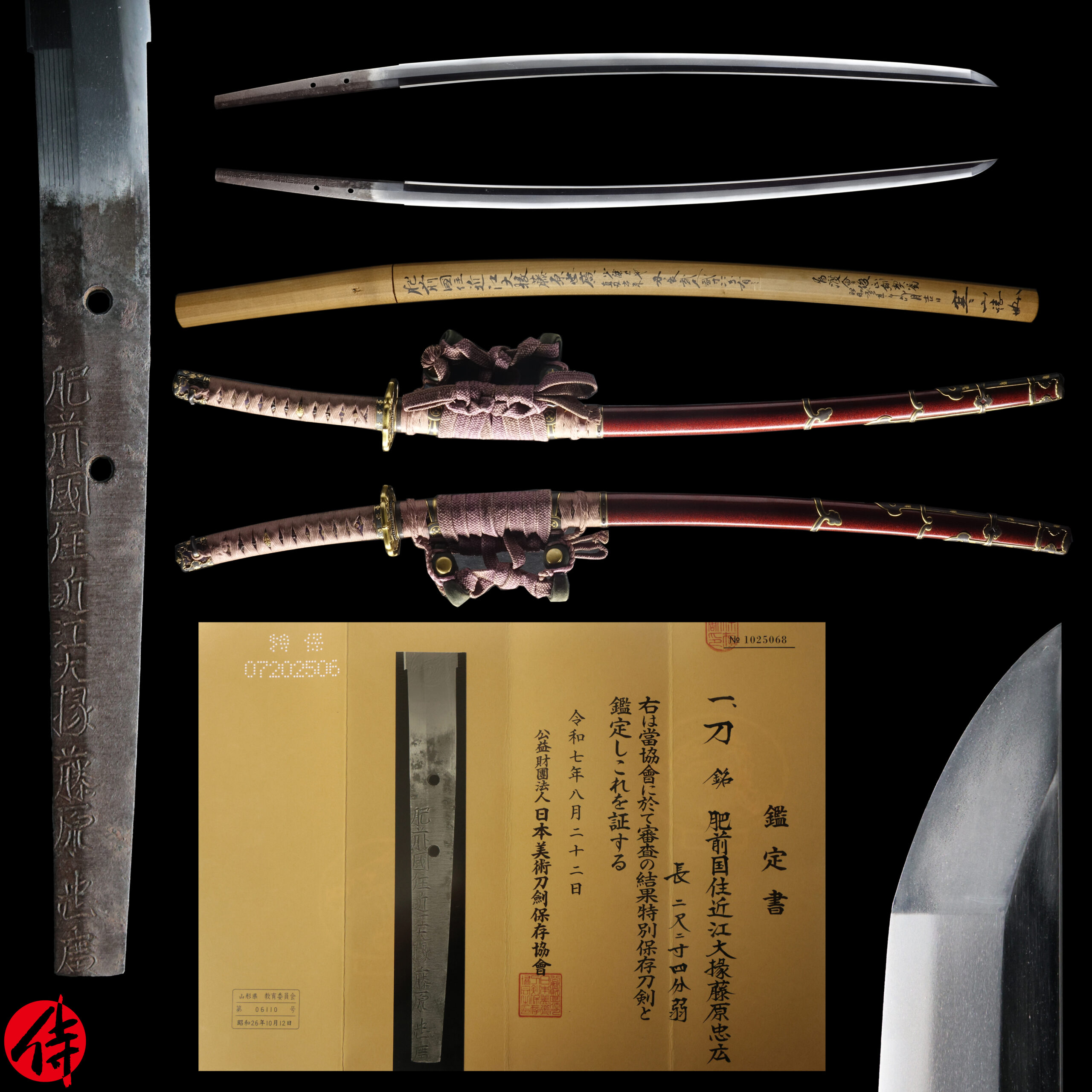
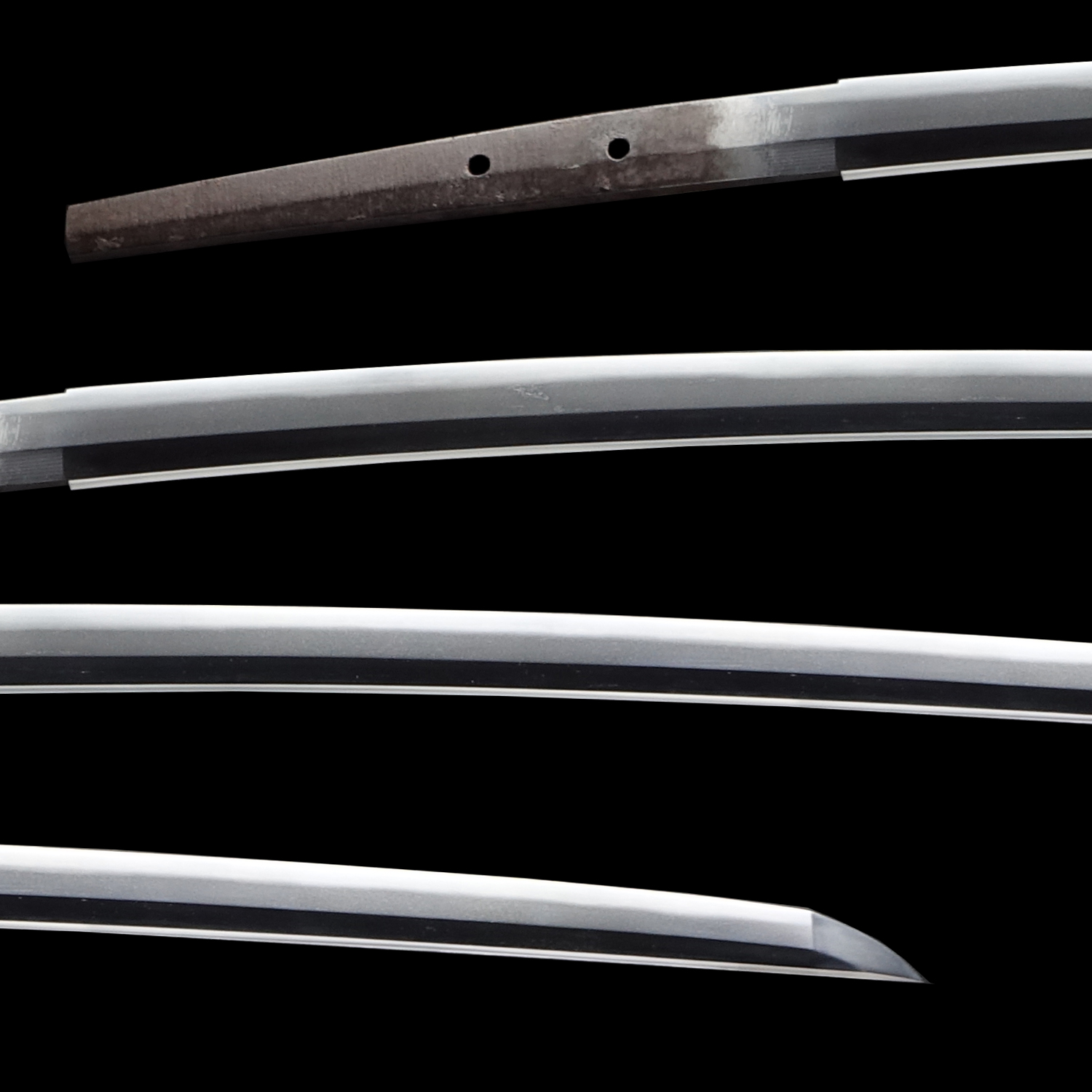
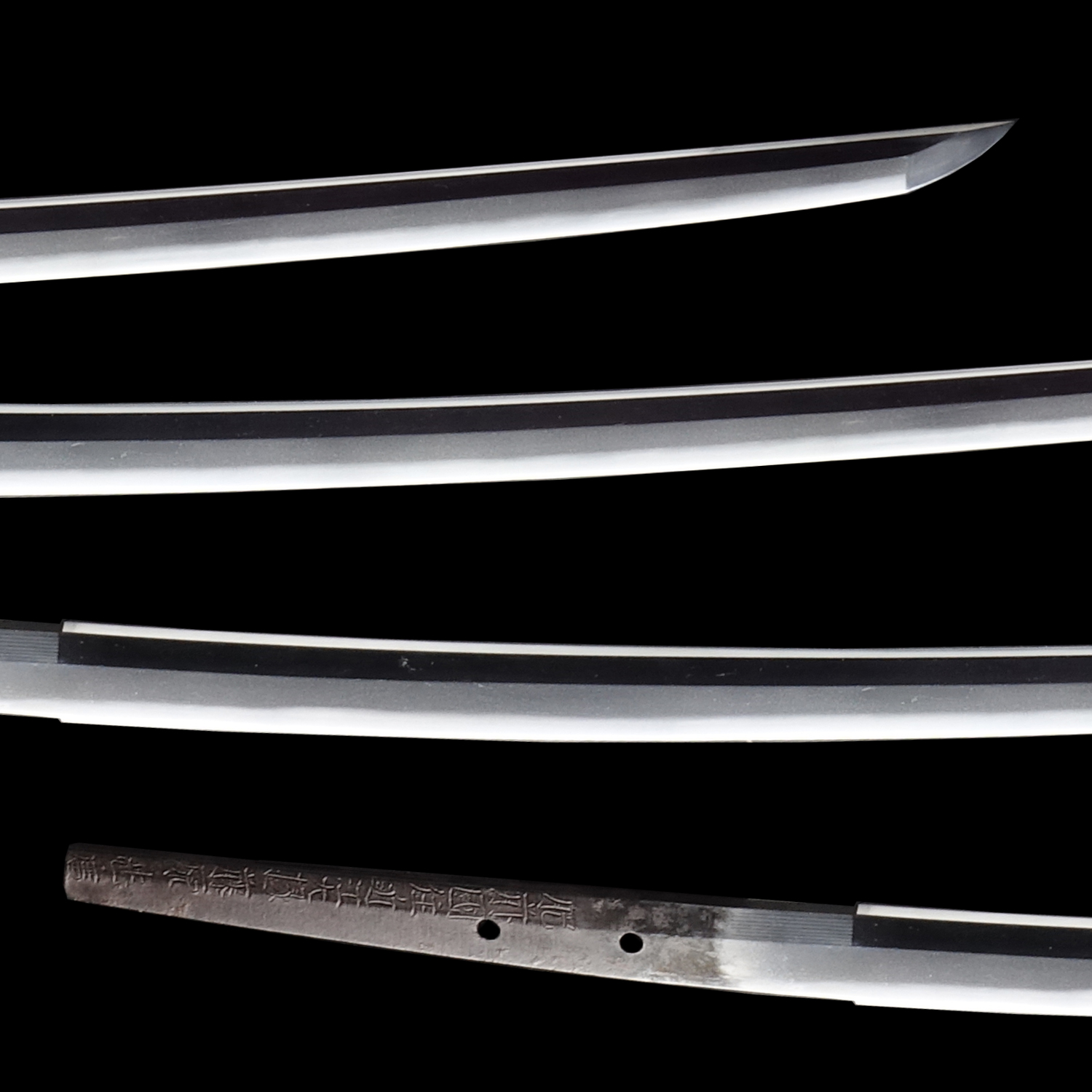

 on the right corner of the photo.
Antique Japanese Sword Katana Signed by Fujiwara Tadahiro with Tokubetsu Hozon Certificate
【Description】
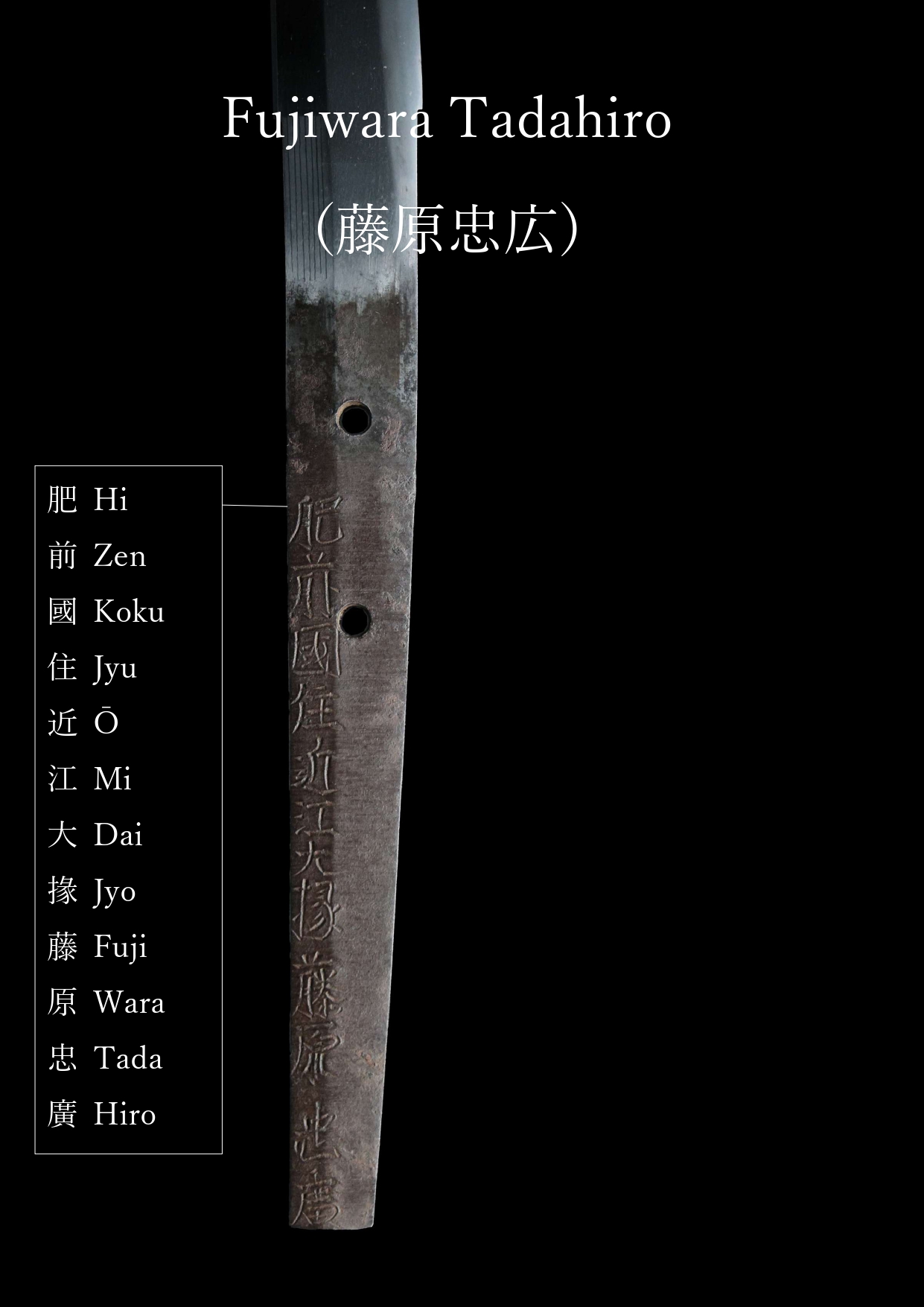
Hizen Koku Jyu Omi Daijyo Fujiwara Tadahiro
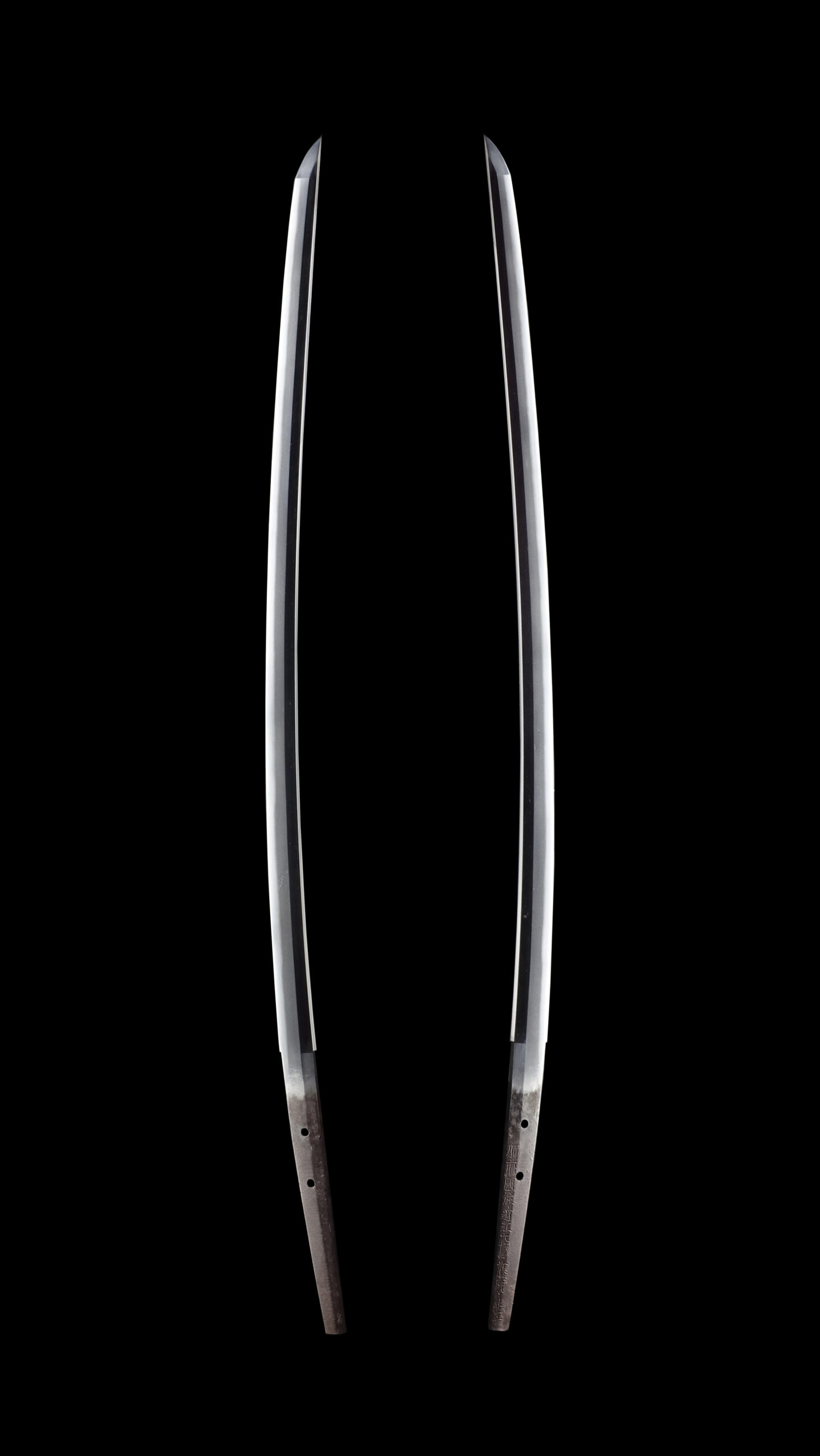
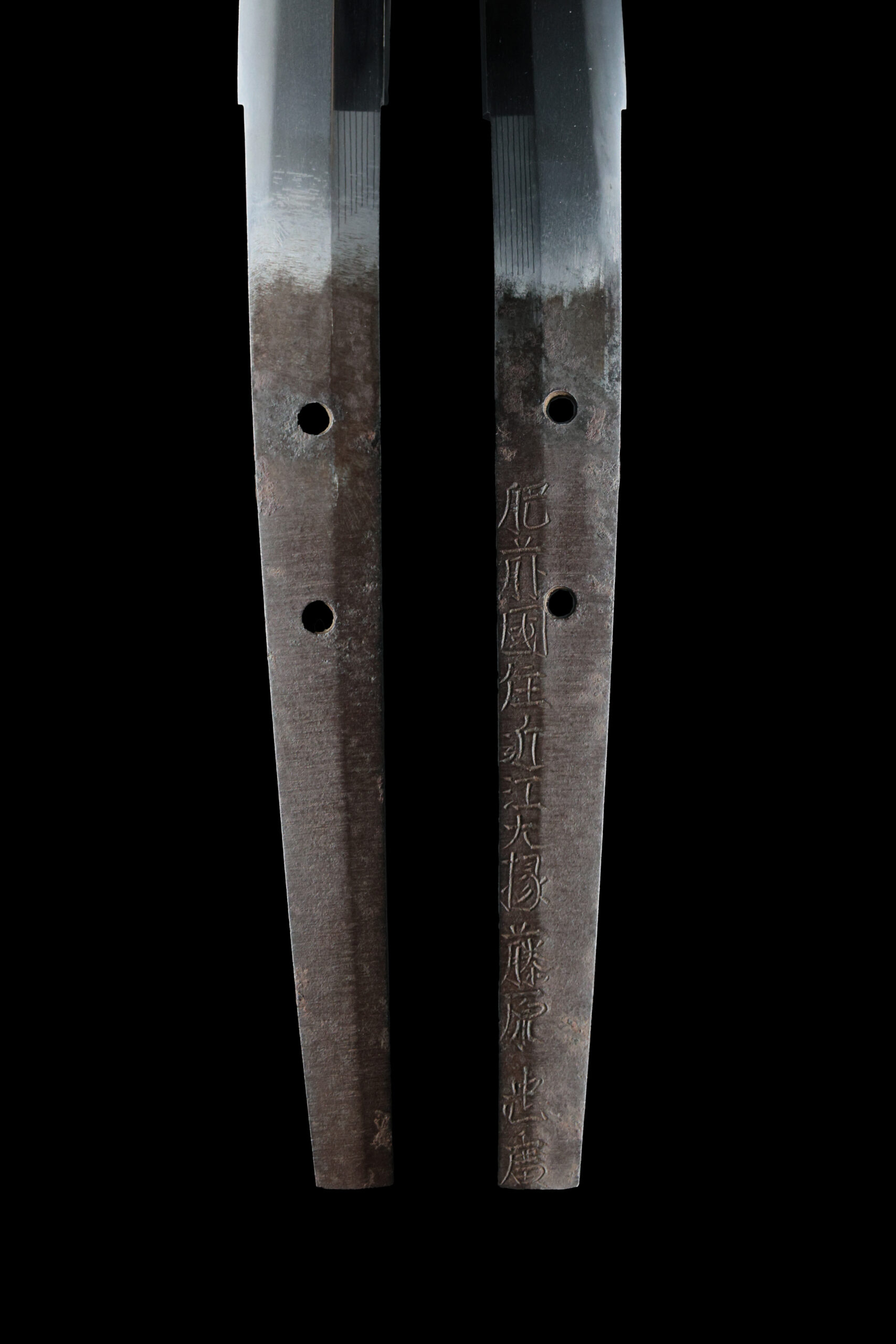
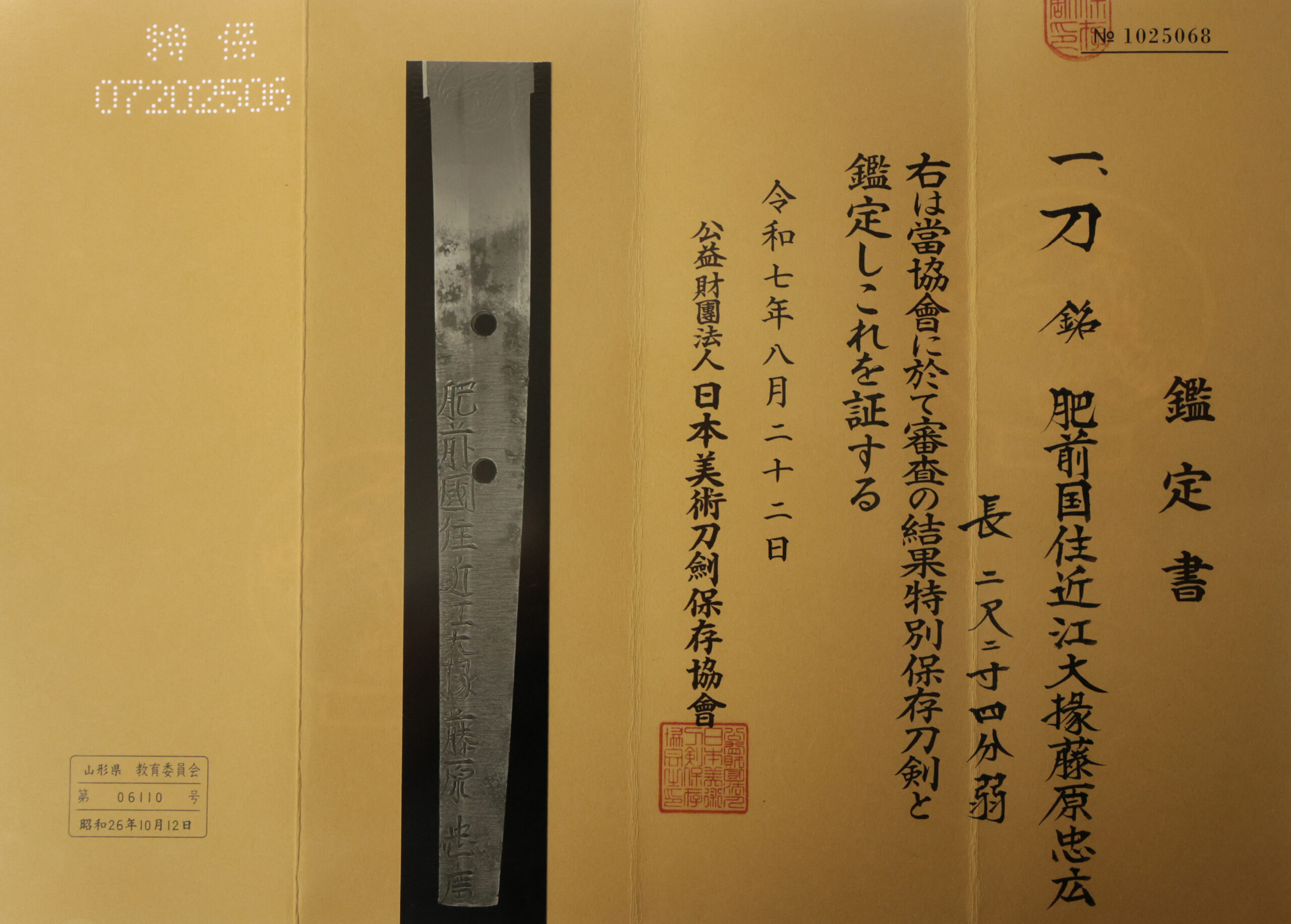
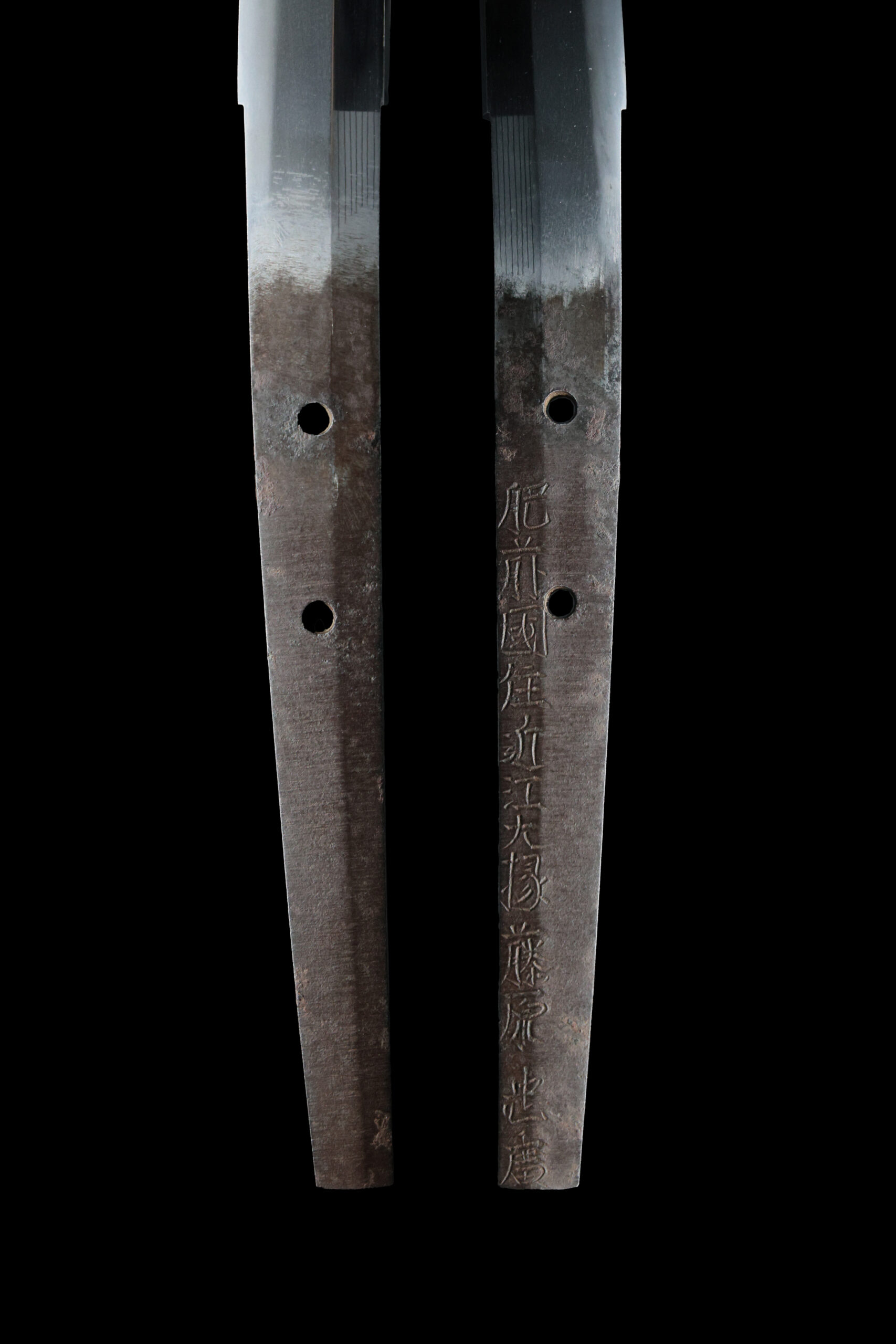
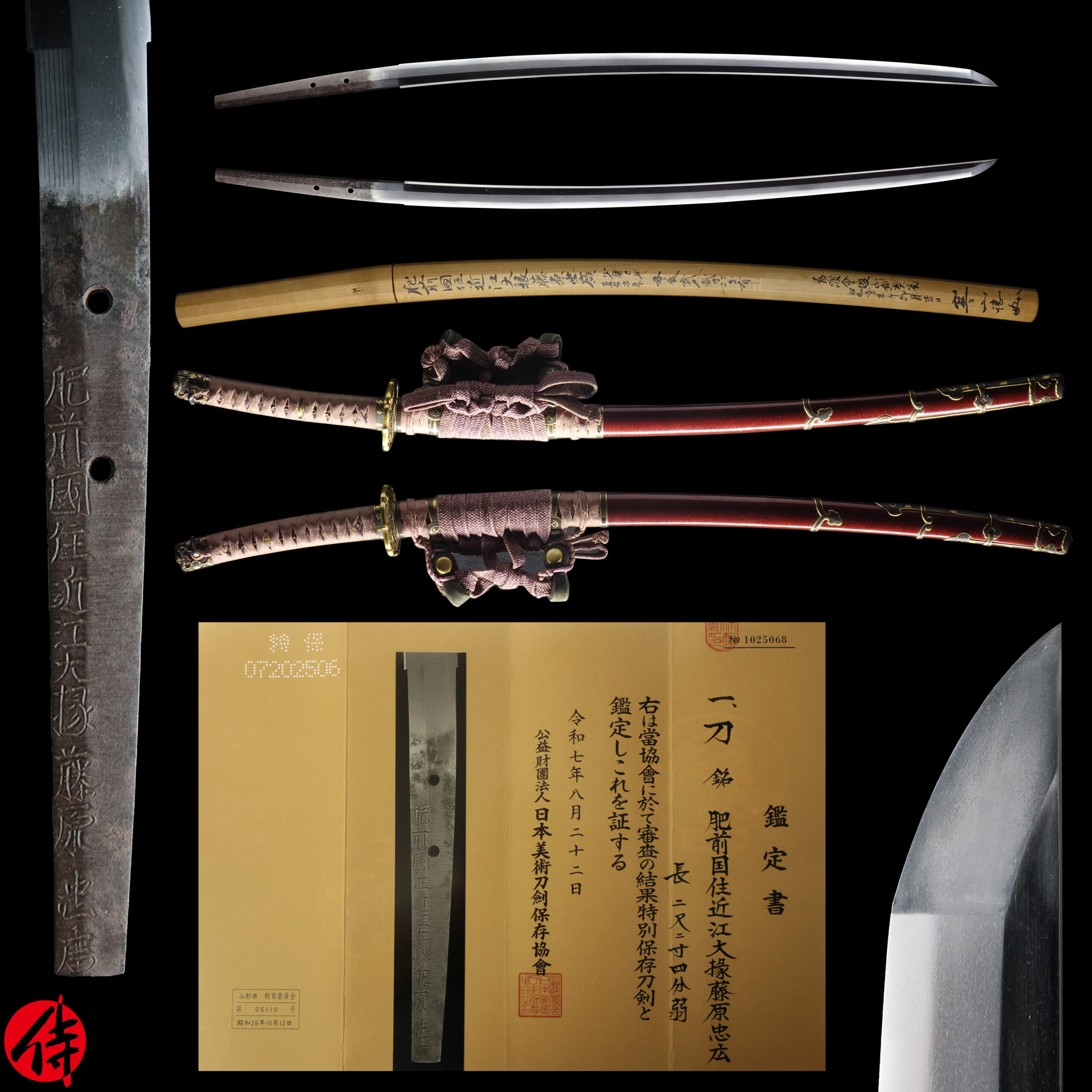
This blade was signed by Hizen Koku Jyu Omi no Daijyo Fujiwara Tadahiro (肥前国住近江大掾藤原忠広), who is the first son of the first-gen Tadayoshi. It is said that Tadahiro was active in sword-forging during 1624-1688 (Early Edo Period).
Tadayoshi (Father) is one of the most famous swordsmiths in the early Edo period and made Hizen province (today’s Saga prefecture) a prominent sword-forging place back then. Tadahiro learned sword-forging techniques under his father’s supervision until Tadayoshi died in 1632 (9th year of the Kan-Ei era).
Tadahiro took over the school his father ran when he was only 19 years old, and he started to make a sword in the same year. This fact indicates that he was excellent at making swords, and the apprentices of his father (Tadayoshi) supported him to run the school. Tadahiro received the title of Omi Daijyo in 1641 (the sixth year of the Genroku era). He kept forging swords for almost 60 years for the Nabeshima clan, strong feudal lords.
Tadahiro died at the age of 81 in 1693 and left a large number of excellent swords before his decease. He had many famous apprentices, such as the third-gen Mutsu Daijyo Tadayoshi, Harima Daijyo Tadakuni, and Kawachi Daijyo Masahiro.
Fujiwara Tadahiro and other swordsmiths in the Hizen province worked under the auspices of Nabeshima clan. The swordsmiths in Hizen province were able to produce beautiful Jigane-patterned blades, also known as Hizen To, using and mixing carbon steel made in Netherland.
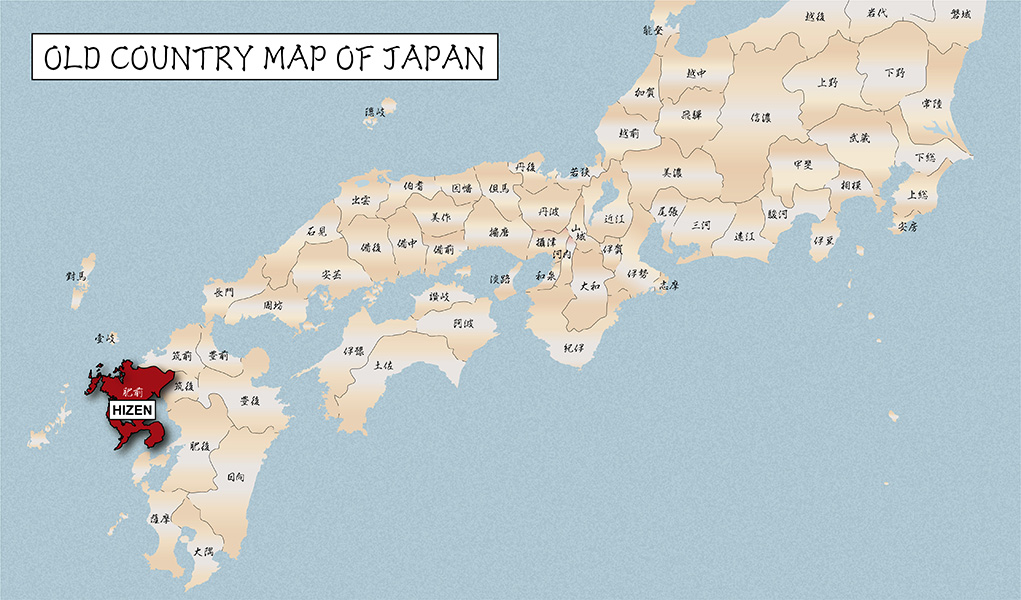
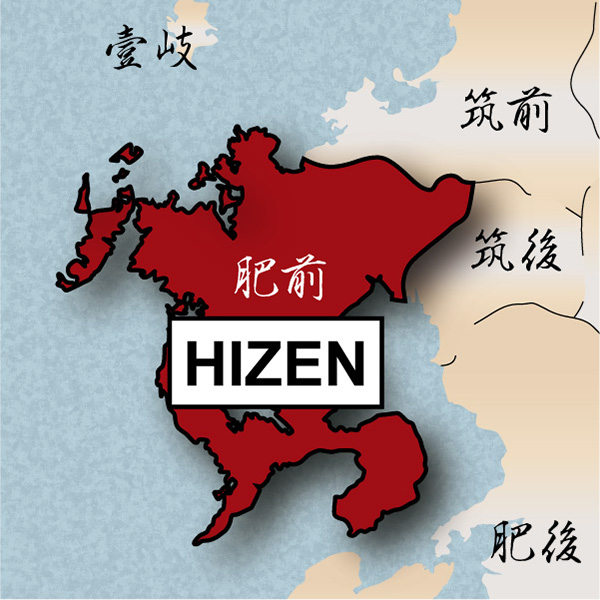
The first-gen Tadayoshi (His father)
The first-gen Tadayoshi was born and raised in the Saga domain. In 1596, under the domain’s order, he went to Kyoto to learn the sword-forging technique from Umetada Myojyu(埋忠明寿), one of the greatest swordsmiths in the early Edo period. He improved his craftsmanship and returned to the Saga domain two years later (1598). The first head of the Nabeshima clan, Nabeshima Katsushige, appreciated the work of the first-gen Tadayoshi very much. Then, Katsushige appointed him as his Okakaekaji, a swordsmith who exclusively forged swords for a specific domain or clan. And Tadayoshi started to stay near Saga castle, which is the headquarter of the Nabeshima clan. And, he founded Hizen Tadayoshi school, which trained more than 100 swordsmiths during the Edo period. Tadahiro is one of them.
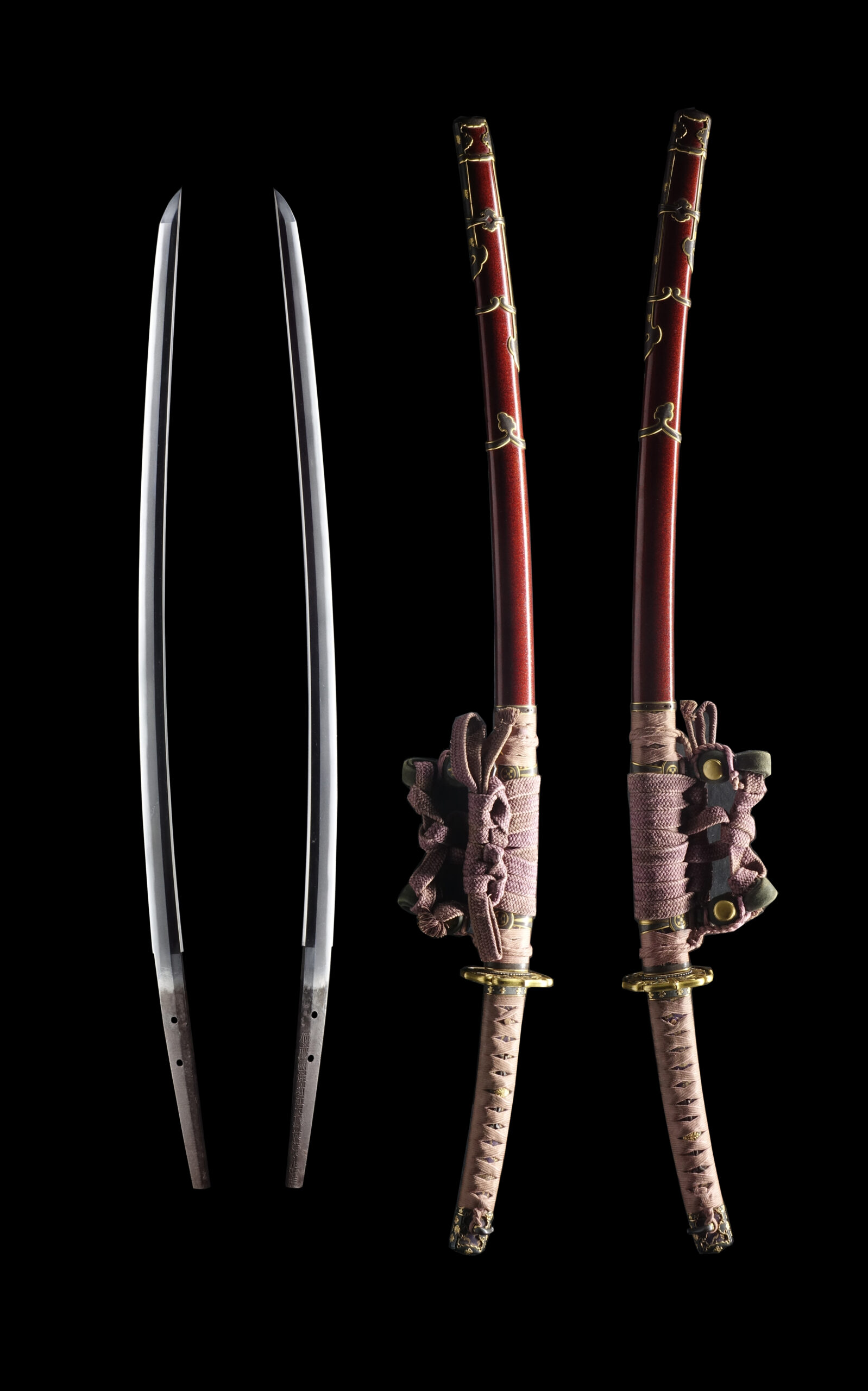
Tachi Koshirae
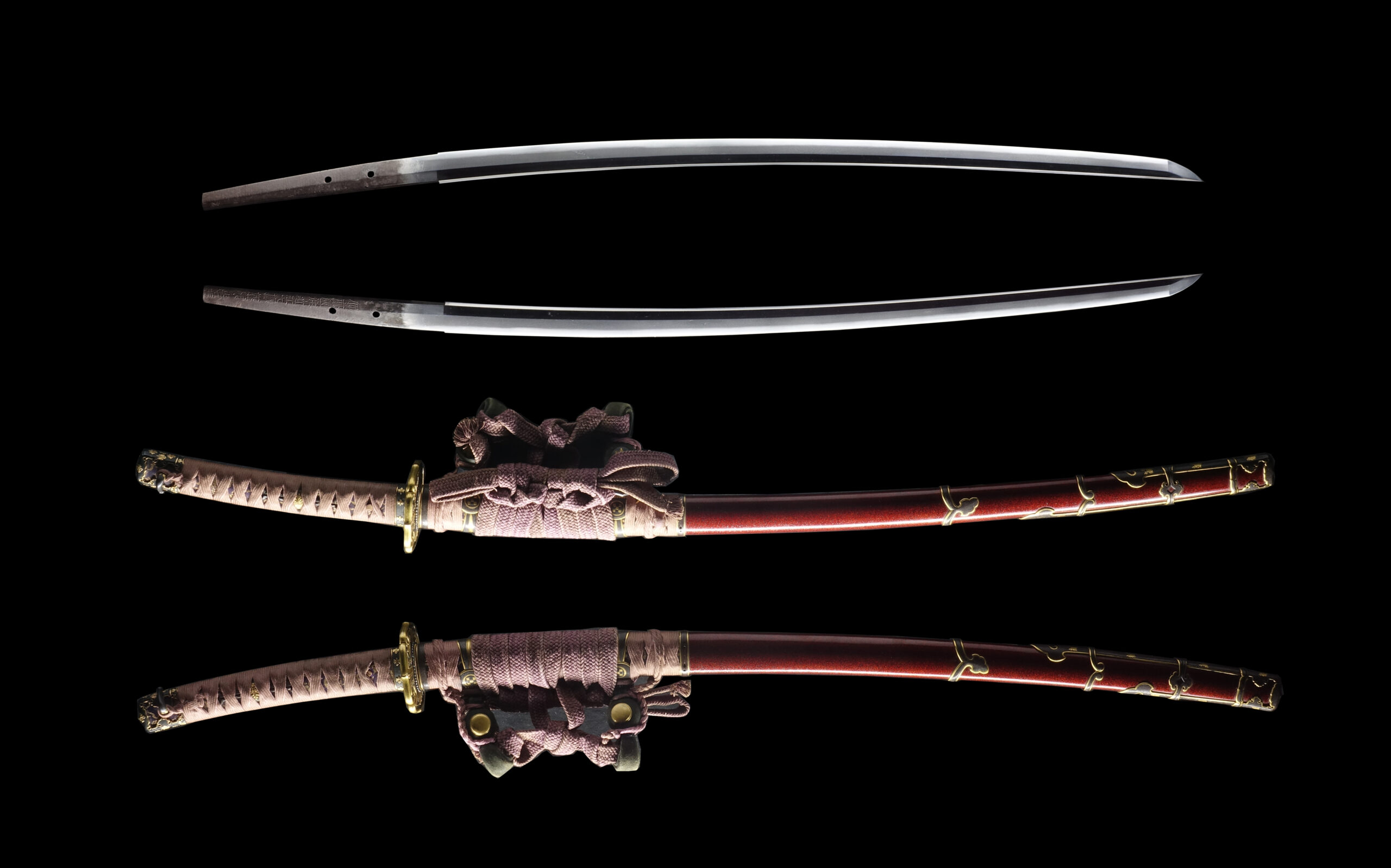
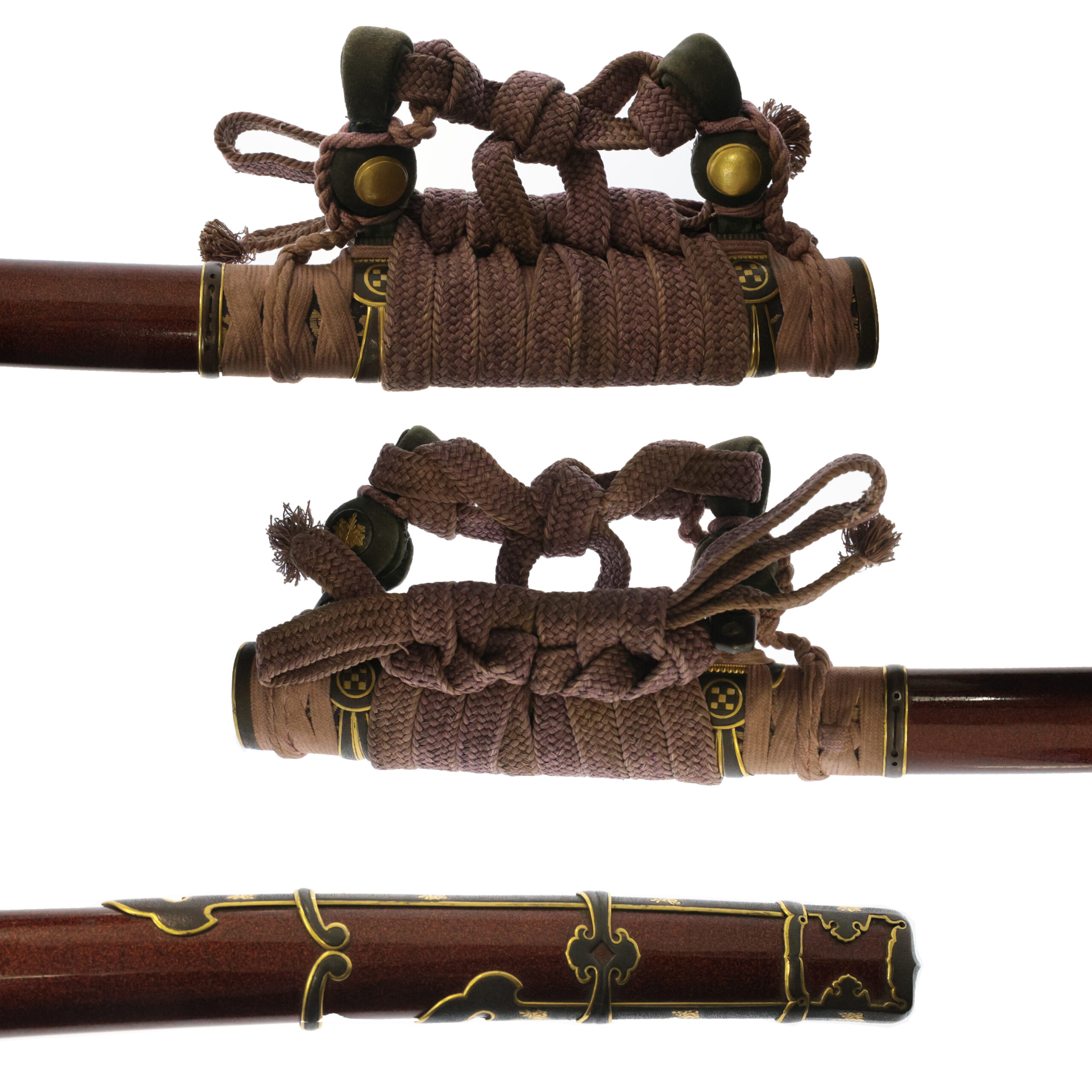
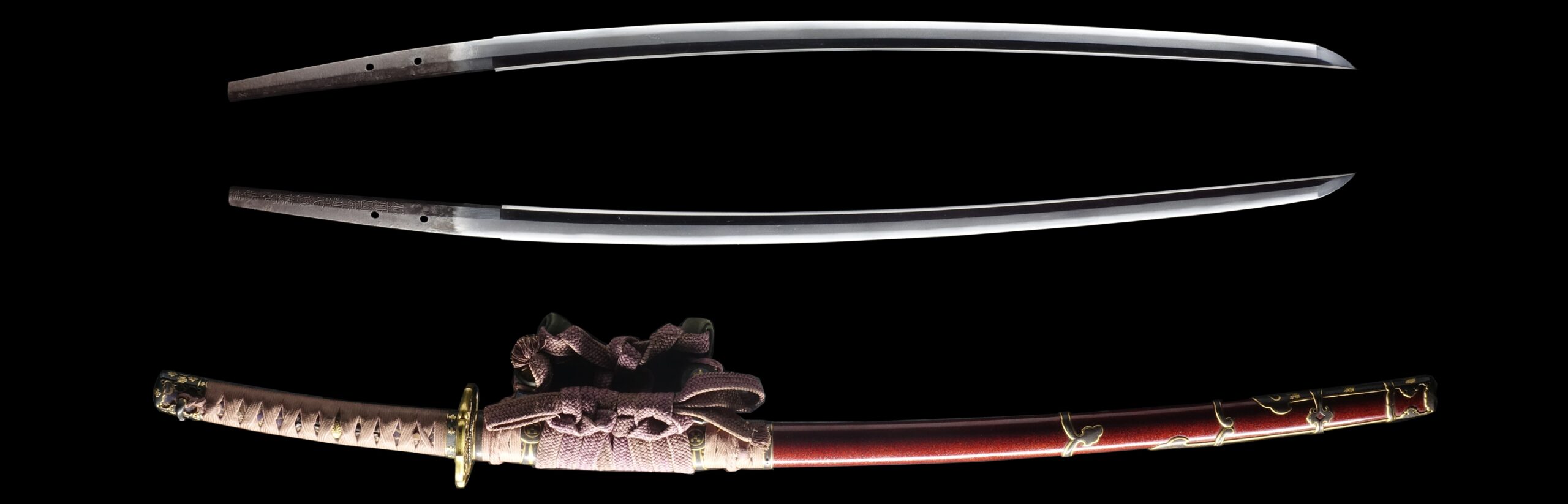
This blade is stored in Tachi(太刀) Koshirae. Tachi was mainly used by an armored Samurai with one hand on horseback from the Heian period (794-1185 A.D.) until the early Muromachi period. TACHI was suspended loosely on the left waist with its edge facing the ground so that you could draw it faster to cut down soldiers on the ground. Because of its gorgeous looking, having a Tachi-style sword mounting became a social status among Samurai.
It is appraised as a Tokubetsu Hozon Token (特別保存刀剣) issued by NBTHK (Nihon Bijutsu Touken Hozon Kyokai:日本美術刀剣保存協会). This authentication paper was only given to authentic Japanese swords, especially well preserved and high quality with artistic value.
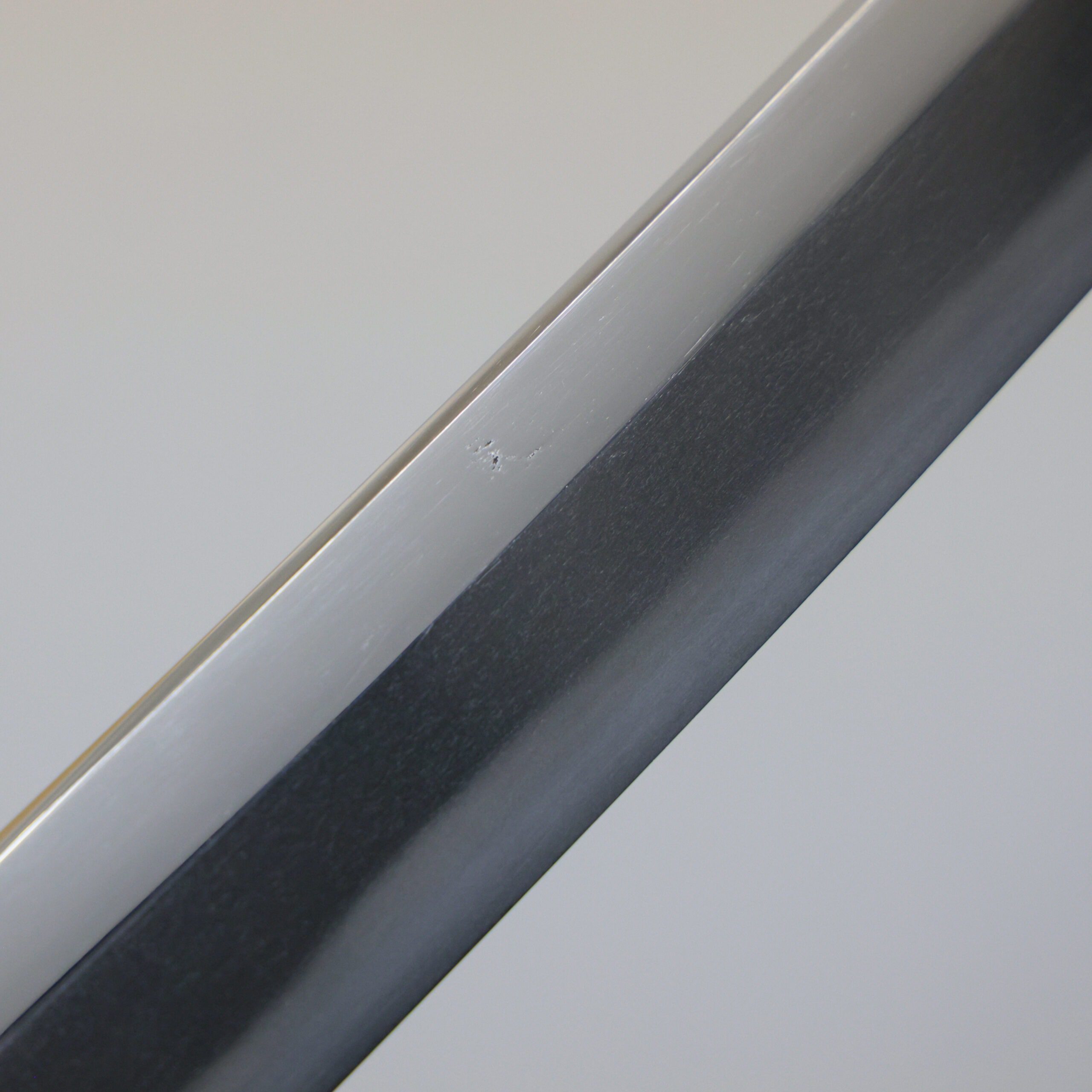
*Please keep in mind that there is a couple of Kitae Kizu on this blade. If you like to know the detailed condition, please feel free to contact us.
【Blade】
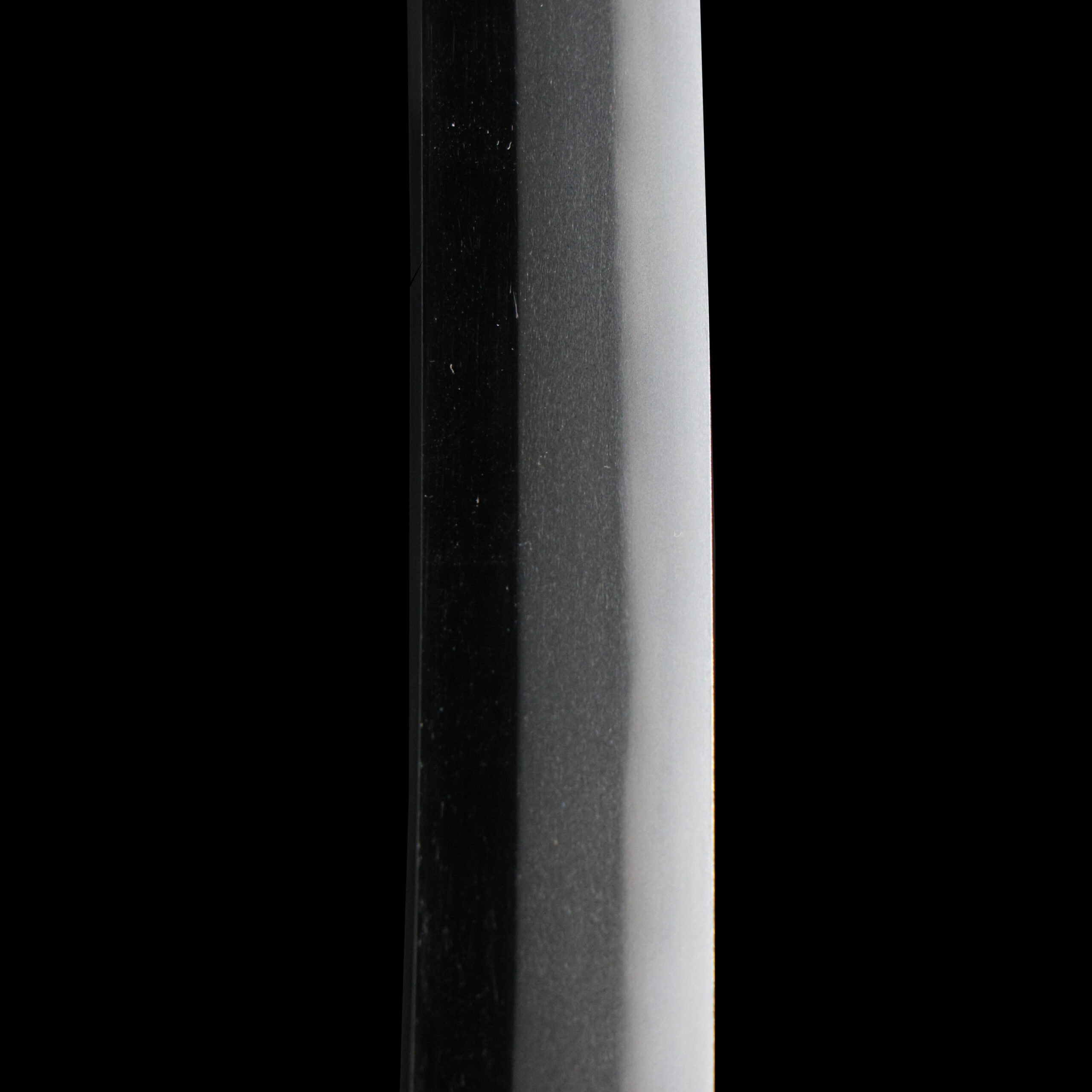
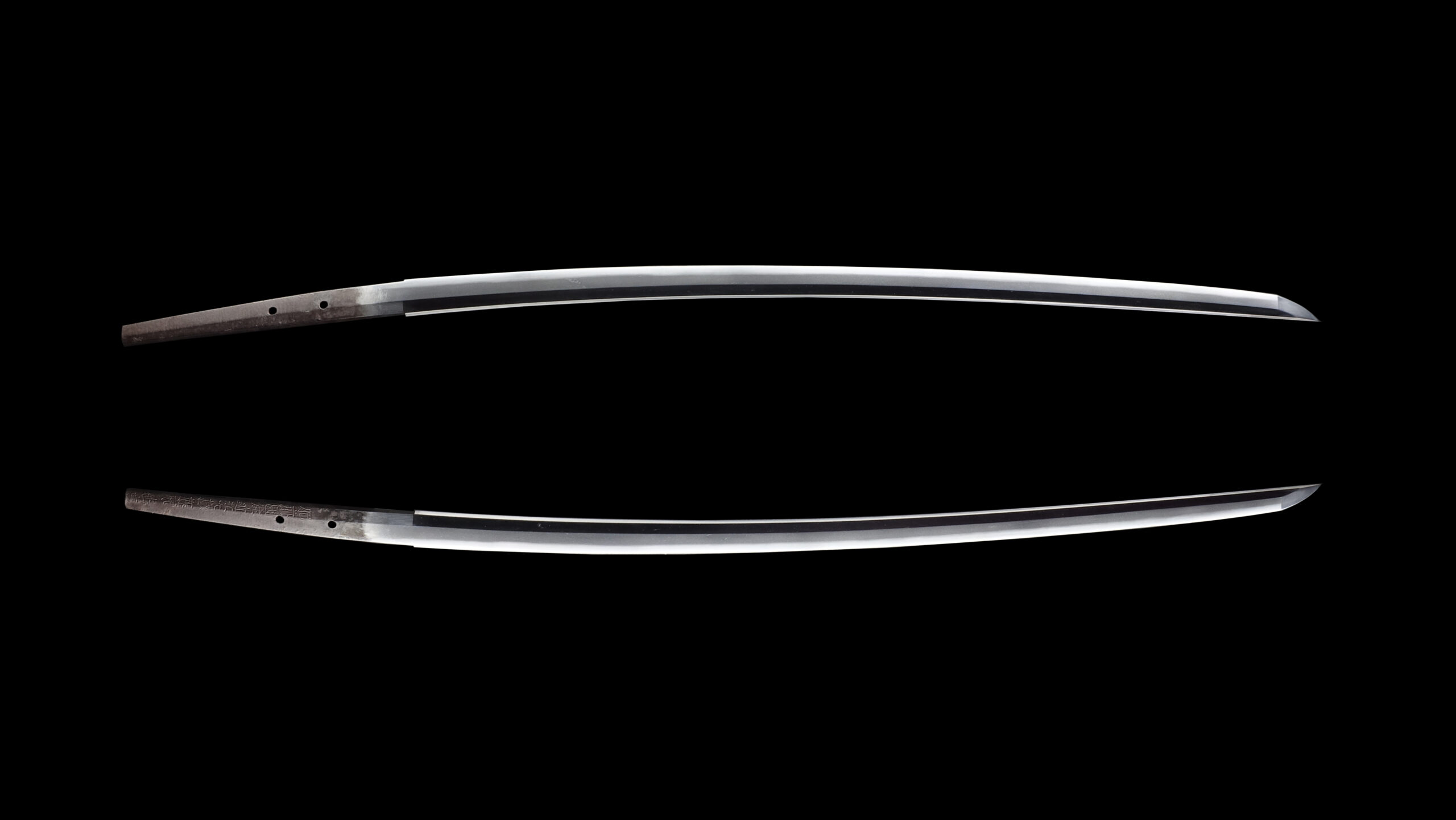
Cutting Edge Length(Nagasa):67.8 cm (26.6 inches)
Curvature(Sori): 1.8 cm (0.70 inches)
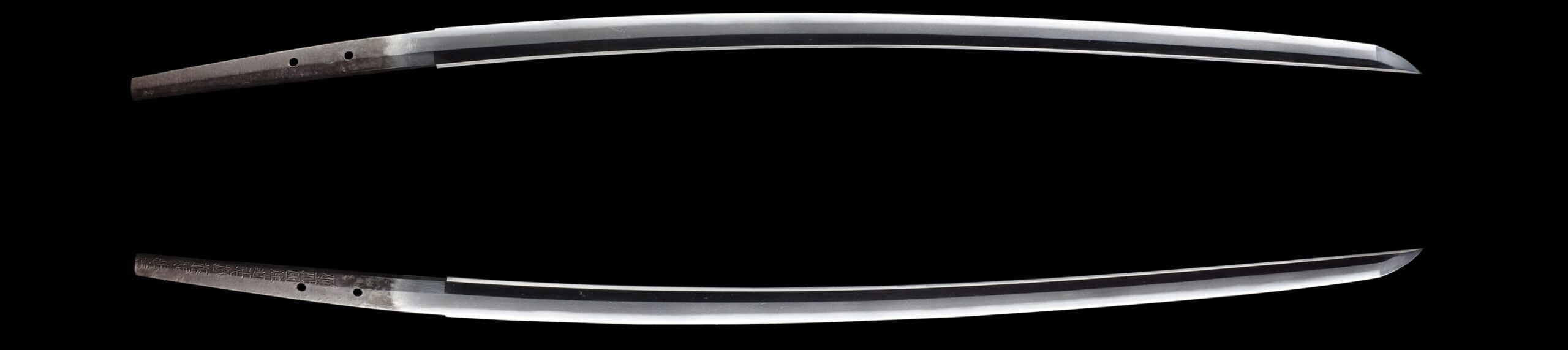
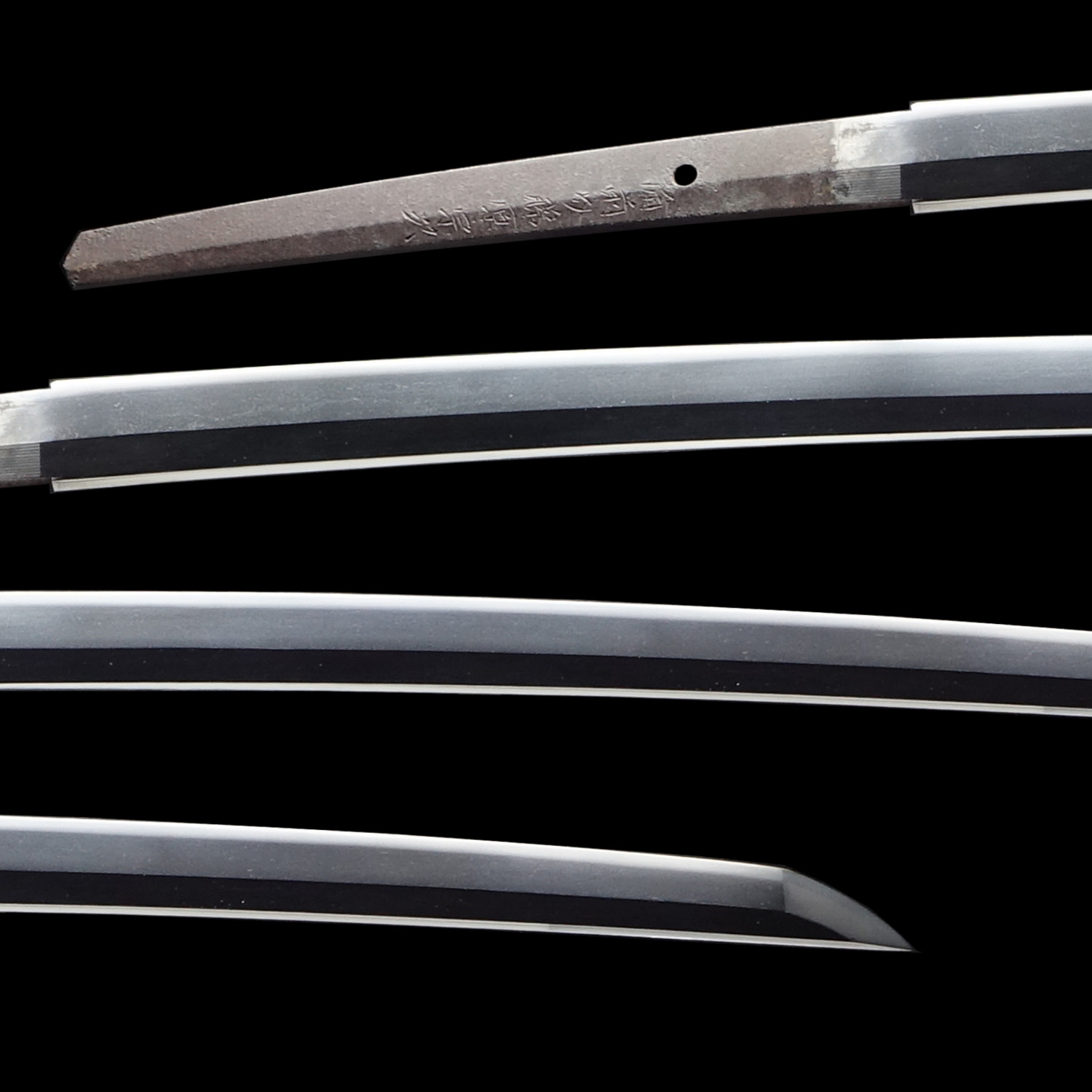
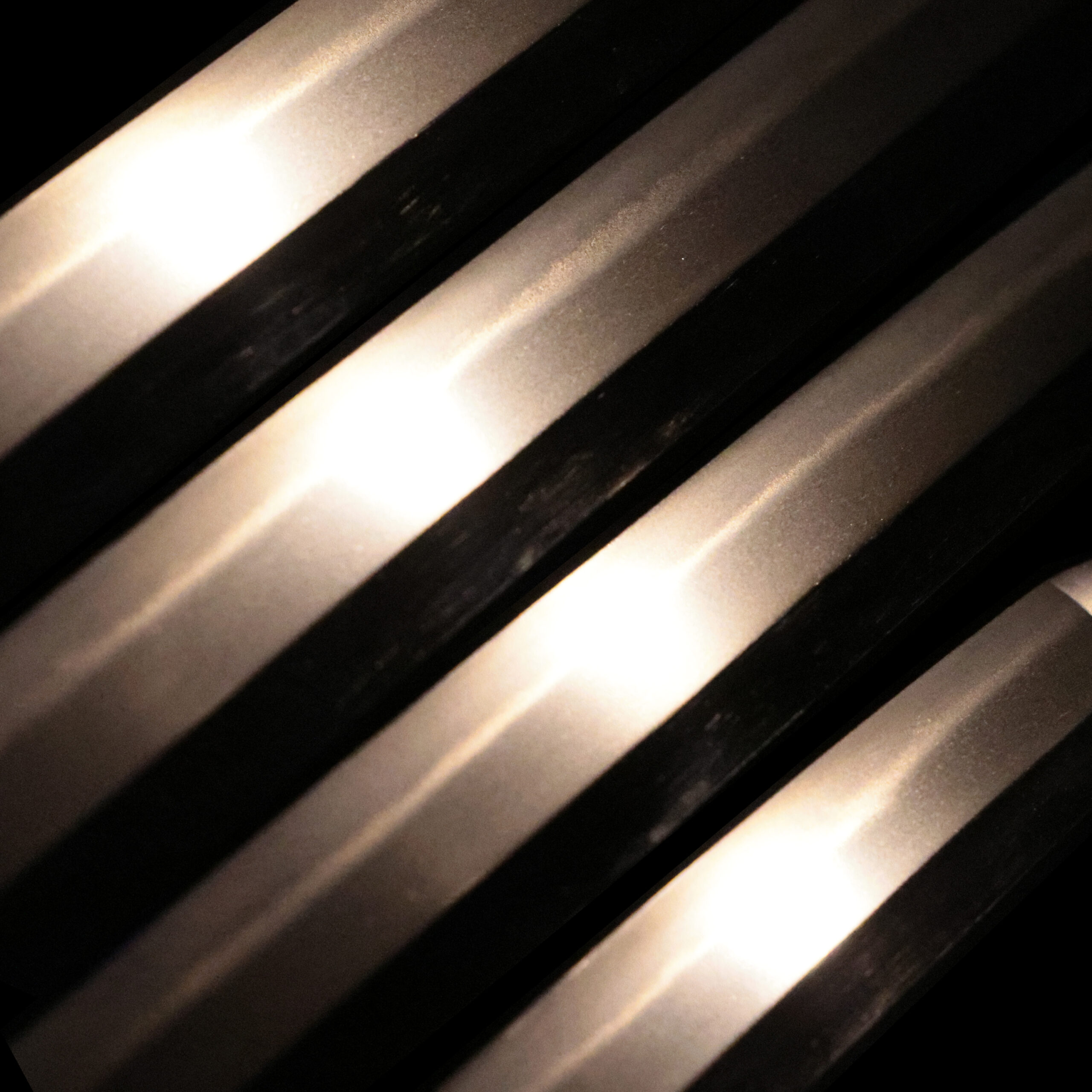
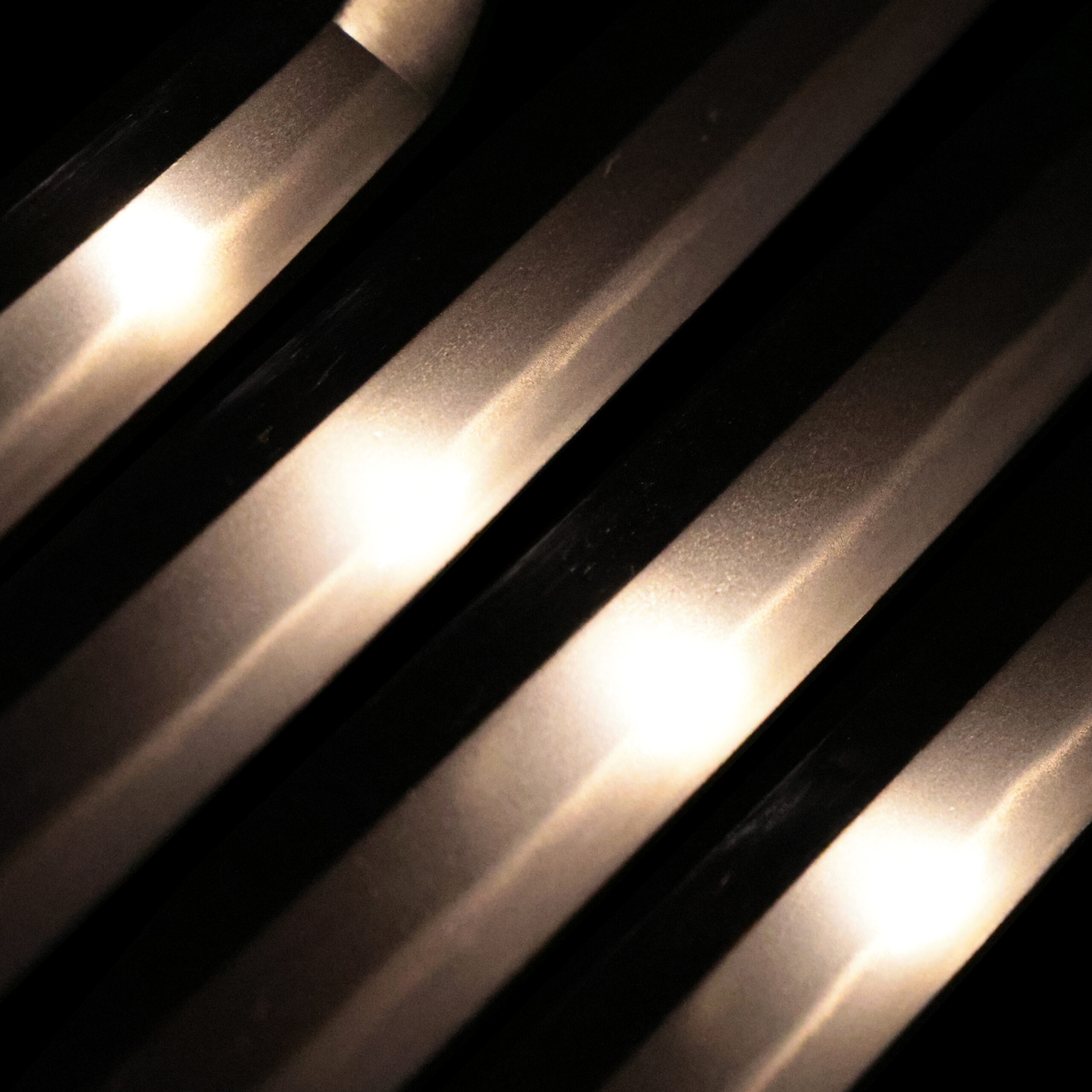
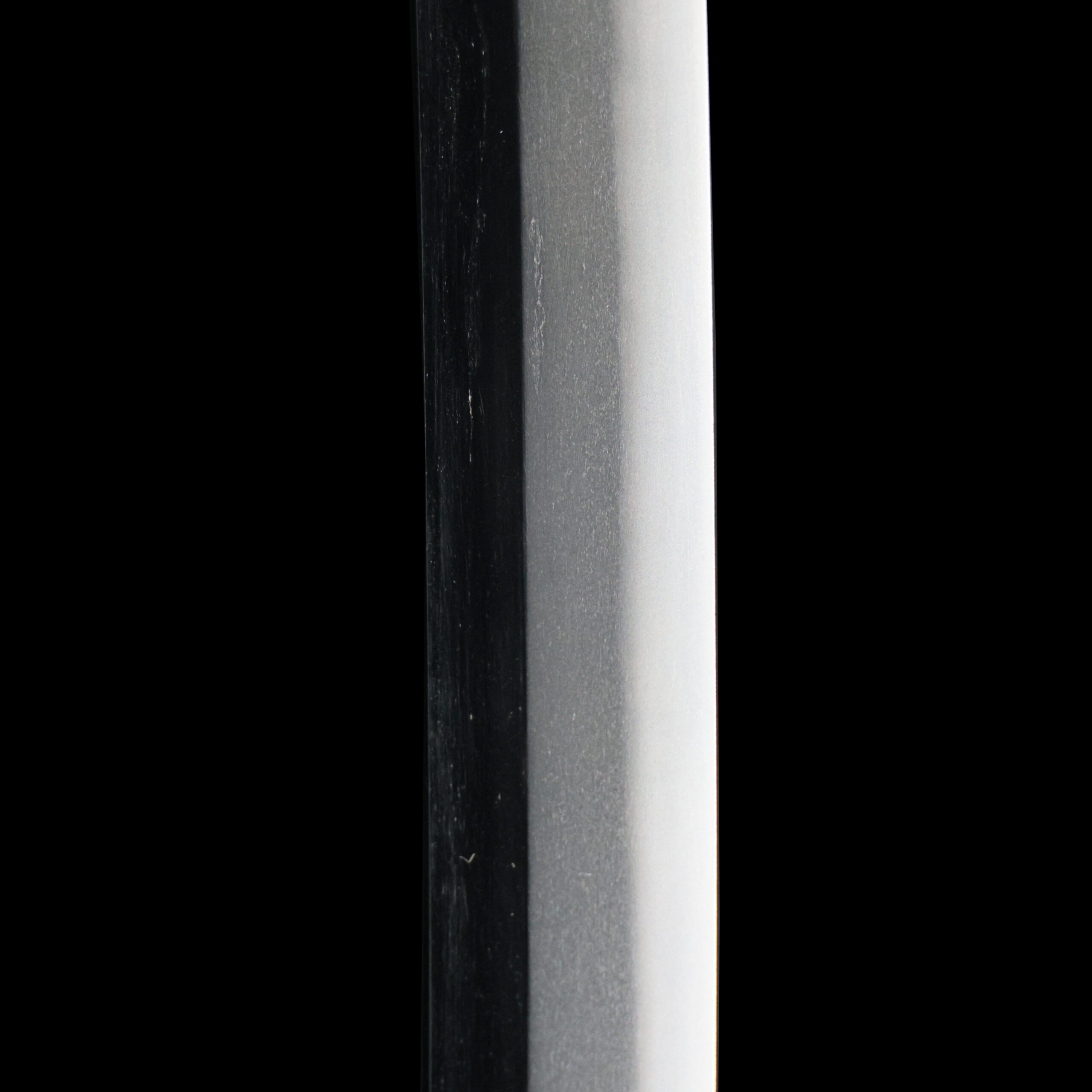
Hamon:
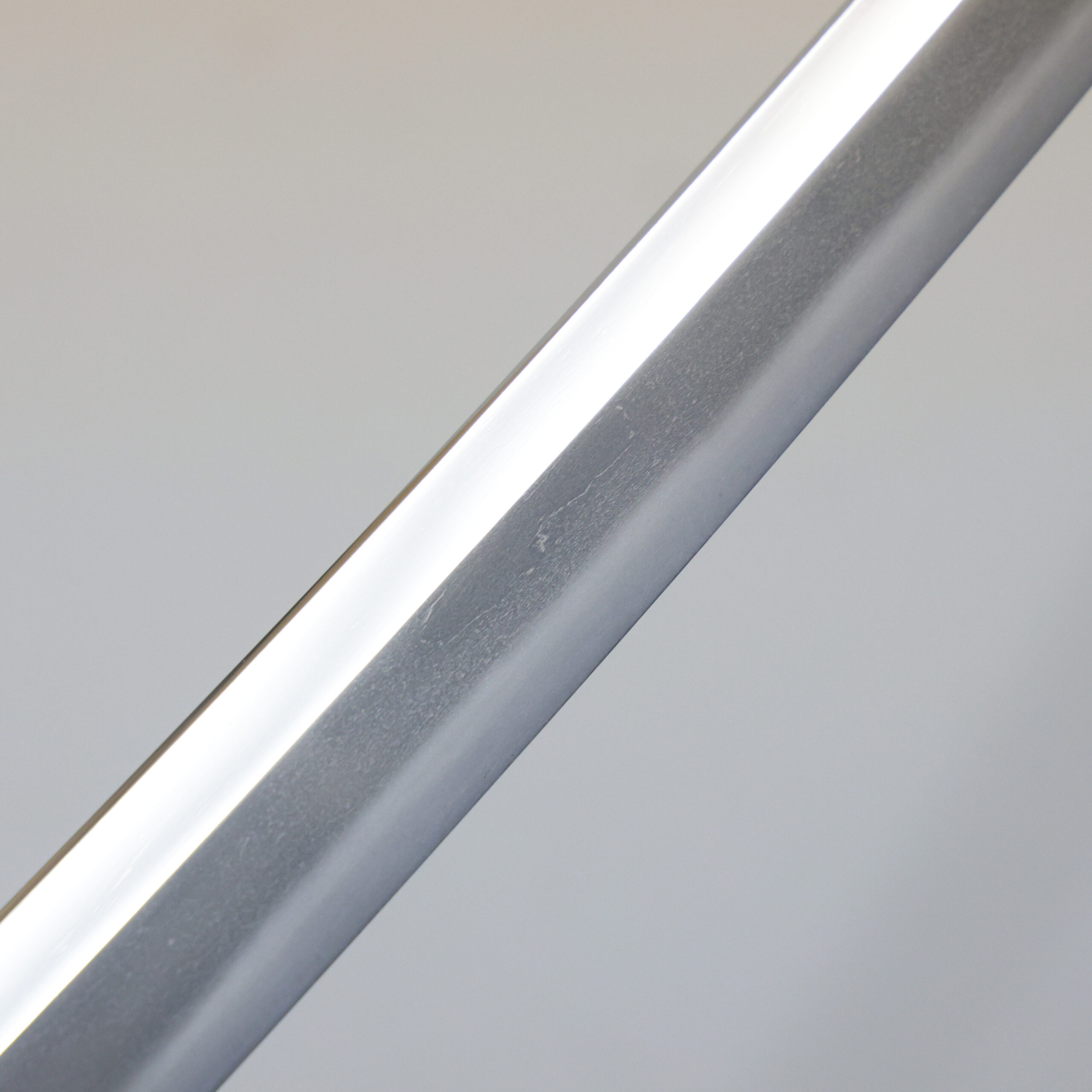
The crystalline structure which forms along the cutting edge of a blade as a result of the hardening process
Jimon(Jihada):
visible steel surface pattern created by folding and hammering during forging process
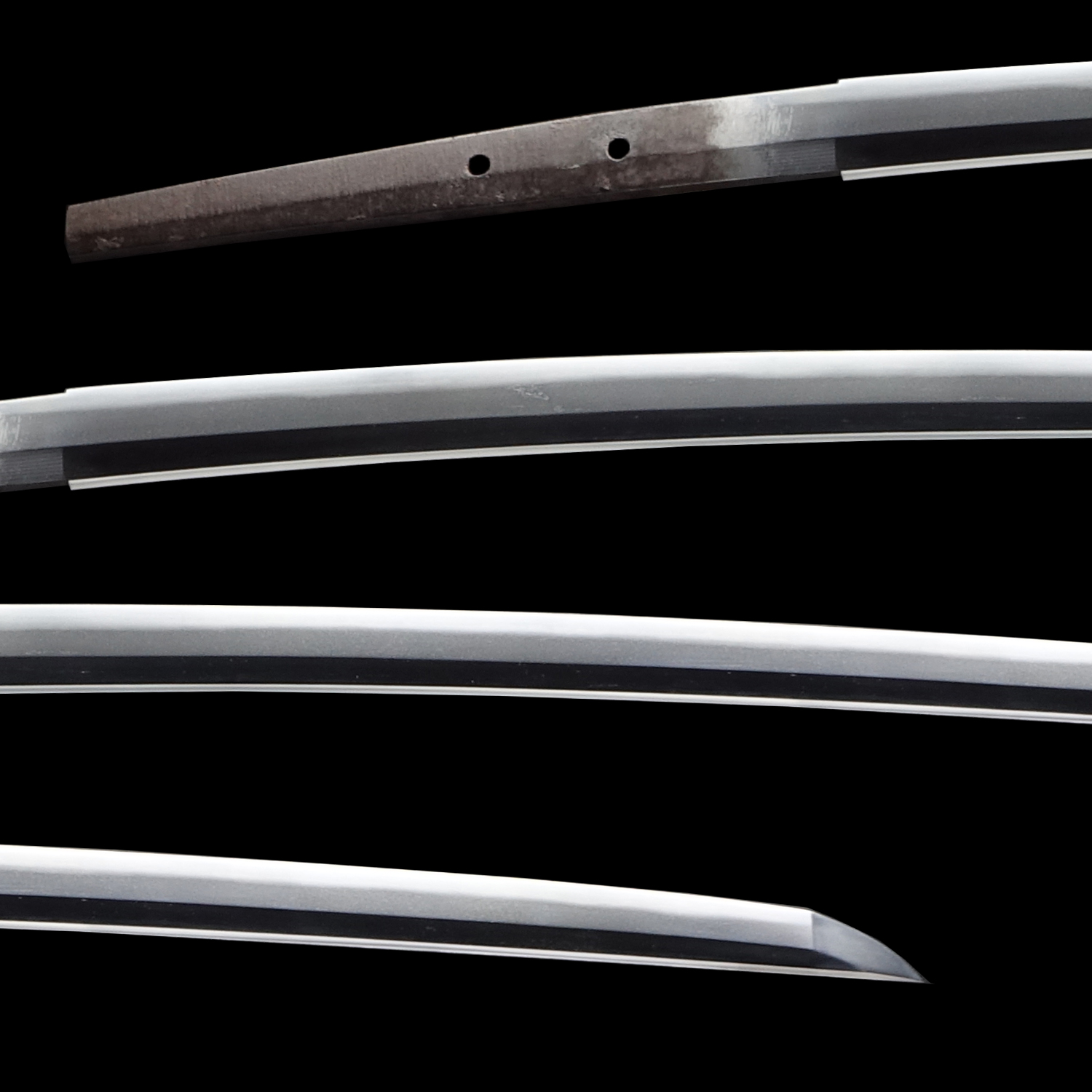
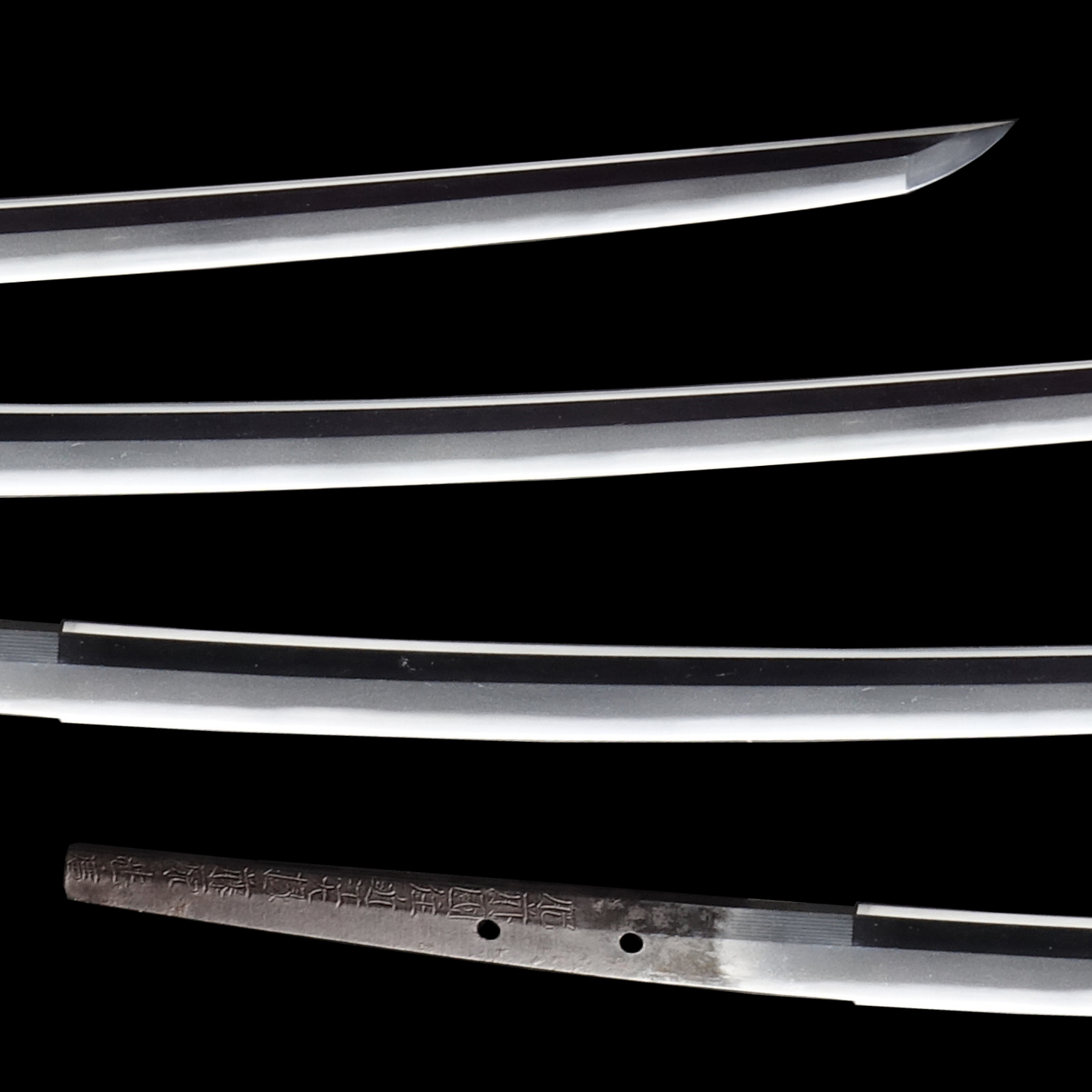
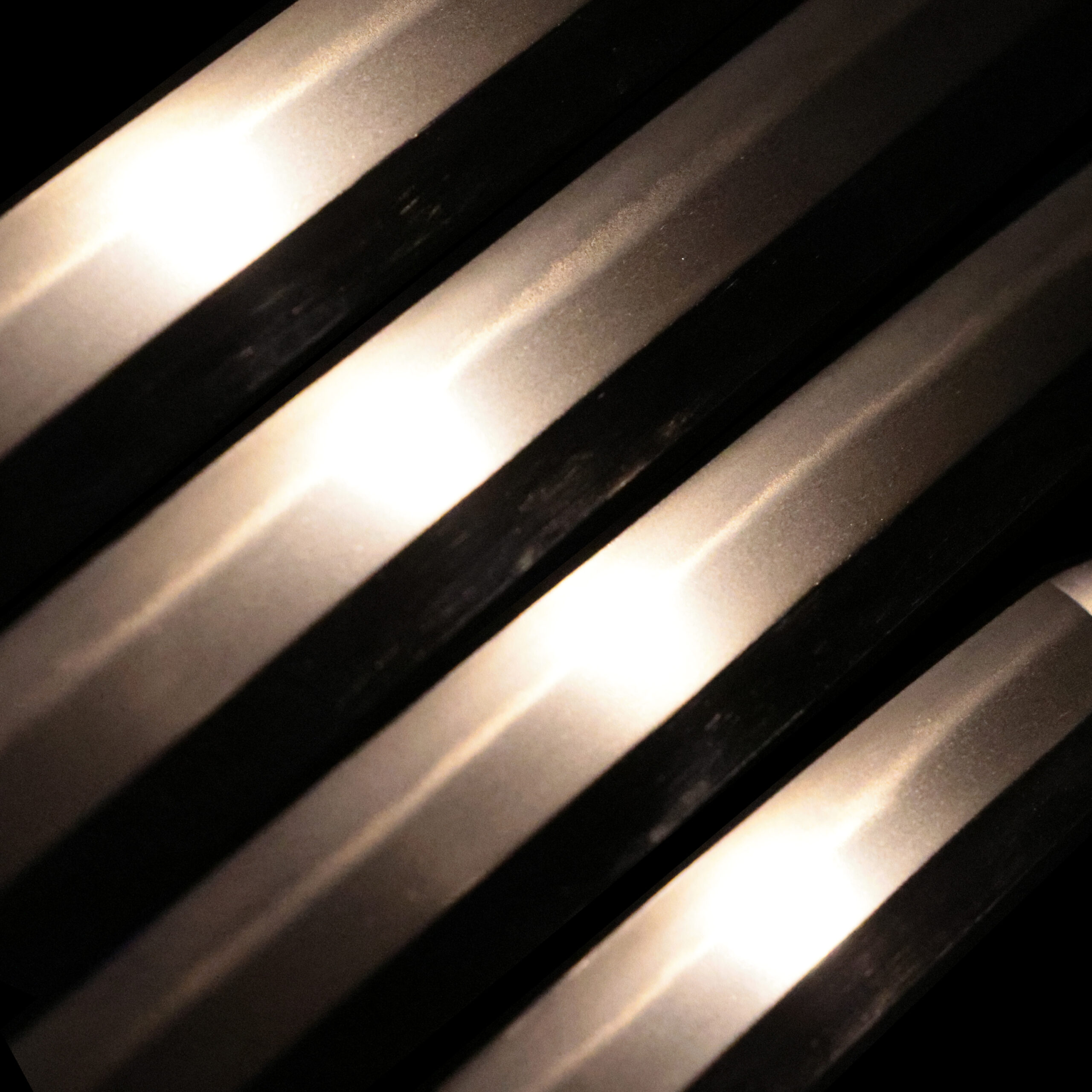
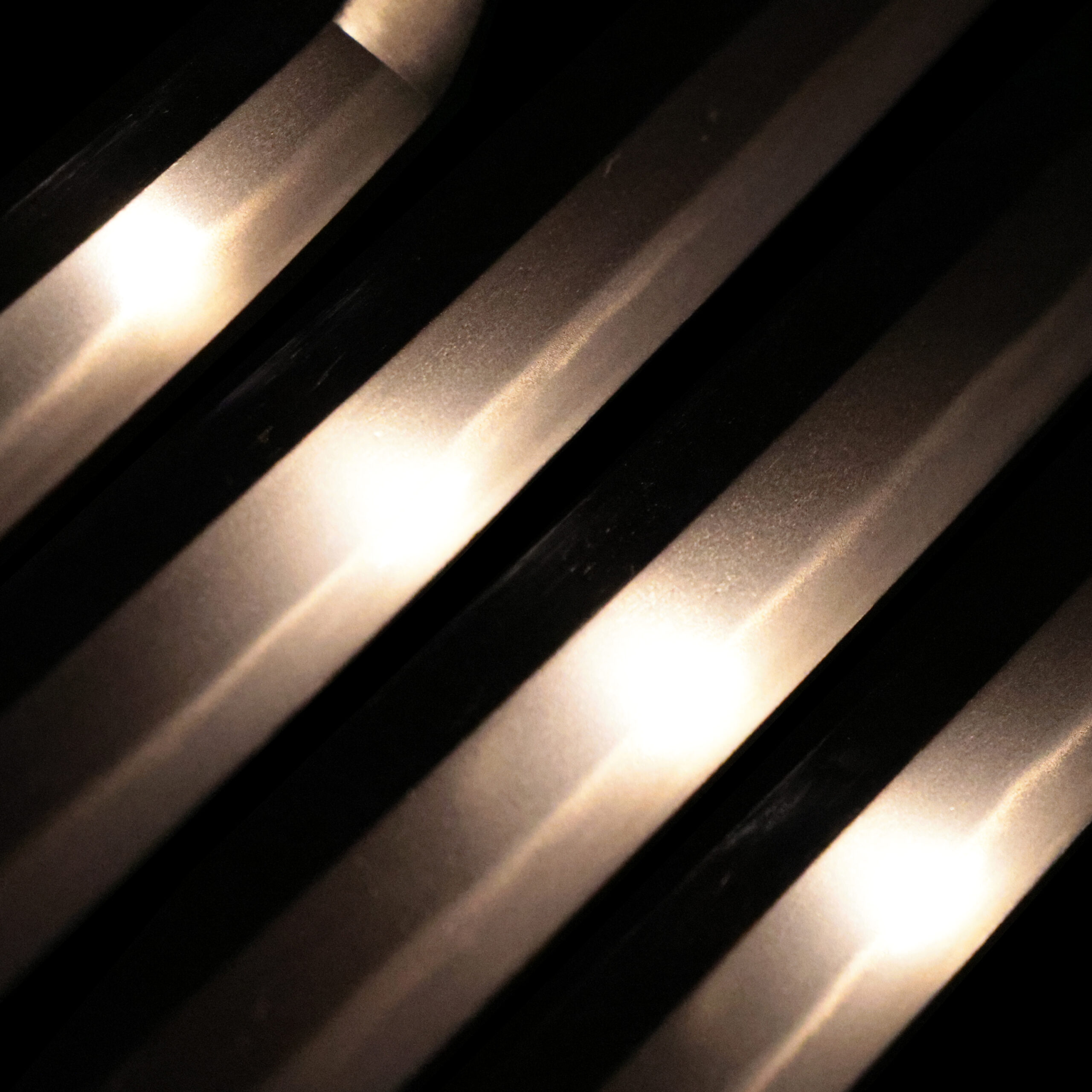
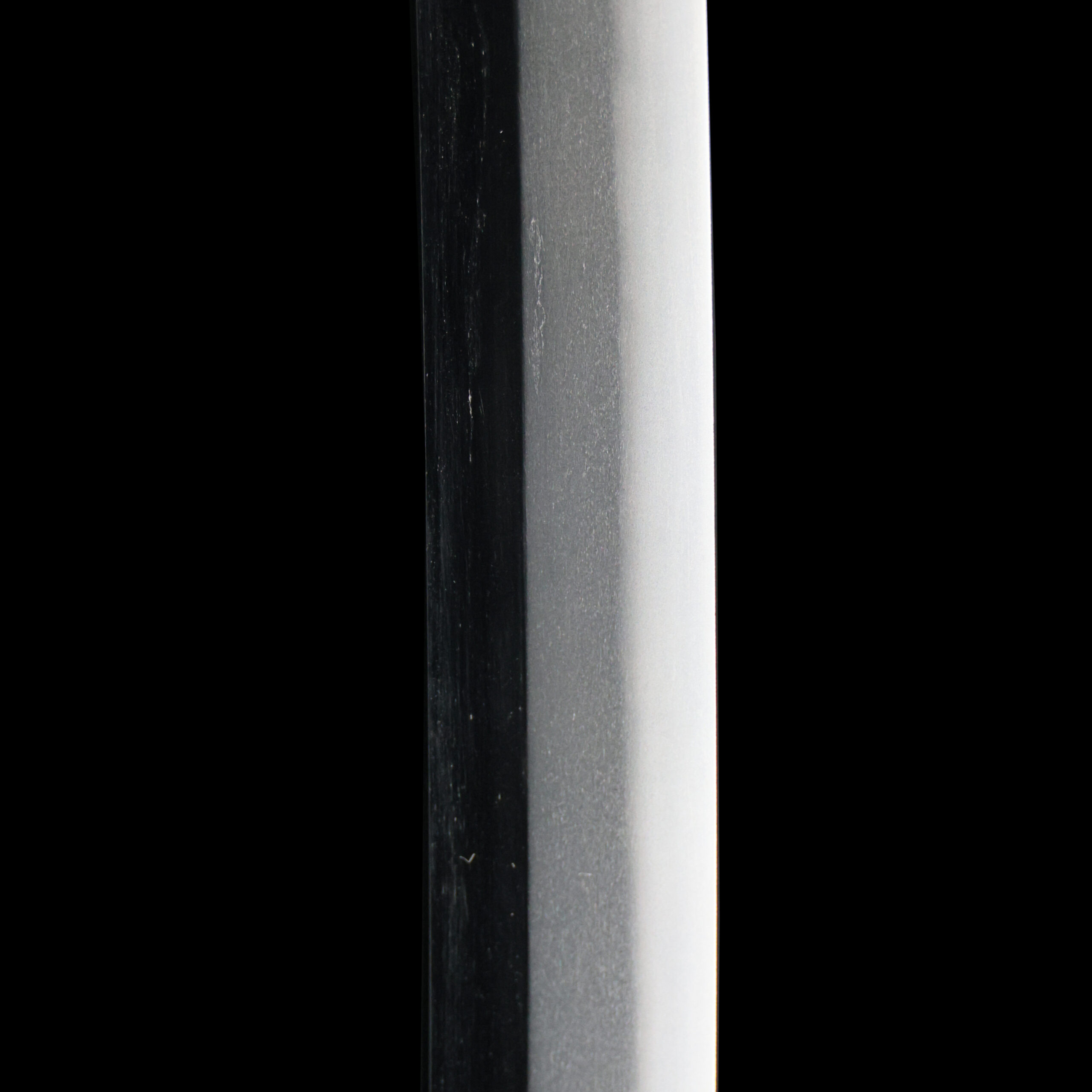
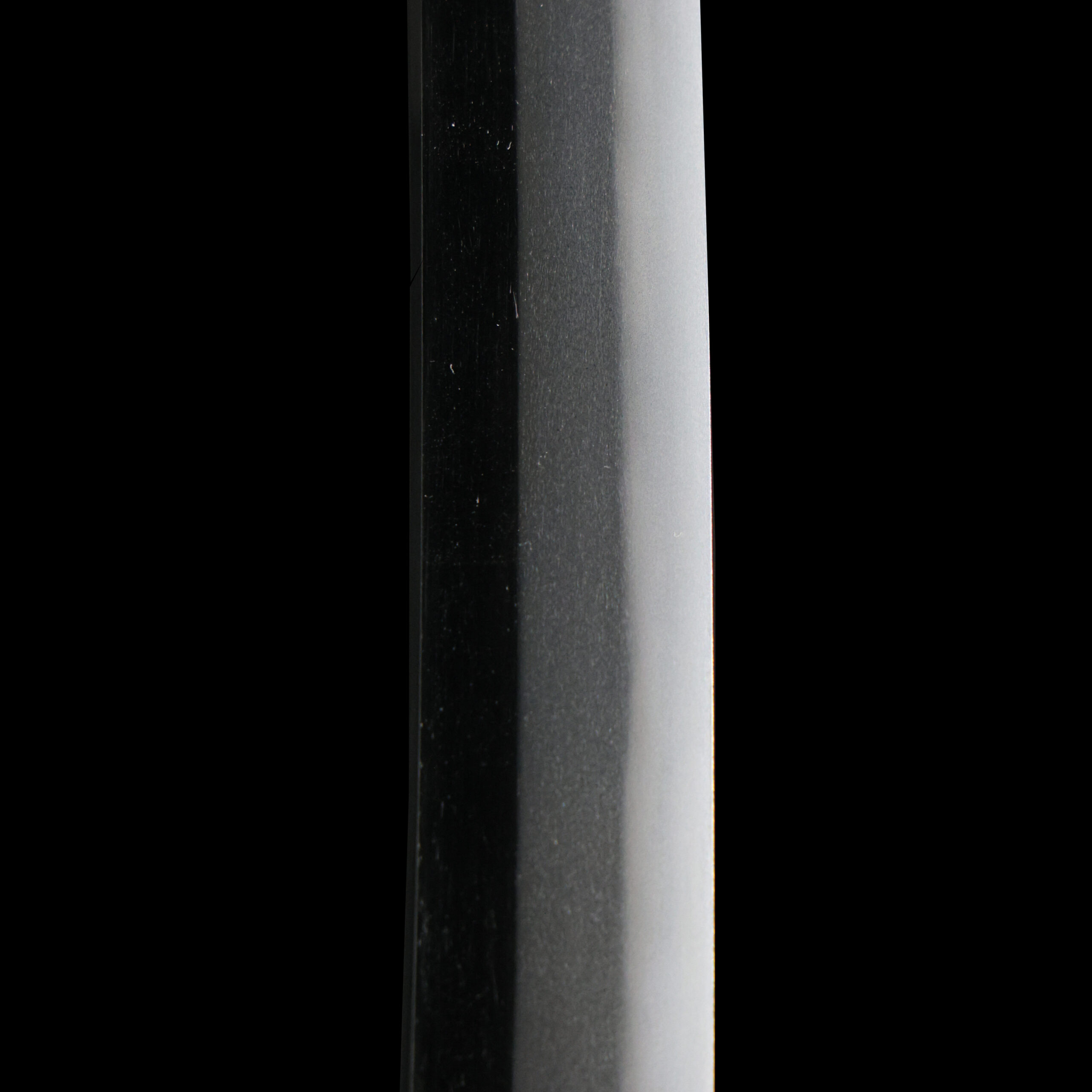
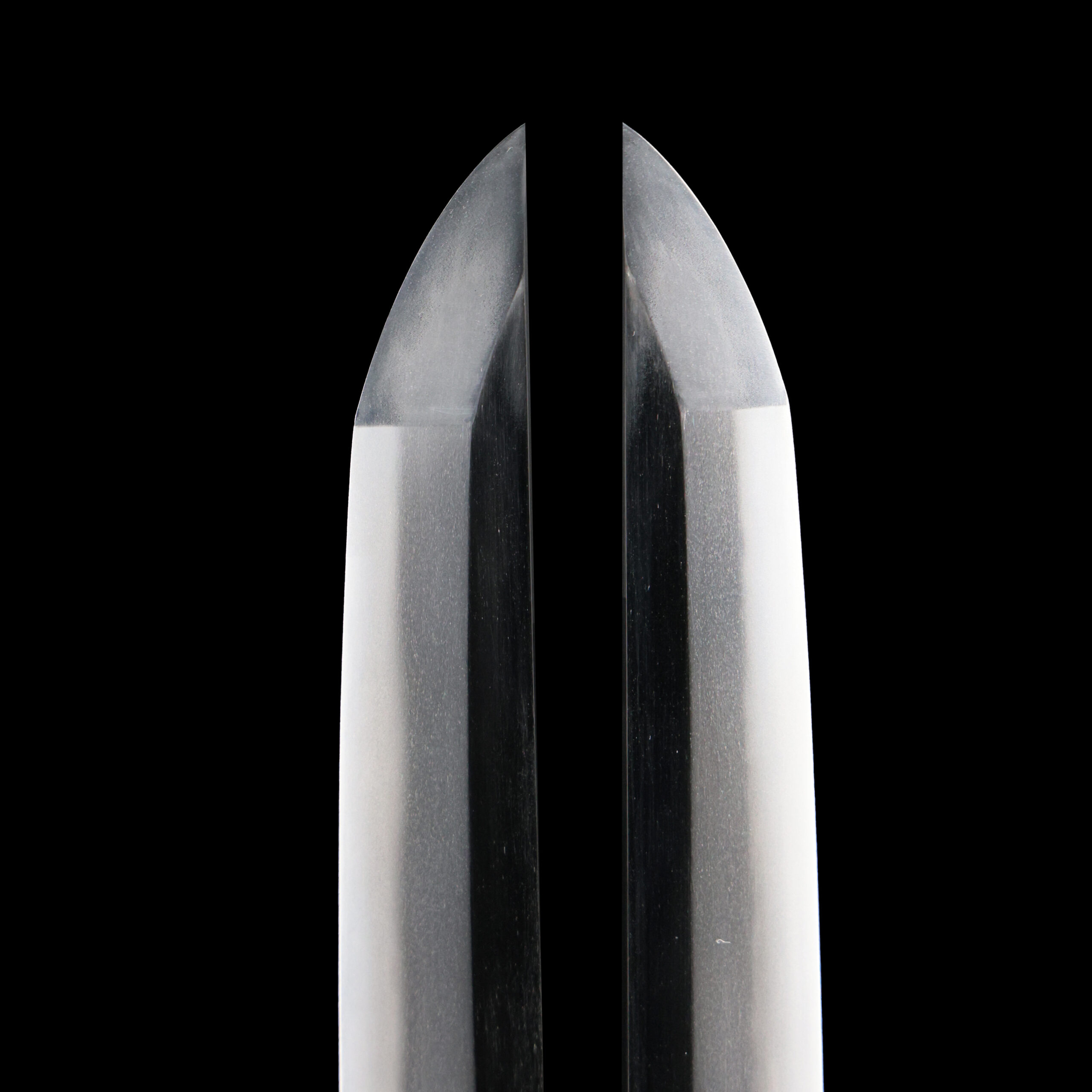
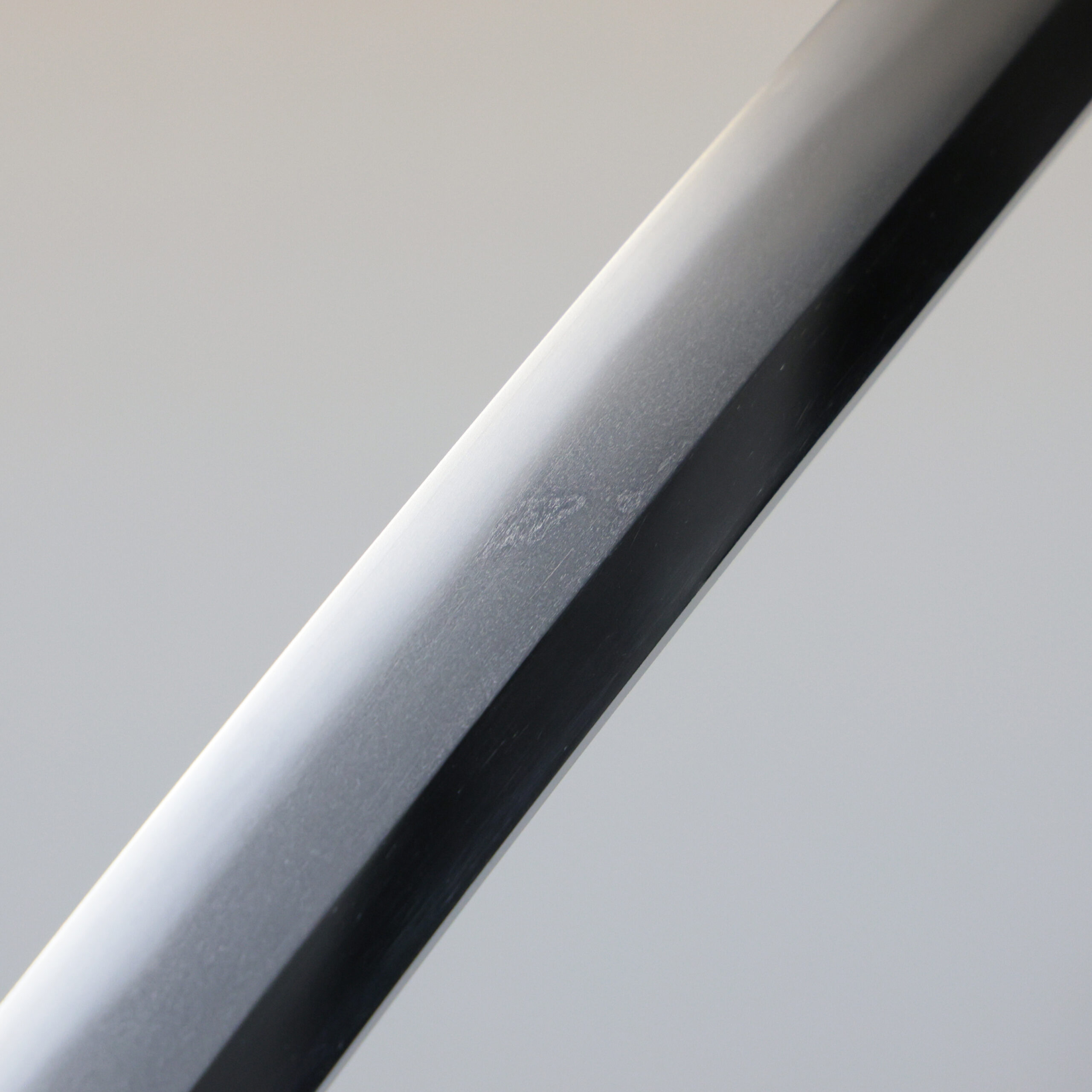
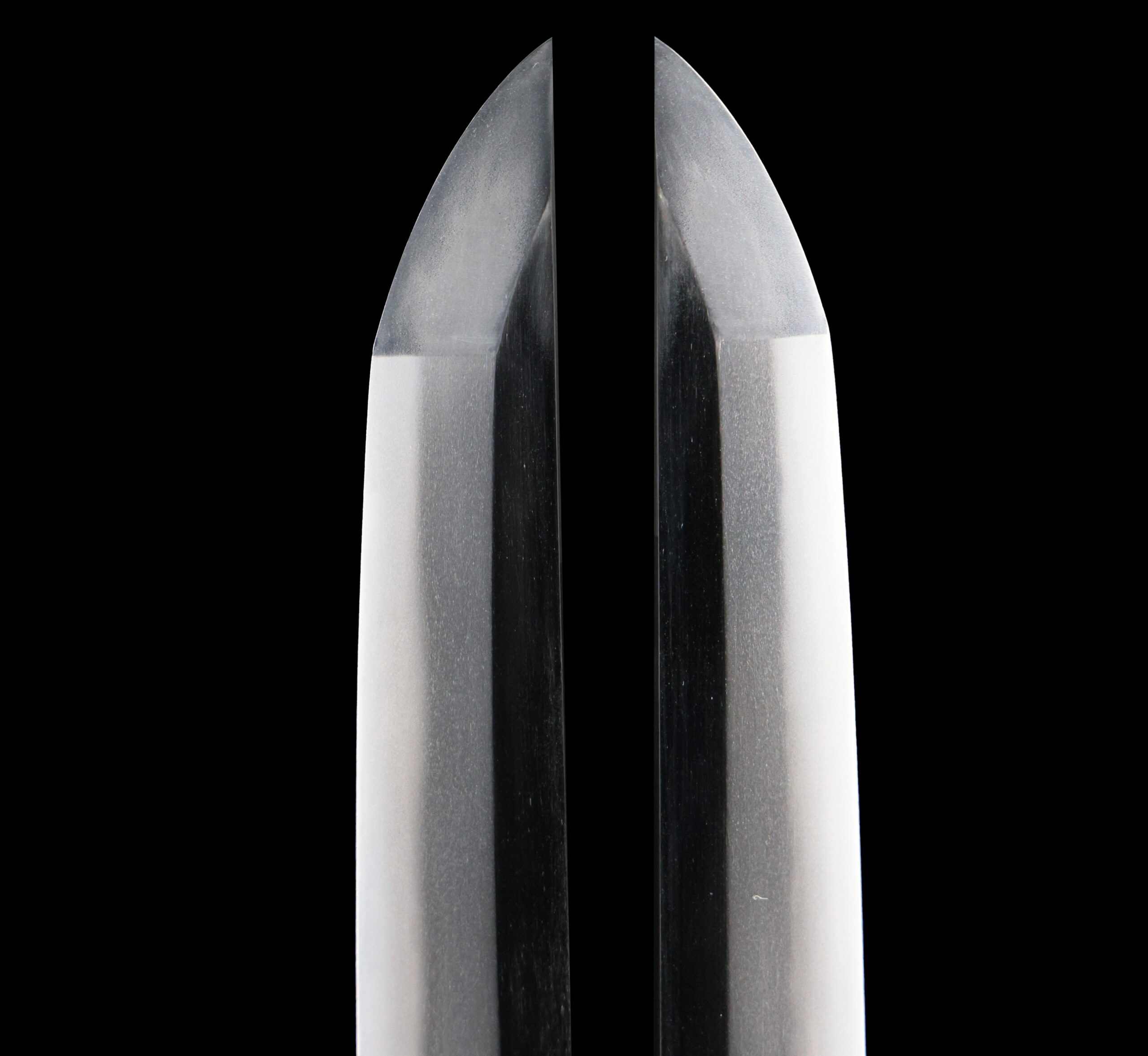
Kissaki:Kissaki is the tip of the Japanese sword.
Nakago:Nakago is the tang of the Japanese sword.
Japanese swordsmiths left the black rust on the tang because it prevents red rust while the tang is in its handle. And the discoloration of the tang was created over time, and it is a great indicator for a Japanese sword specialist to estimate when the sword was forged.
Koshirae:Koshirae is the mounting of the Japanese sword. There are several parts that consist of Koshirae such as Saya (Scabbard), Tsuka (Handle), Tsuba (Handguard).
This type of Koshirae is called a Tachi-koshirae (太刀拵え), designed to be worn hanging at the waist. It is not intended for practical combat; instead, its purpose was to signify the authority and dignity of the Samurai who carried it, or the powerful figures they served. As a result, it is characterized by the luxurious decorations and colors.
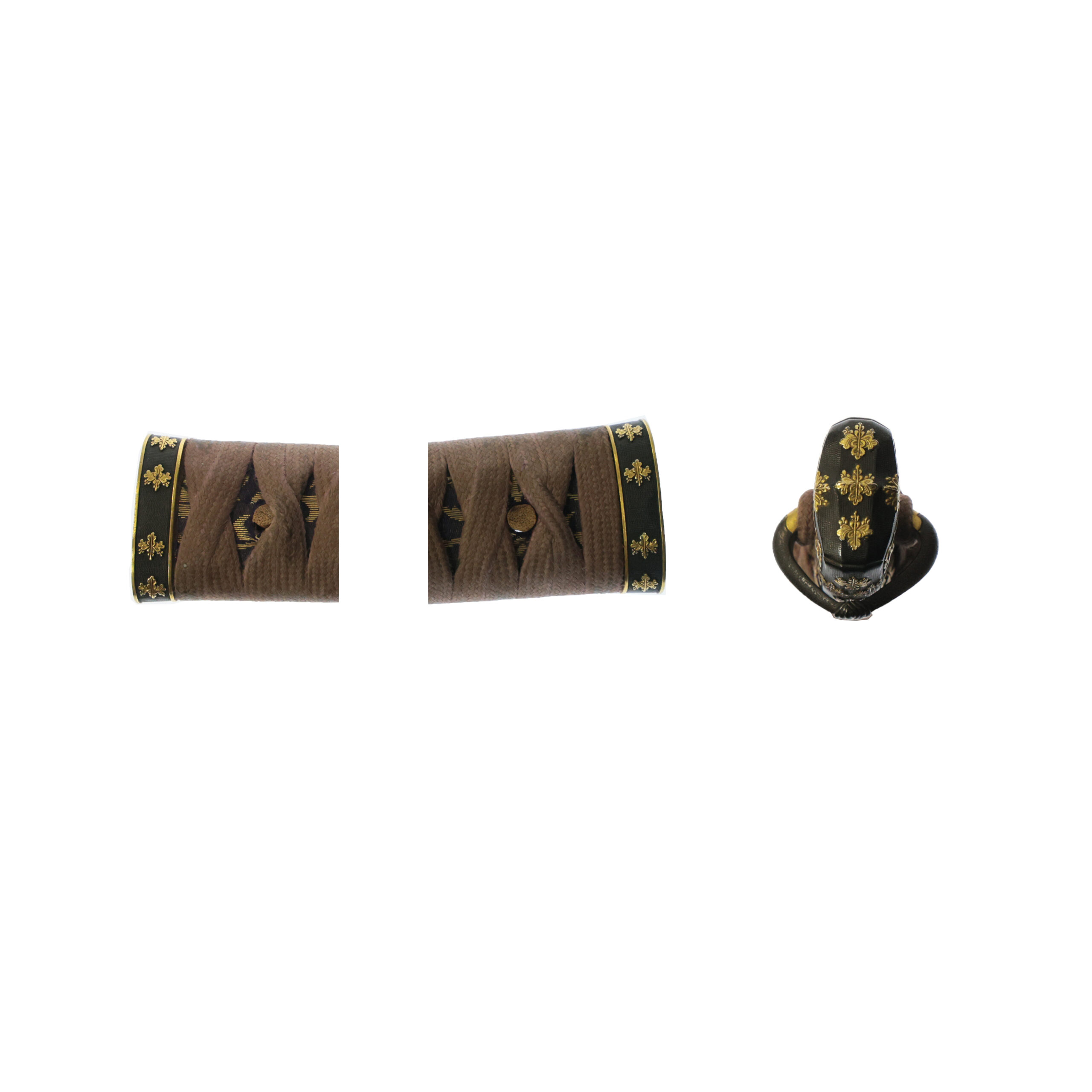
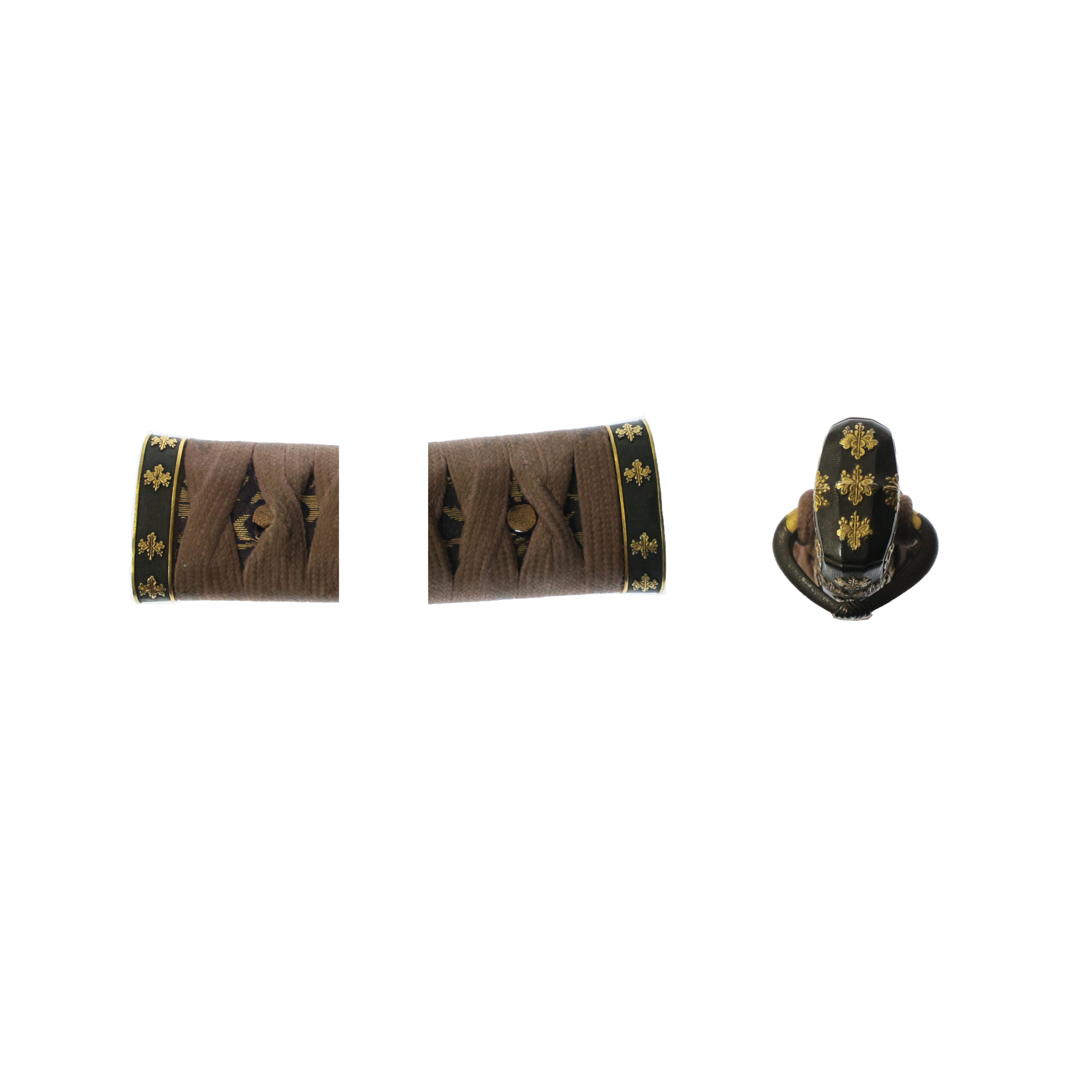
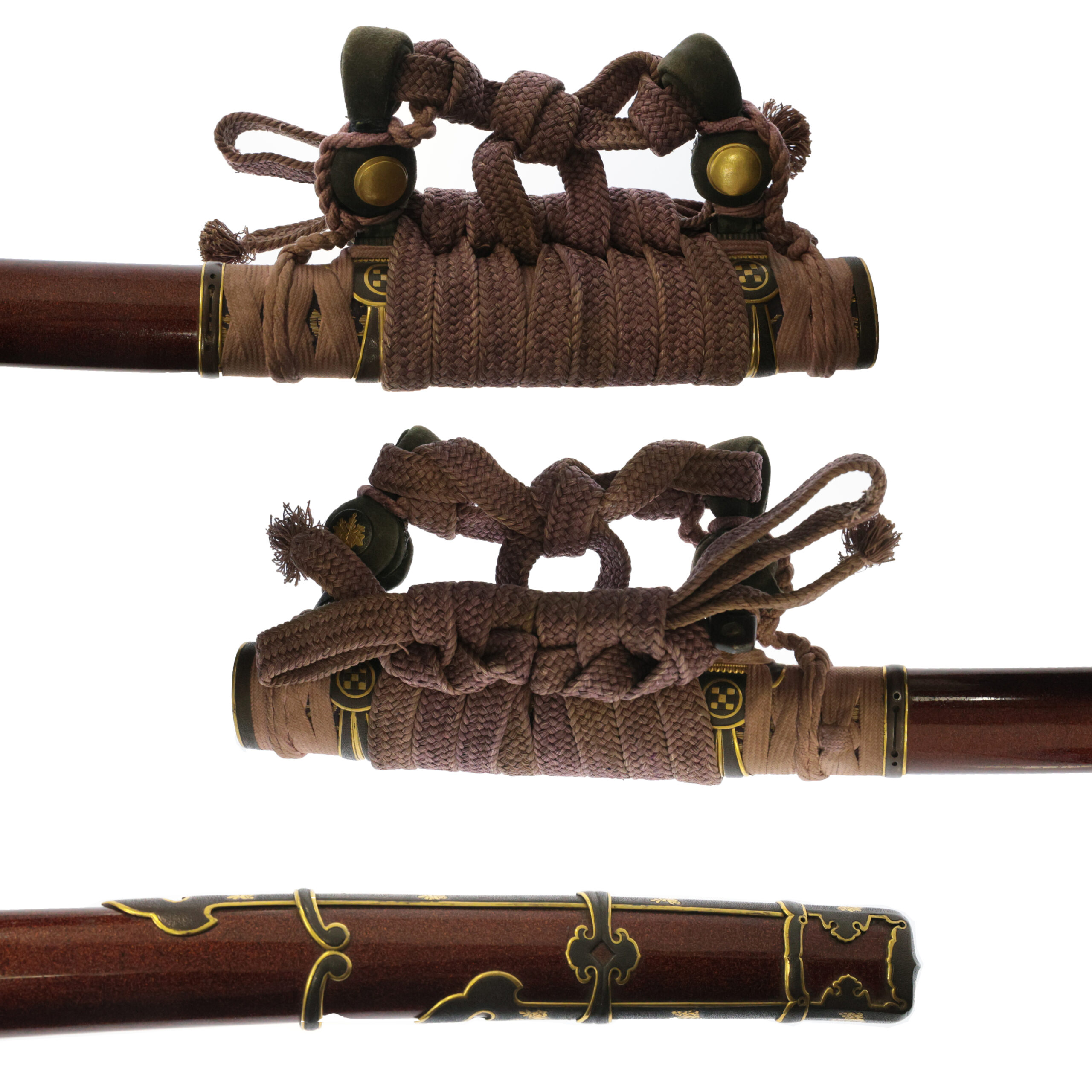
Fuchi-Kashira:A pair of matching sword fittings that cover the upper and bottom parts of its sword hilt.
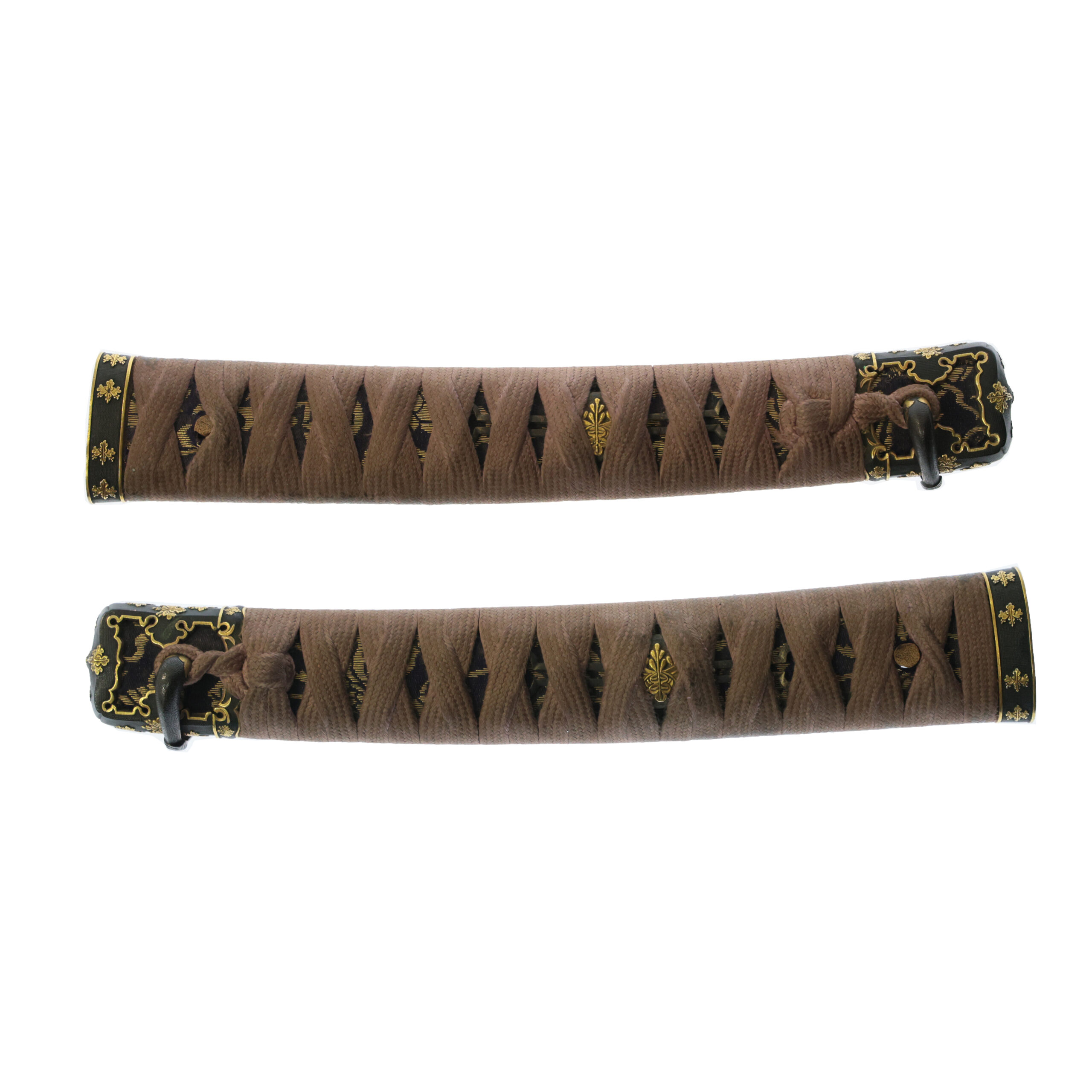
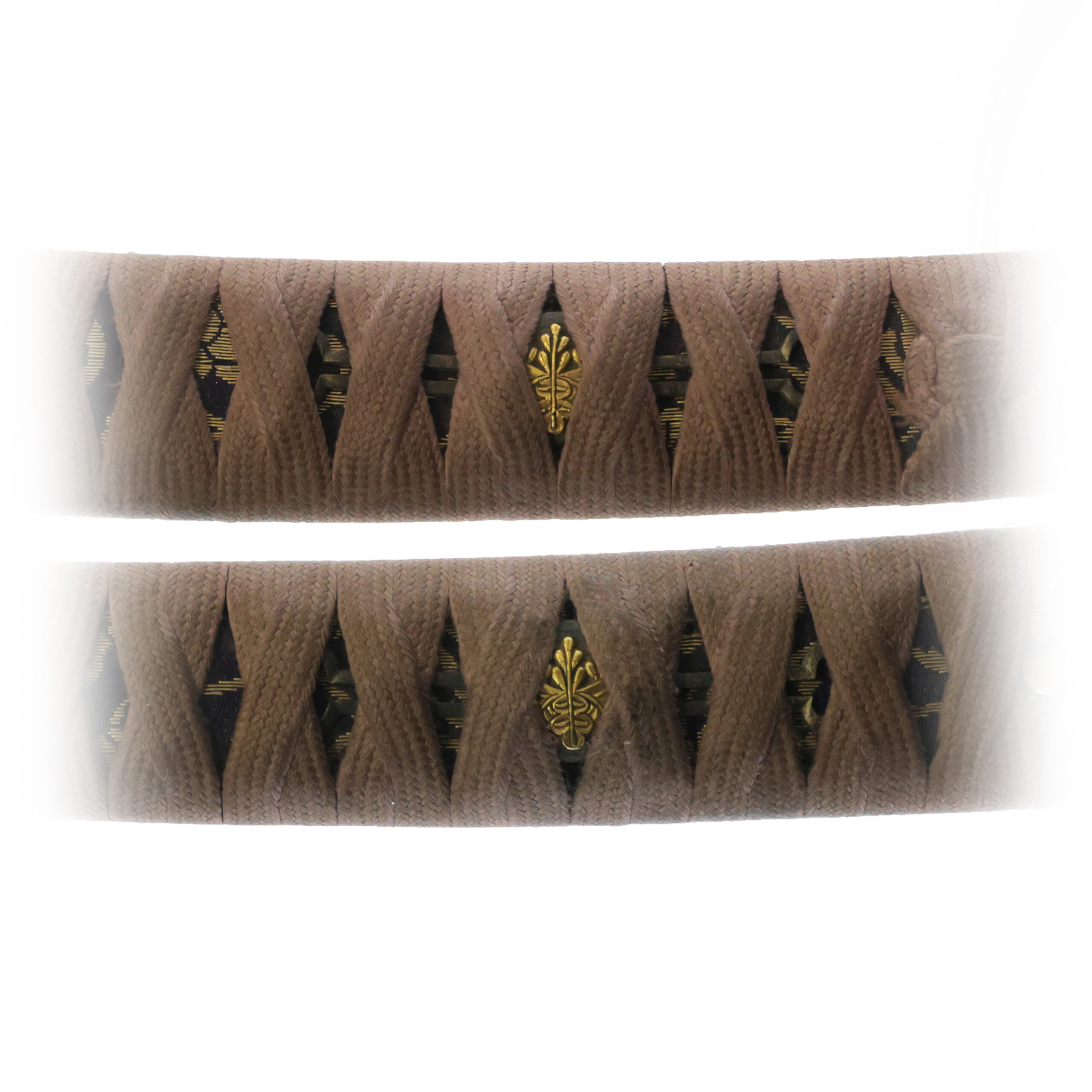
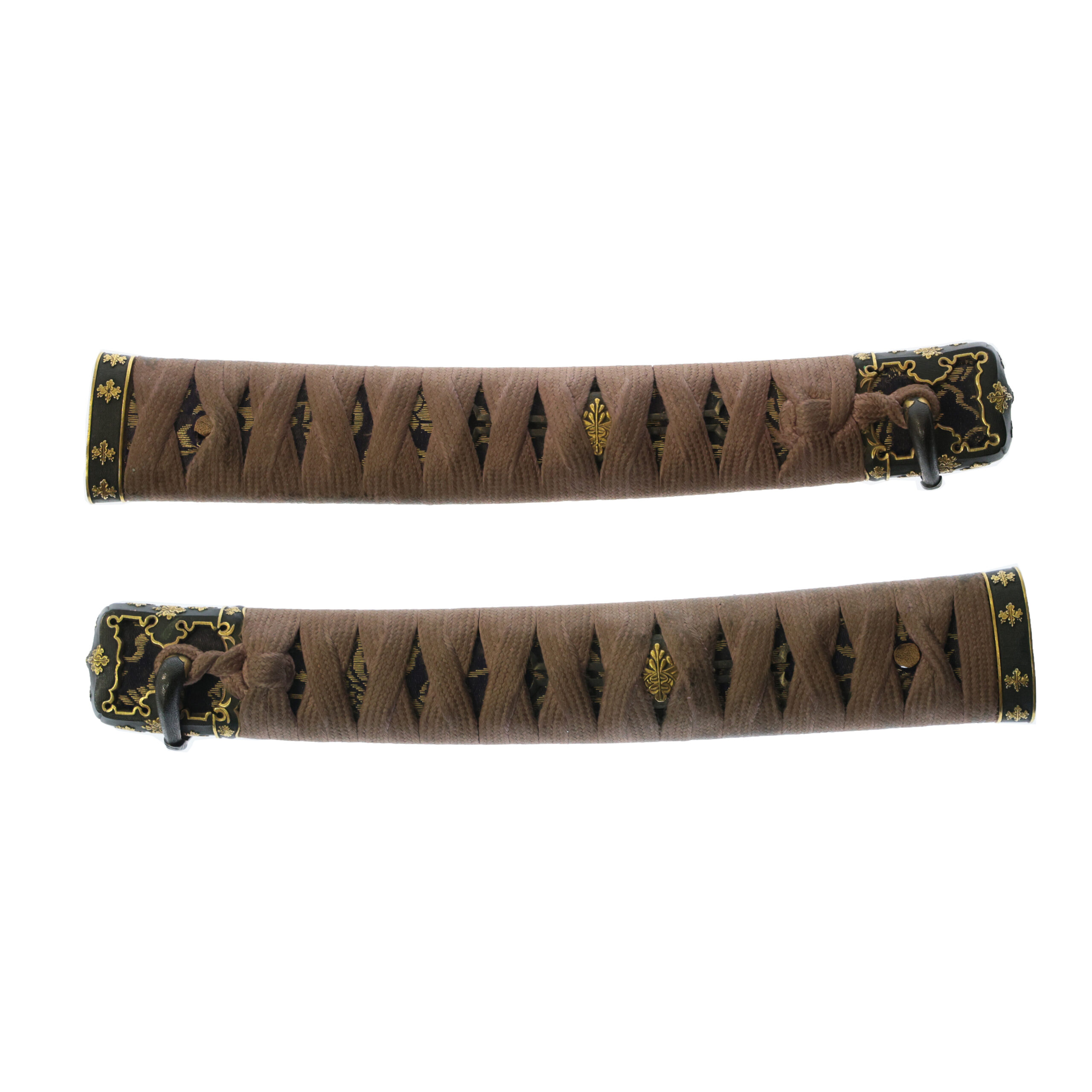
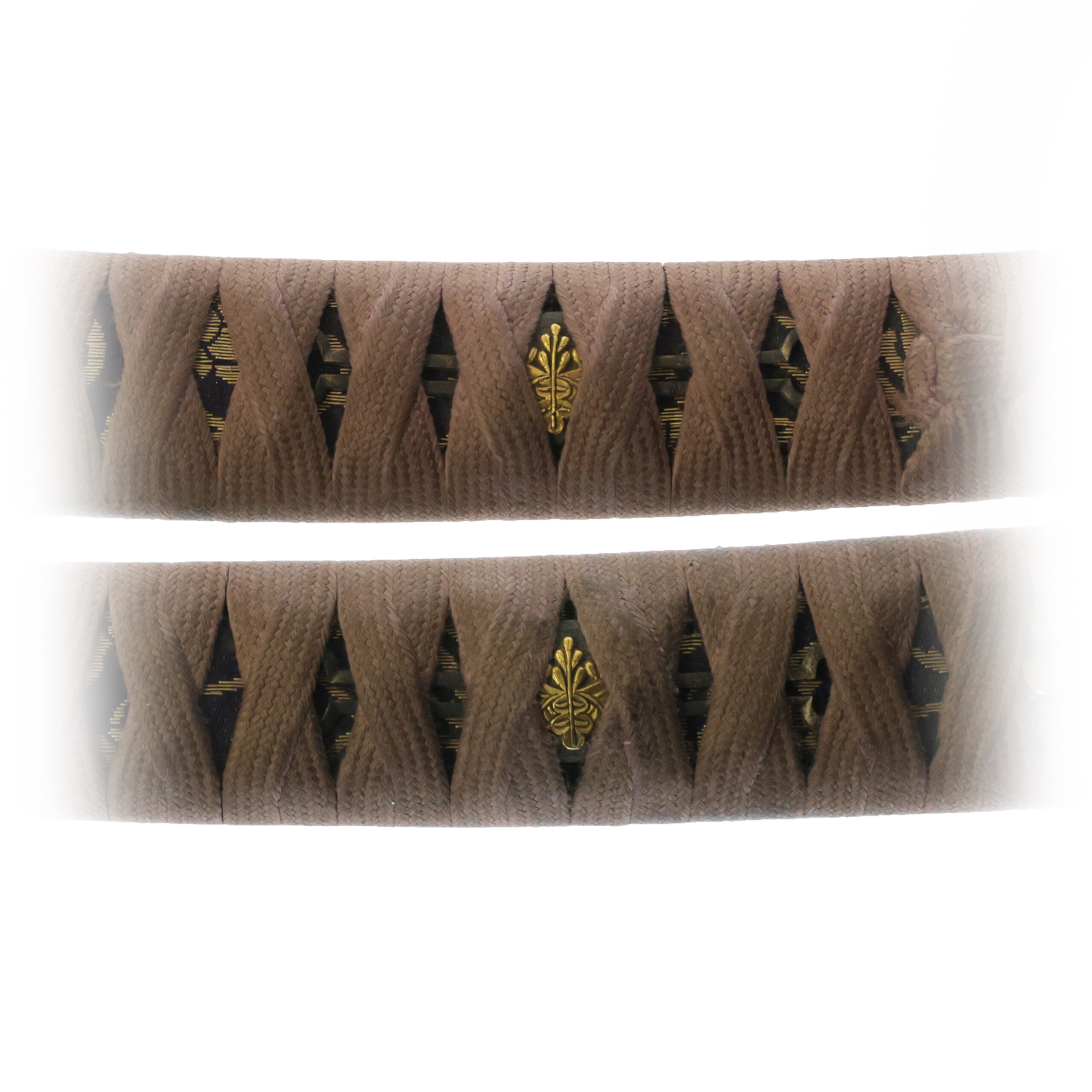
Tsuka and Menuki:Tsuka is the handle of the Japanese sword and Menuki is its decoration.
These menuki are crafted in the kenukigata (毛抜形, hair-tweezer-shaped) style and feature the Gosan-no-Kiri mon (五三の桐紋, Paulownia crest) at the center.
The kenukigata design, originating in the Heian period (794–1185), is a traditional form often seen in early tachi mountings. The paulownia tree (桐, kiri) has long been revered in Japan as a symbol of nobility, virtue, and prosperity, and is famously known as the crest of the Imperial family and the Toyotomi clan. Its graceful appearance made it a favored motif among samurai, representing authority and good fortune, and it was widely used as an auspicious decorative emblem.
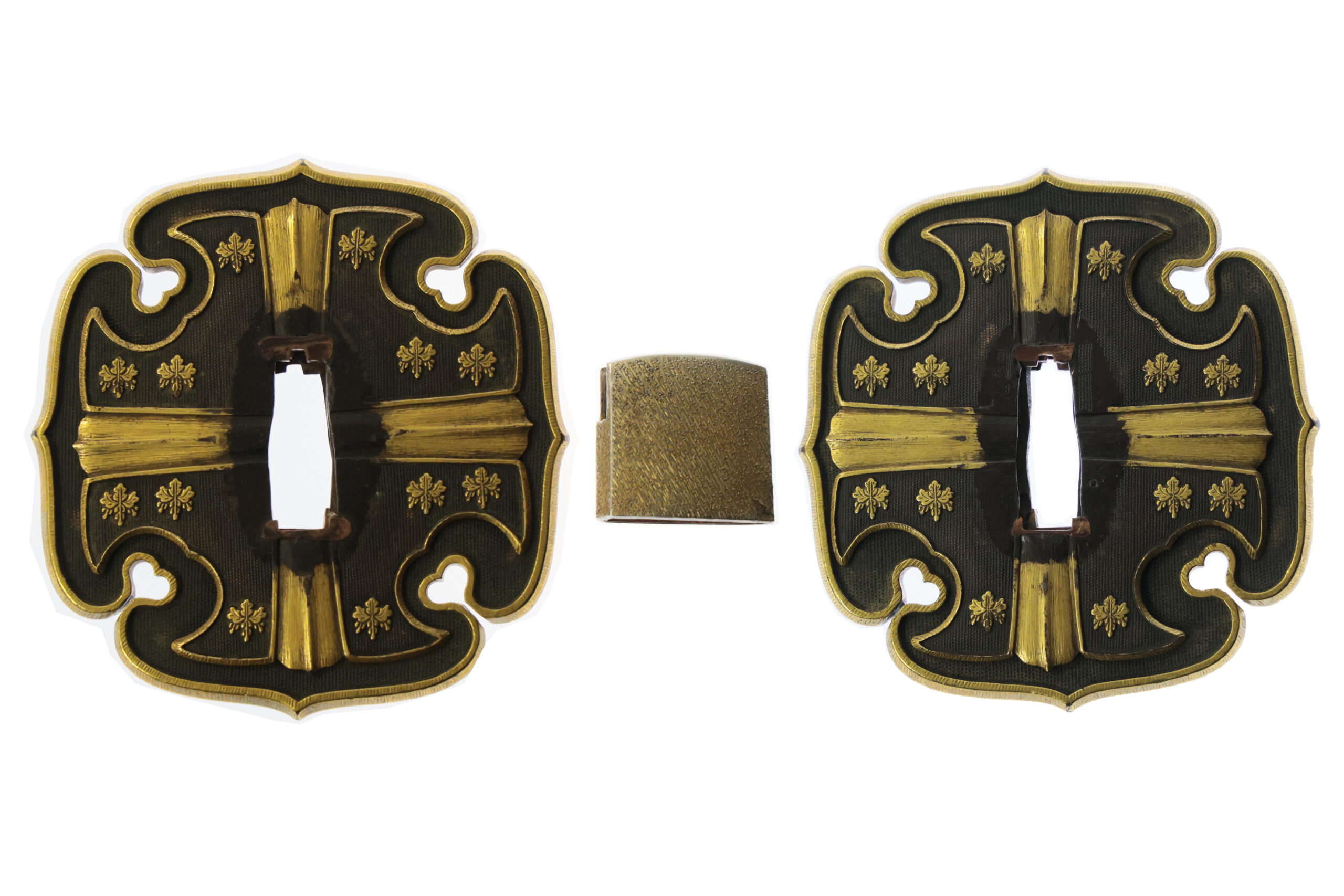
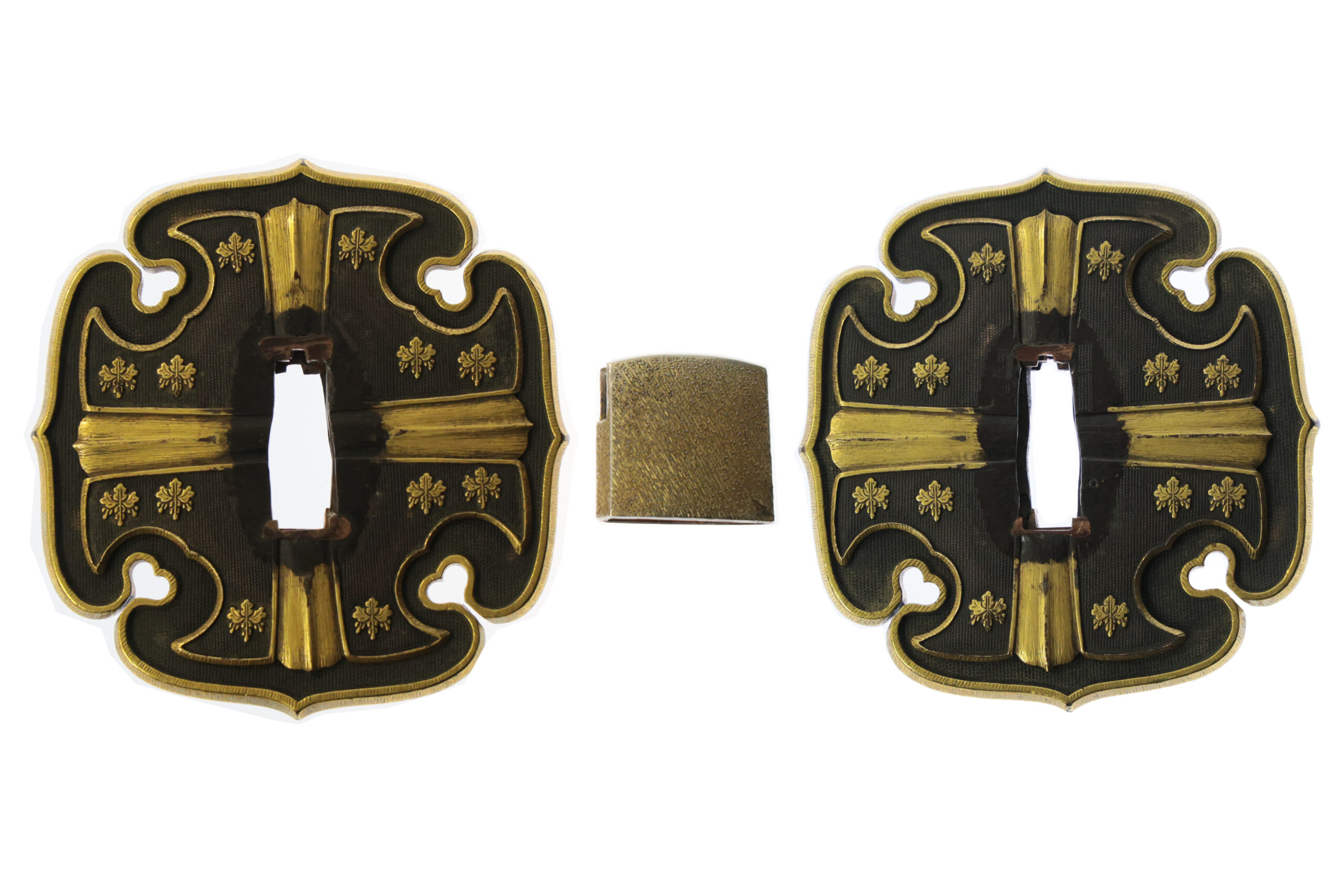
Tsuba and Habaki:Tsuba is the handguard for the Japanese Sword and Habaki is the equipment to make the blade not touch its scabbard inside. It prevents the blade from getting rusty and chipped.
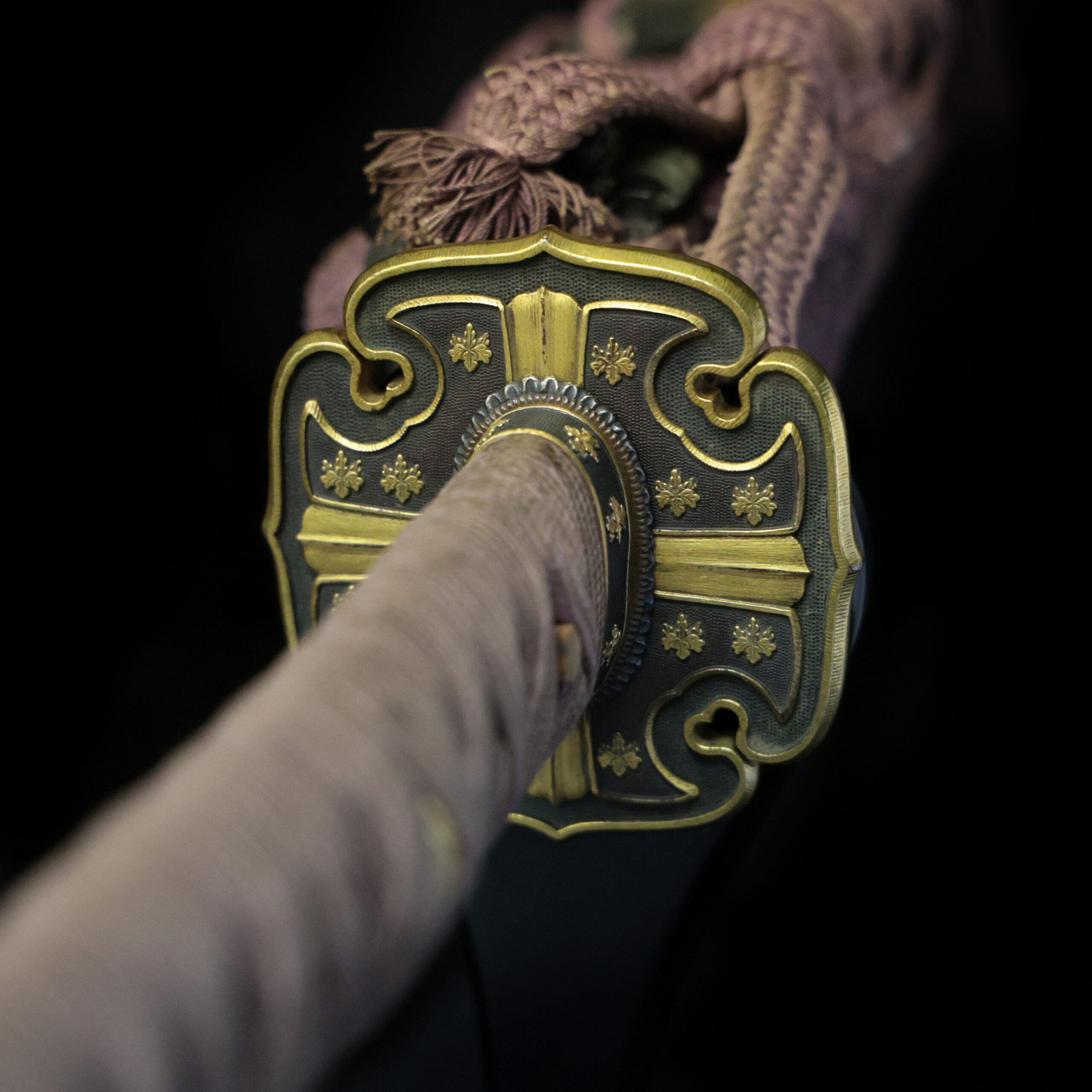
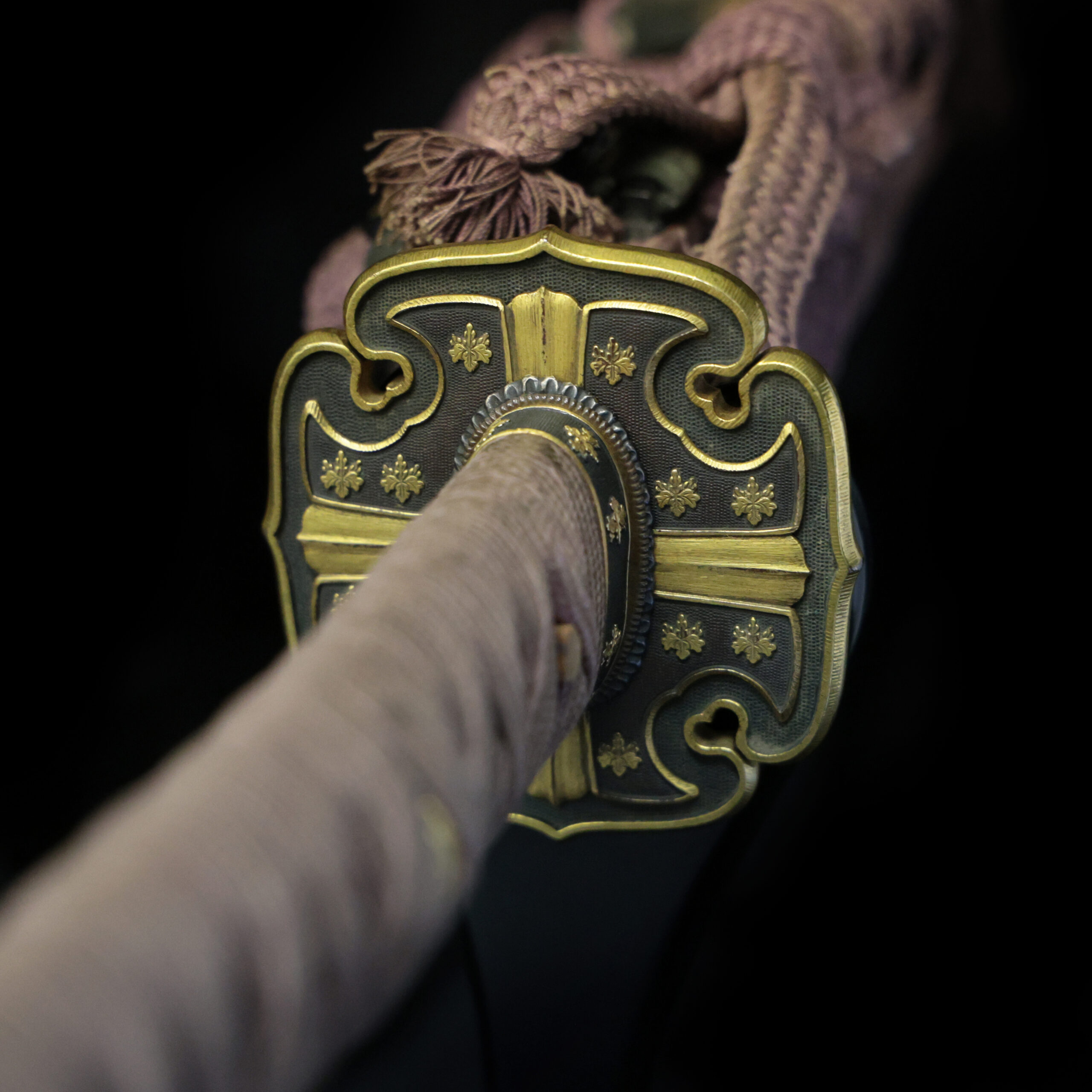
This Tsuba is made in a yotsu-mokkō-gata (四つ木瓜形) form, a classic outline derived from the rounded, lobed shape of a sliced gourd.
At the four corners you can see inome (猪目, boar’s eye) cutouts, also described as inome-sukashi. Because of their curved point-and-lobe profile, they often look like small heart shapes at a glance, and they are not just decorative. Inome are widely used as an apotropaic motif, believed to help ward off evil and misfortune while also adding lightness and rhythm to the design.
The plant-like motifs scattered across the surface are known as the Go-san no Kiri (五三の桐) crest.
This design stylizes the leaves and blossoms of the paulownia tree and has long been associated with the Imperial court. It was later adopted by powerful military leaders, most notably Toyotomi Hideyoshi, and is widely recognized as a symbol of authority and prestige.
The paulownia tree is also considered sacred, as it is said to be the tree upon which the mythical phoenix (鳳凰, hōō) alights. As such, the motif carries auspicious connotations of nobility and good fortune. In this piece, the scattered arrangement of these crests enhances both the decorative richness and the dignified character of the tsuba.
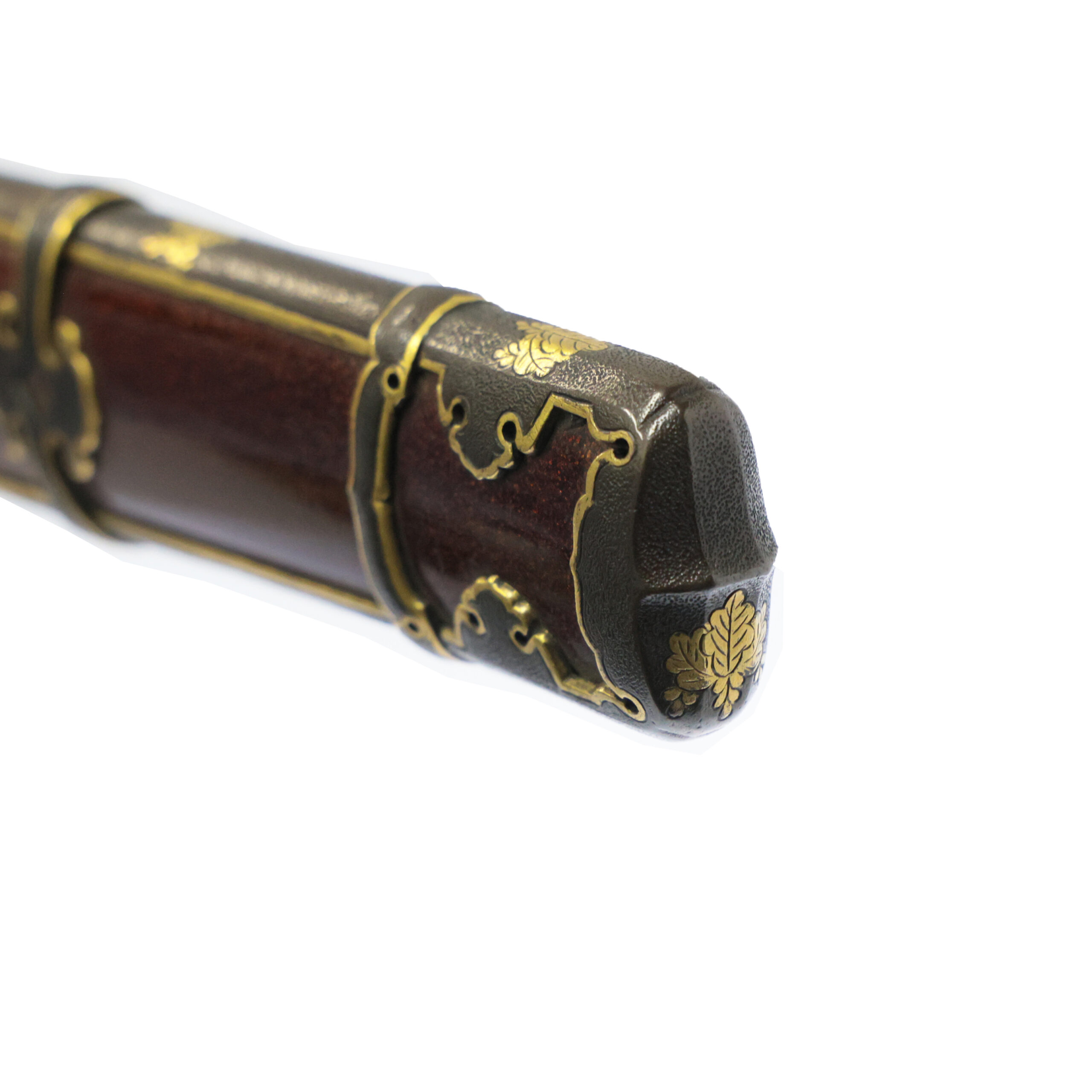
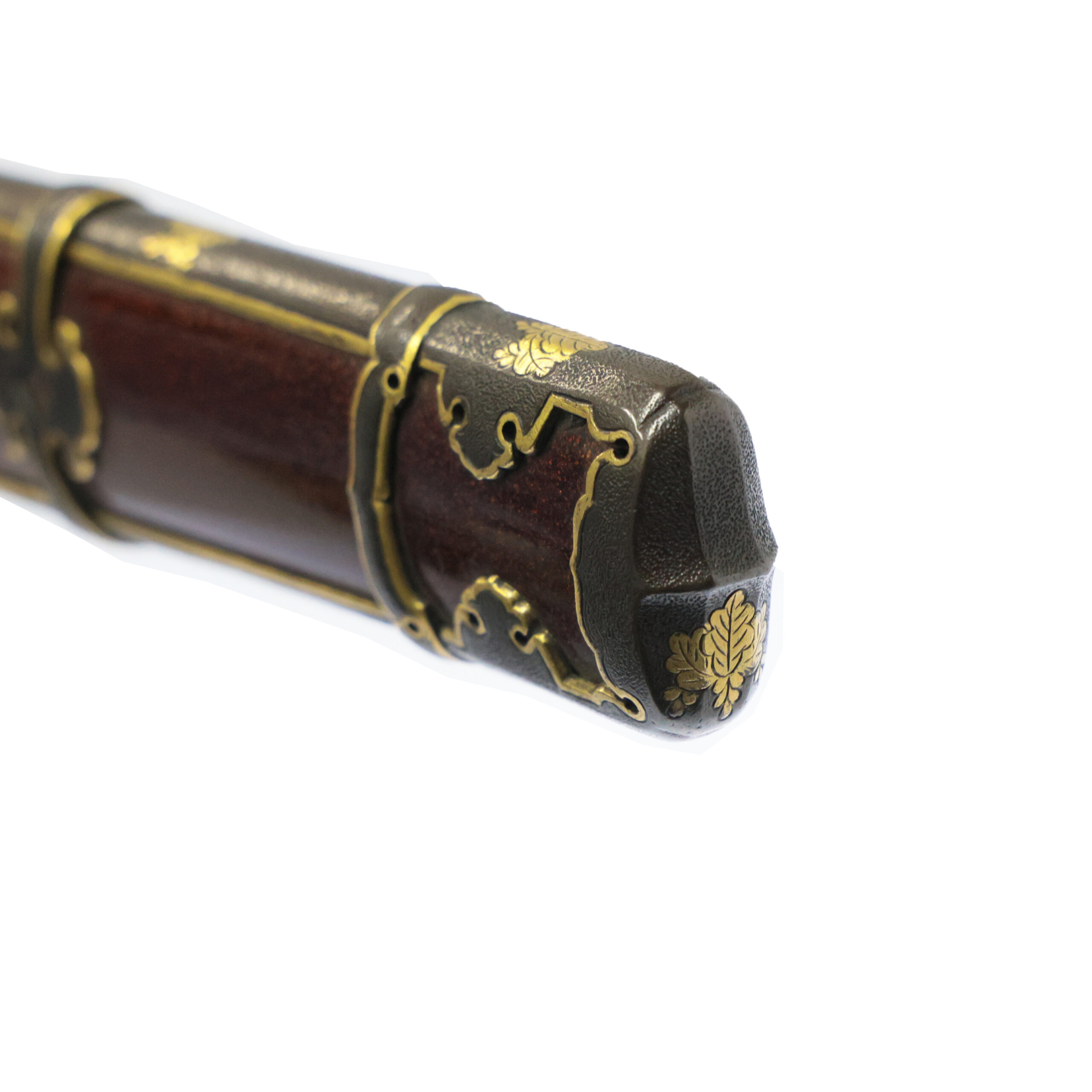
Saya:Saya is the scabbard for the Japanese sword.
The Taiko Kanagu (太鼓金具) on this Saya is decorated with the Mitsuuroko family crest. The name Mitsuuroko comes from the way three connected triangles resembles the scales (uroko) of a snake, and ‘mitsu’ means three, so it came to be called Mitsuuroko (three scales). The motif has been used in Japan since ancient times and can even be seen in wall paintings from the Kofun period (古墳時代). It is well known for its protective, talismanic power against evil, and one of the most famous Samurai families to use this crest was the Hojo clan (北条氏).
In addition, this Saya is finished woth Nashiji laquer (梨地塗り), a technique that creates a subtle, pear-skin texture with a softly shimmering surface, and decorated with Gosan no Kiri family crest (五三桐). Gosan-no-Kiri Monyou (五三の桐文様) is a popular design that the paulownia motif is used. This pattern was once used by the imperial family and people in authority at that time. Today, it is permitted to use by ordinary households and is appreciated as their family crests. According to a tradition, Houou (鳳凰, Fenghuang, a kind of sacred beast) rests its wings at the paulownia tree; therefore, it has come to be regarded as a holy plant.
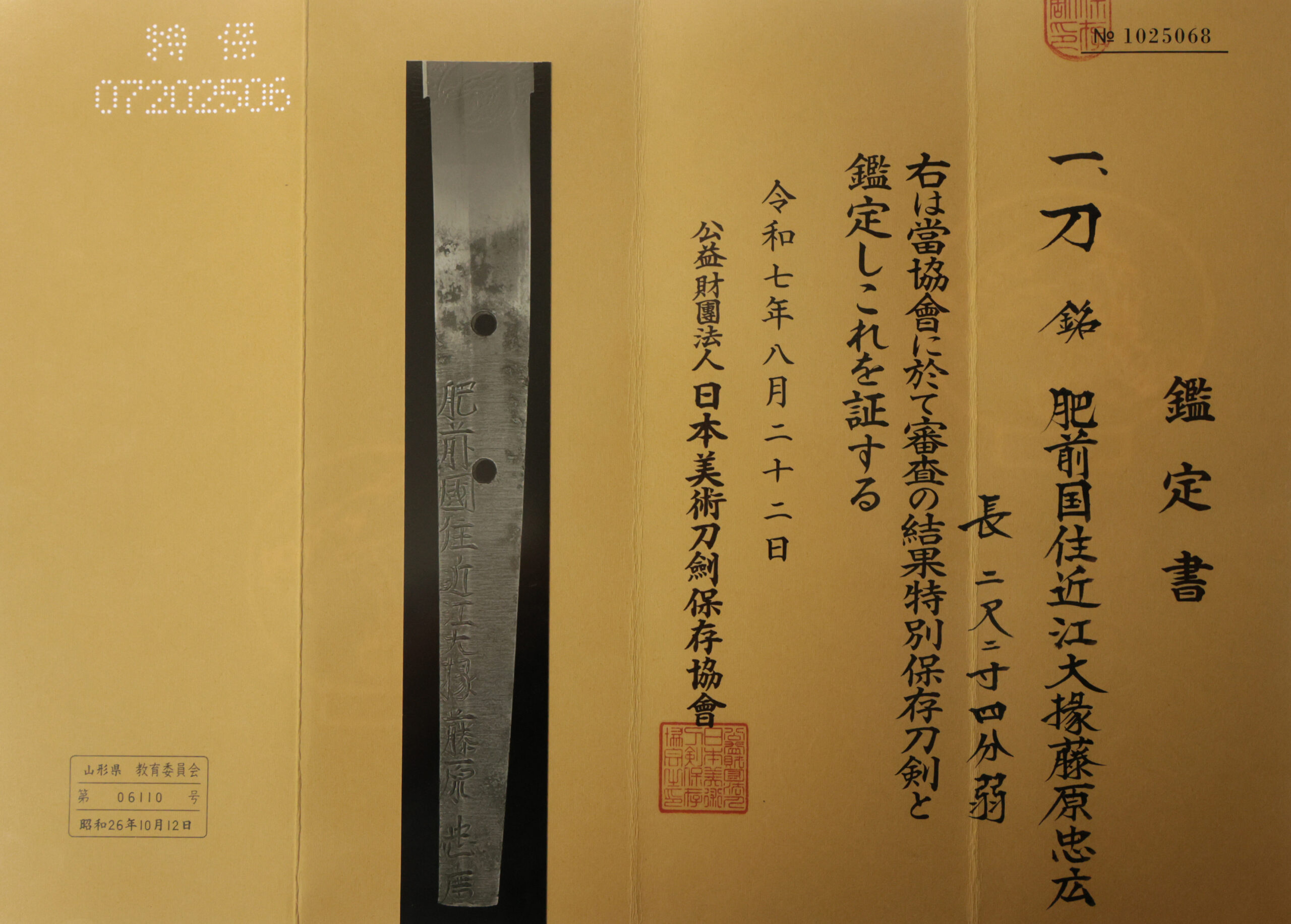
Authentication Paper:NBTHK TOKUBETSU Hozon Certificate for the blade (No. 1025068)
NBTHK, also known as Nihon Bijutsu Touken Hozon Kyokai (the Society for the Preservation of the Japan Art Sword), is one of the oldest Japanese sword appraising organizations in modern-day Japan. They authenticated the blade on August 22nd in the 7th year of Reiwa (2025). They appraised it as Tokubetsu Hozon Touken, the blade especially worth preserving for Japanese society. The purchaser will receive this original certificate as well. We can also translate what is written into English and make a PDF file for your record if you request.
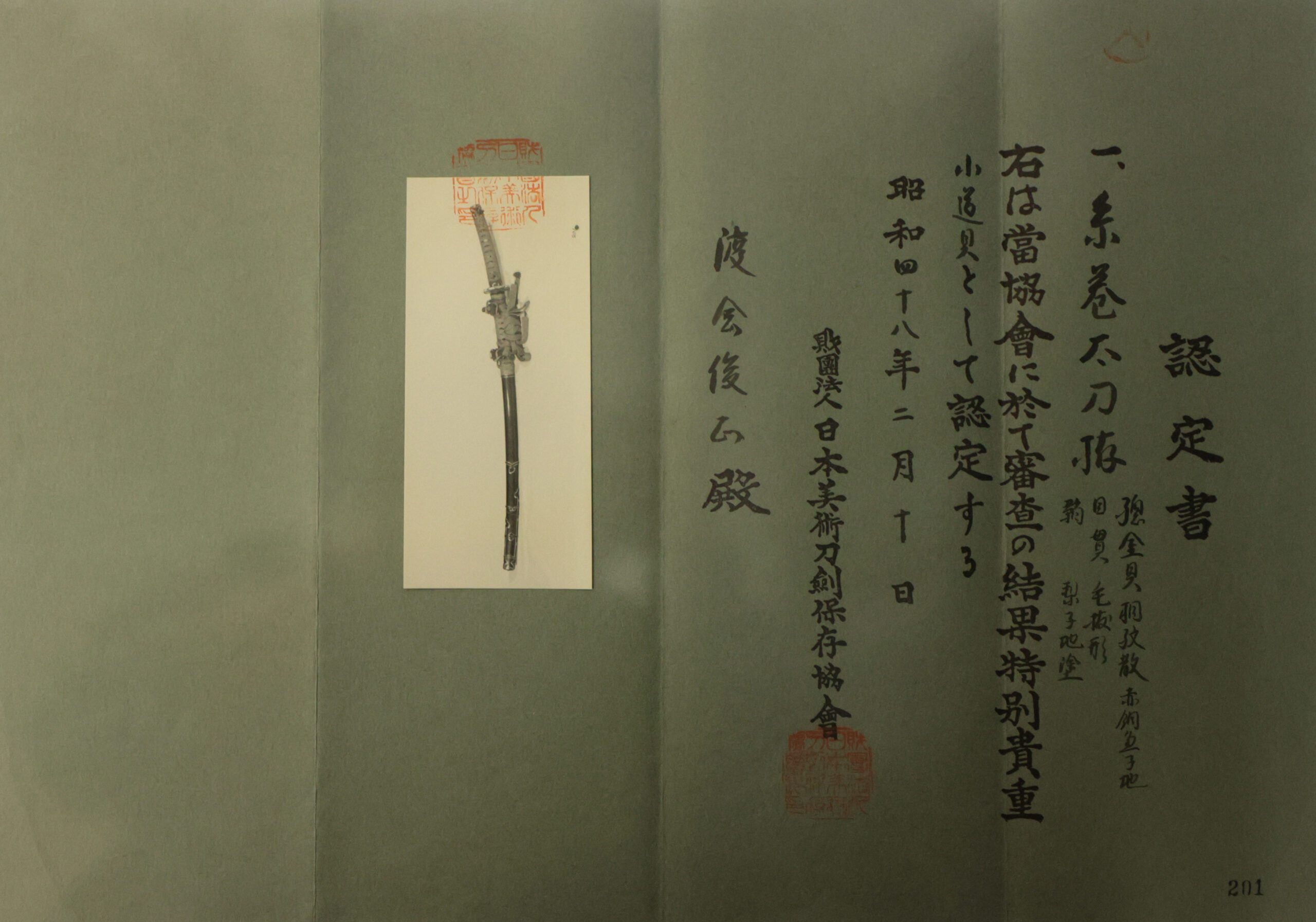
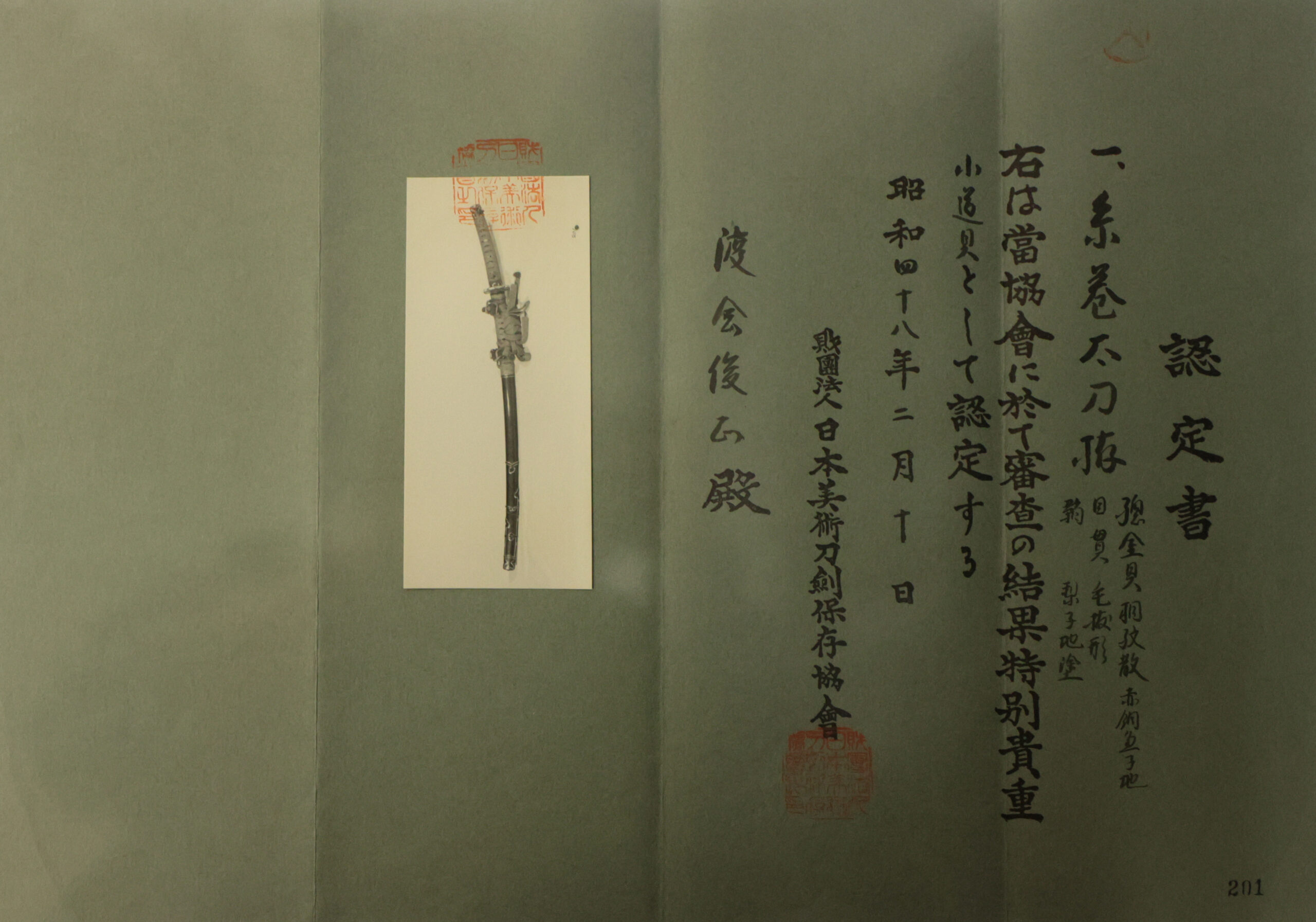
Authentication Paper: NBTHK Tokubetsu Kicho Certificate for the Koshirae (No.201)
NBTHK, also known as Nihon Bijutsu Touken Hozon Kyokai (the Society for the Preservation of the Japan Art Sword), is one of the oldest Japanese sword appraising organizations in modern-day Japan. They authenticated the Daisho Koshirae on February 10th in the 48th year of Showa (1973). They appraised it as Tokubetsu Kicho Kodogu, an old form of the certificate. The purchaser will receive this original certificate as well. We can also translate what is written into English and make a PDF file for your record if you request.
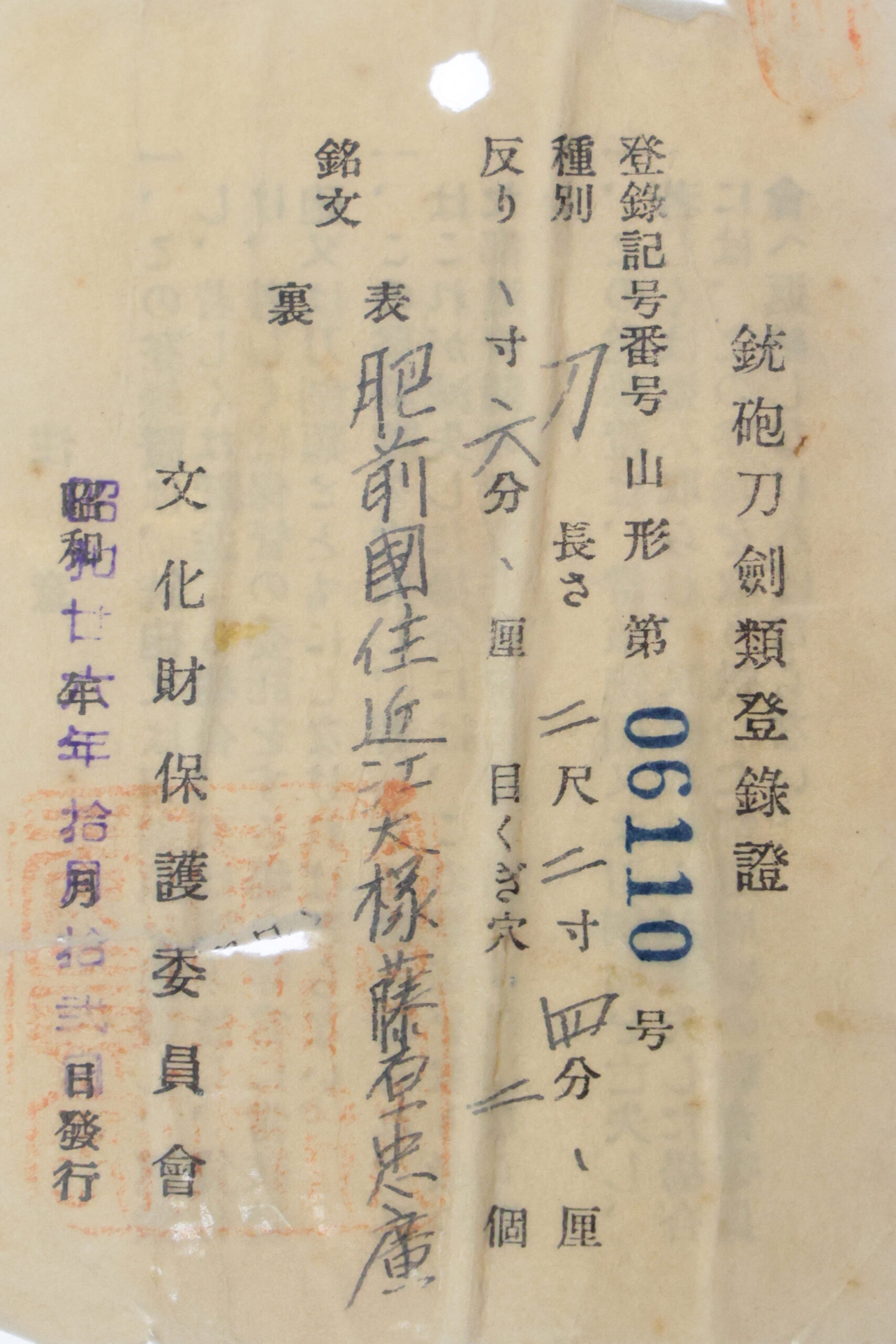
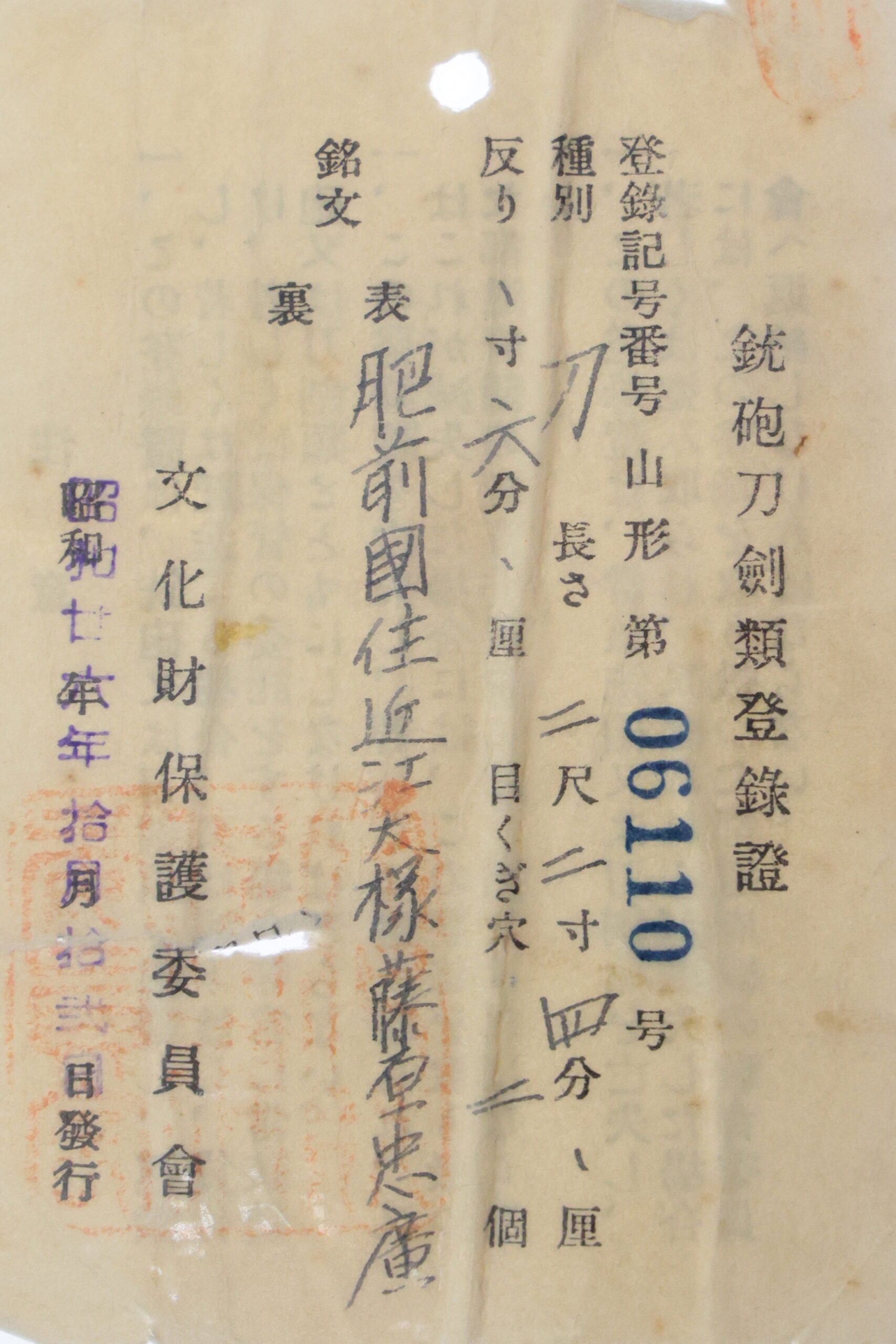
Registration Number : Yamagata 06110
The Board of Education in Yamagata prefecture issued a registration paper for this sword. It is called Jyu Hou Token Rui Tourokusho (銃砲刀剣類登録証). Bunkacho (The Agency for Cultural Affairs) acknowledges a Japanese sword with this paper as a work of art.
The sword needs to be traditionally hand-forged and made of Tamahagane carbon steel to be registered in the system. With this paper, its owner in Japan can legally own an authentic Japanese sword. Based on this registration number, we will apply for its export permit.
This paper will need to be returned to the board of education when the sword is being shipped abroad, but you can receive a copy of it. An English translation of this registration paper is available on request.
—————————————————————–
【About us】
Samurai Museum is located in Tokyo, Japan, exhibiting antique artifacts related to the Samurai history. Samurai Museum Shop is the place for those who are interested in Japanese culture and craftsmanship. We deal with antique Samurai swords/armor, traditional crafts made in Japan and so on.

【Japanese Sword& Export Process】
The Japanese swords we deal with are hand-forged edged swords made in Japan. It was made from the traditional carbon steel called TAMAHAGANE(玉鋼). Samurai Museum is familiar with the proper legal procedure for an antique/ authentic Japanese sword to be exported from Japan. We have sent more than 1000 Japanese swords for the past few years (~2025) to amazing owners who appreciate its historical value.
Each Japanese sword is registered under the Agency for Cultural Affairs and the Board of Education in Japan. They issue a registration paper for each Japanese sword for its owner in Japan to legally possess it. The Japanese sword with its registration paper means it was traditionally hand-forged in Japan.
To legally export the sword from Japan to other countries, we will have to apply for its permit to the Agency for Cultural Affairs(Bunkacho) and return the original registration paper to the Board of Education. It normally takes around 2-4 weeks to receive this permit after submitting required documents. And we would like you to expect at least 1-1.5 months for your order to arrive at your given address after you ordered. For more detailed info, please click here.
It is allowed for residents in Japan to own authentic Japanese swords without a special license as long as they come with registration papers. Please feel free to contact us if you are a resident of Japan, whether temporarily or permanently. We will also assist you when you leave Japan and need to obtain the export permit.
【Payment Method】
We accept payment through Stripe (Credit card), PayPal, Apple Pay or ChromePay, all of which are secure payment methods. Also, you don’t need to make an account on Stripe for the checkout. If you prefer other payment method, please contact us. After confirming your payment, we will apply for an export permit. You may either pay in JPY, USD, AUD, CAD,EUR CHF or GBP. The price is set in Japanese Yen. Prices in other currencies are automatically calculated based on the latest exchange rate.

* If the amount is above 1 million JPY, Stripe or wire transfer will be the only options for payment.
【Shipping】
We have shipped authentic Japanese swords to the USA, Canada, Mexico, Germany , Belgium, France, Finland, UK,Hong Kong, Australia. If you don’t live in these countries and like to order, please contact us first before making a purchase. We offer Free International Shipping as long as we can send antique Japanese swords by EMS.
We normally ship by EMS(Express Mail Service) provided by Japan Post. We will send you a tracking number for your order as soon as we hand it to the post office. We will put 100 % insurance on the shipping document without any extra charge. Based on the total amount, there might be a duty tax or other fee for you to pay, depending on the countries. We use package cushioning to protect the item and put it in a PVC pipe, which is one of the most secure packages because of its durability.
It will normally takes 5-14 days for the item to arrive at your given address after we dispatch it. Time of delivery is estimated as accurately as possible by the carrier but does not take into account any delays beyond our control such as by inclement weather, post office holiday seasons.
* If you live in Australia and like to purchase an authentic Japanese sword, please click here to know the detail.
* If you live in the UK and like to purchase an authentic Japanese sword, please contact us first and click here to know the detail.

【Review】
Here is one of the reviews we received from a customer who purchased an authentic Japanese sword from us. For more reviews, please click here.
“My experience overall with the whole process was wonderful. I had many questions about the history and process to purchase these treasures. All my questions were answered very timely and complete. The staff is very knowledgeable and very well versed if any questions do arise.”
【How to make sure the condition】
Please keep in mind that what you are going to purchase is an antique item. We uploaded high resolution photos for you to check its condition thoroughly. If you like to see more photos with different angles, please feel free to contact us. We will be happy to send them to you so that you can make informed decision. It is essential for us to know that you are happy with your choice of a sword. and we are prepared to use the best of our ability to serve you.
【How To Contact Us】
Please contact us through email, Facebook Messenger or Live Chat if you have any questions. You can find each icon on the right side of the website. Please click one of them to reach us. We will reply to you within 1-2 business days.
【The Art of Nihonto (Japanese Sword)】
Samurai’s history is a profound, eloquent legacy of ancient Japanese warriors in which millions of people worldwide are being fascinated. If you like to find out the art of Nihonto, please click here.
【A Guide to Japanese Sword Maintenance】
After acquiring an genuine Japanese sword, it is also important to know how to take good care of it. Here is the special video for you. Mr. Paul Martin, Japanese sword expert, shows you how to give proper maintenance to your sword. By mastering how to clean the Japanese sword, its aesthetic beauty will last forever.
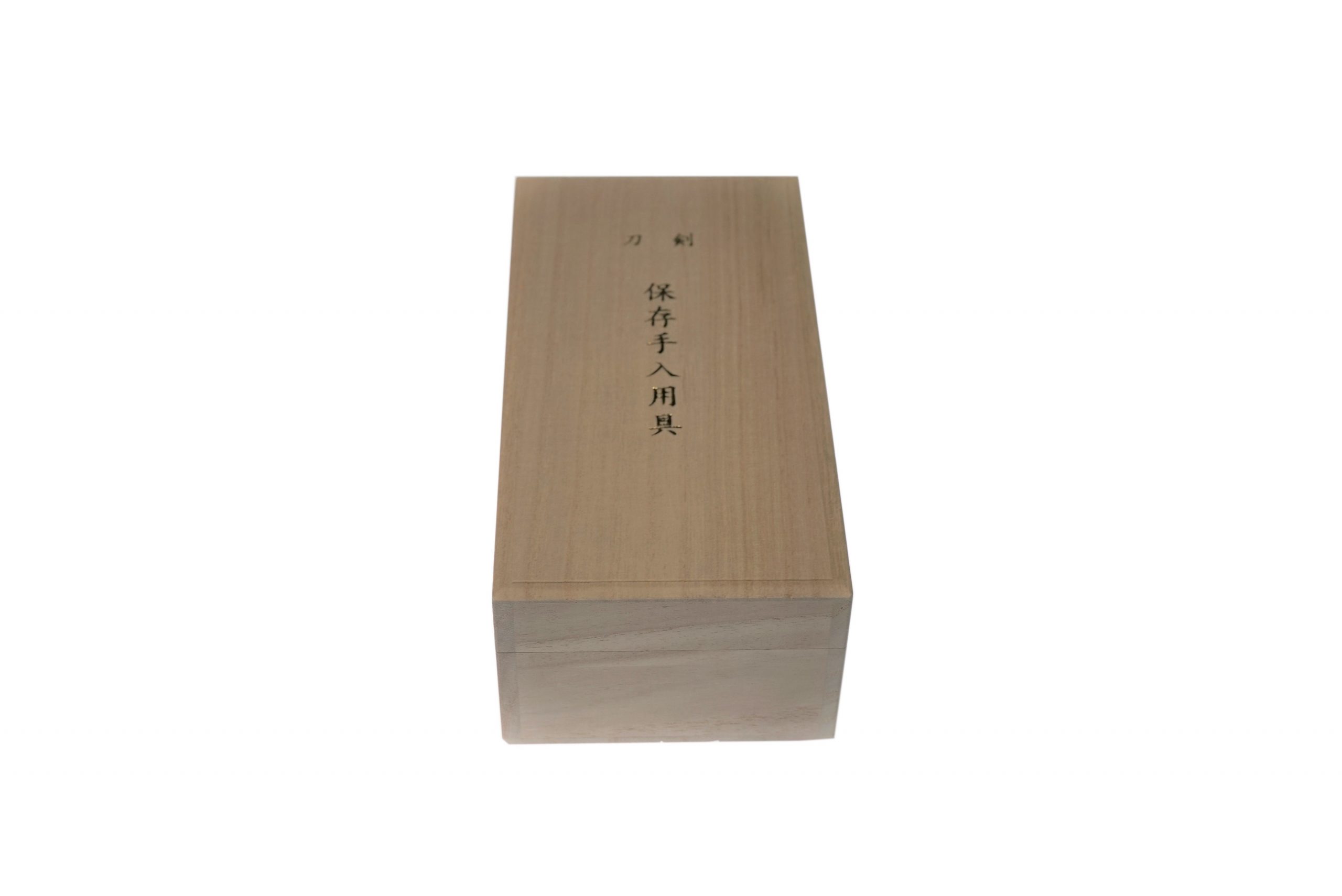
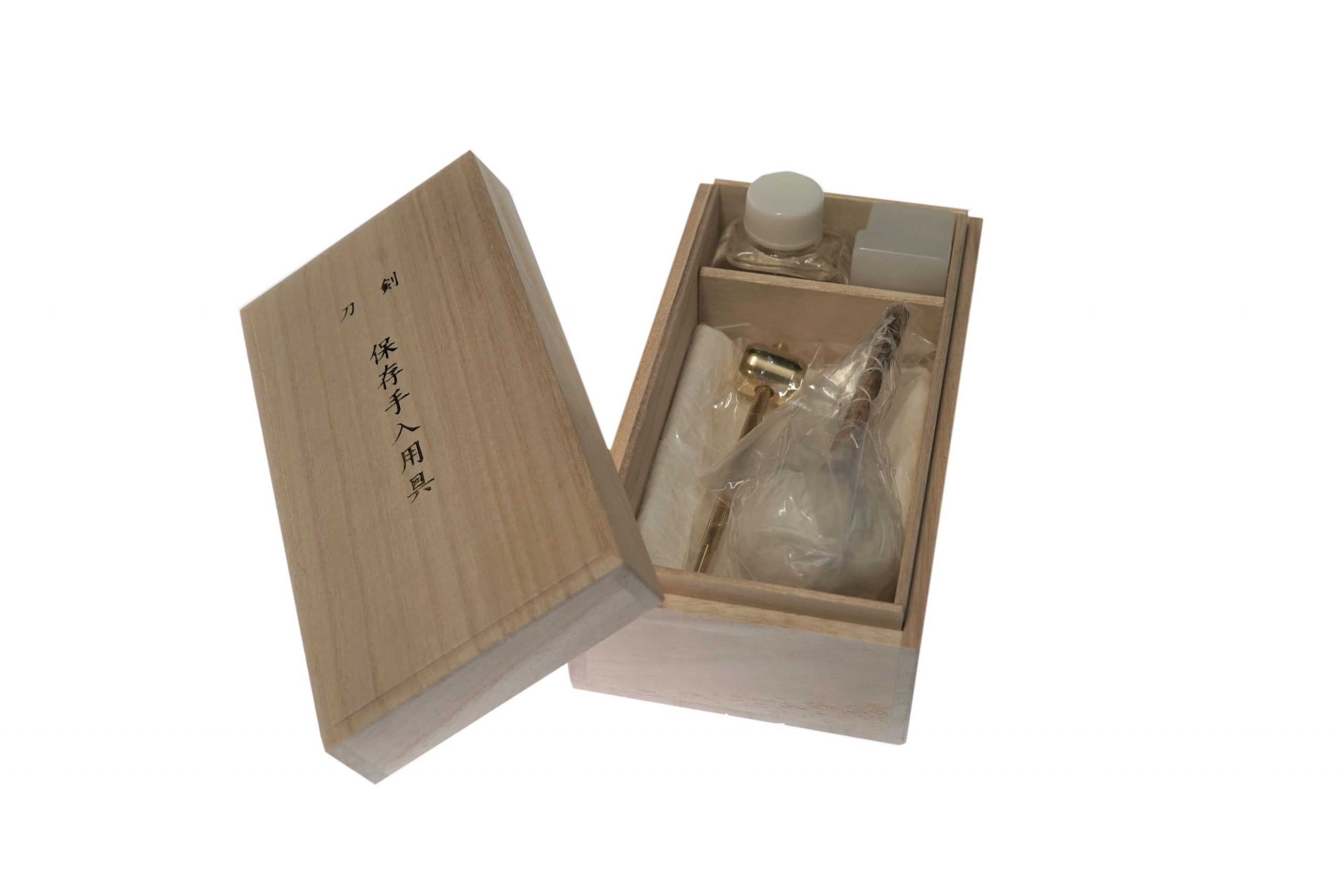
When you purchase a Japanese sword from us, you can get a Free Japanese sword maintenance kit. It comes with four tools(Choji Oil, Uchiko Whetstone Powder, Peg remover, Oil Applicator). By watching the video instruction above , you can enjoy learning how to maintain your Japanese sword while appreciating it. If you have any difficulty assembling the sword or cleaning the blade, you can feel free to contact us.
MORE ANTIQUE JAPANESE SWORD FOR SALE
SWORDS WITHOUT CERTIFICATES FOR SALE
LEARN JAPANESE SWORD TERMINOLOGY
Thank you for reading all the information on the page. If you have any difficulty choosing the right Japanese sword for you, we will be more than happy to help you find the one that speaks to you the most. Please feel free to contact us.