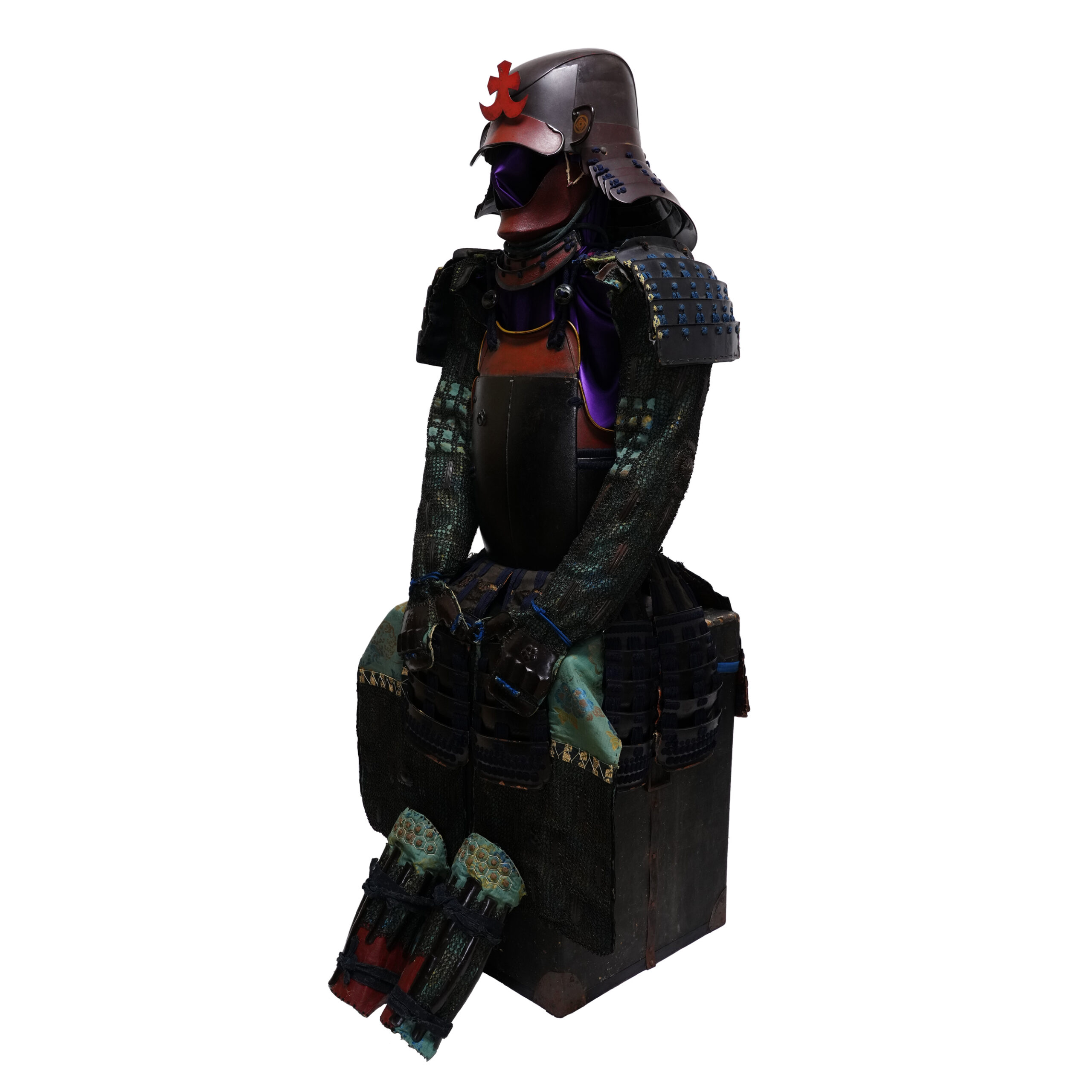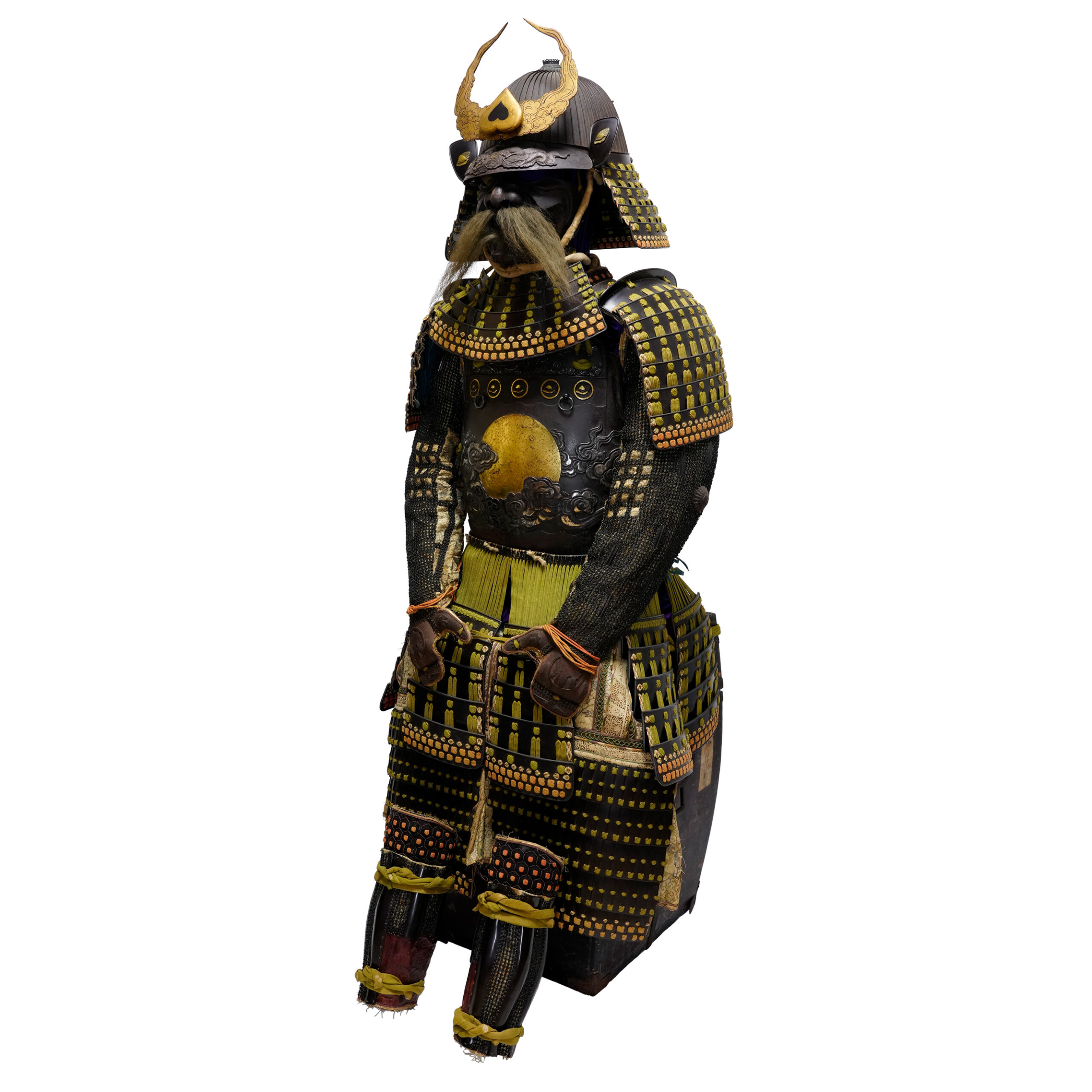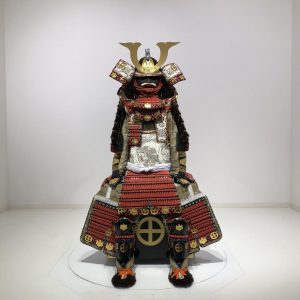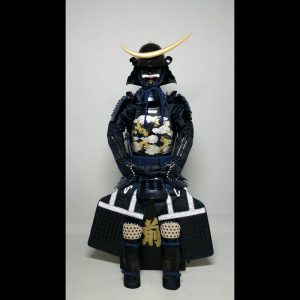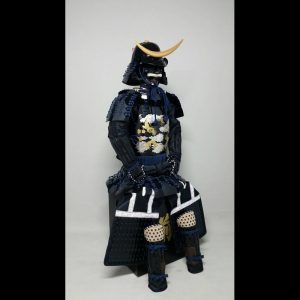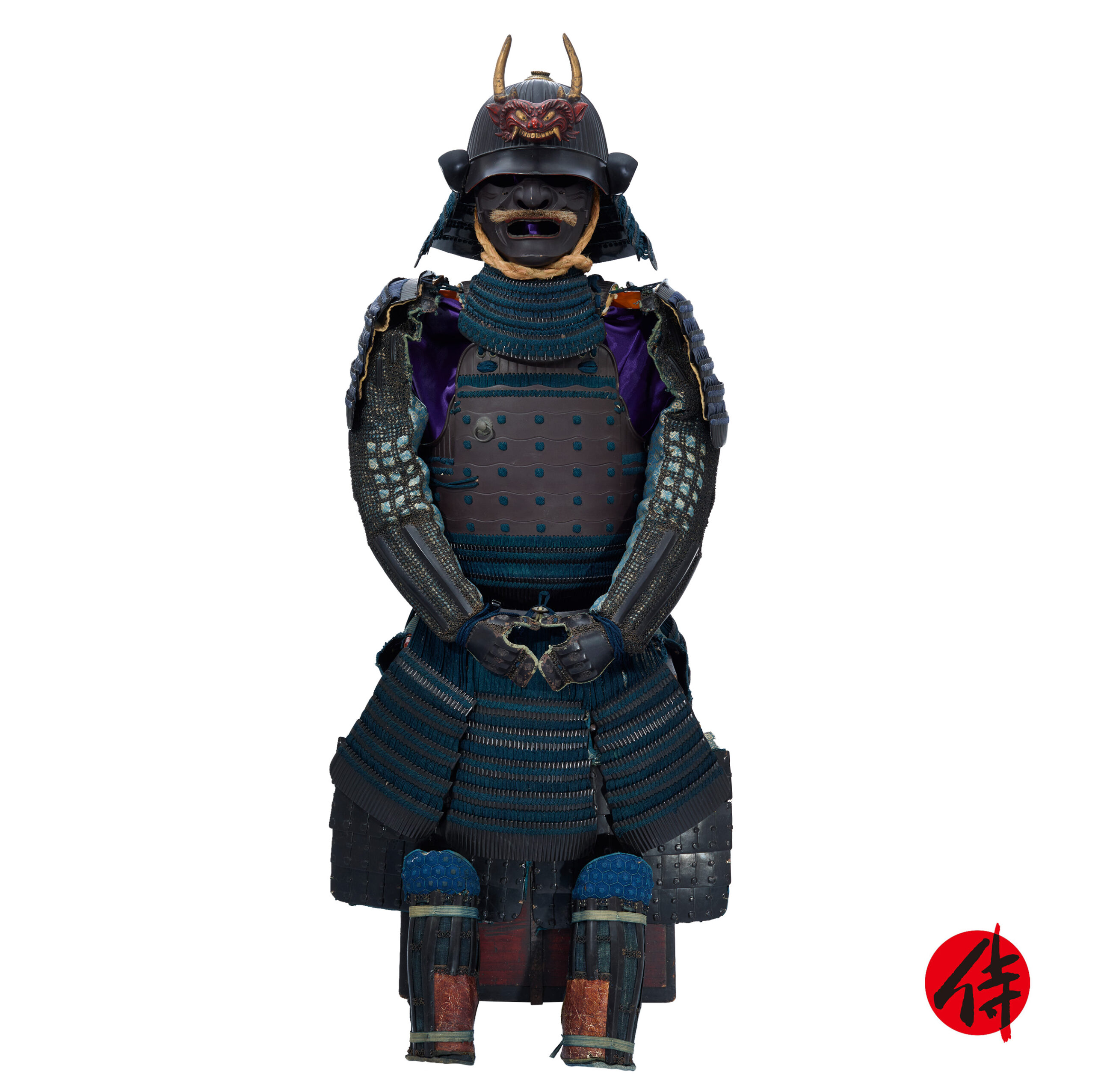
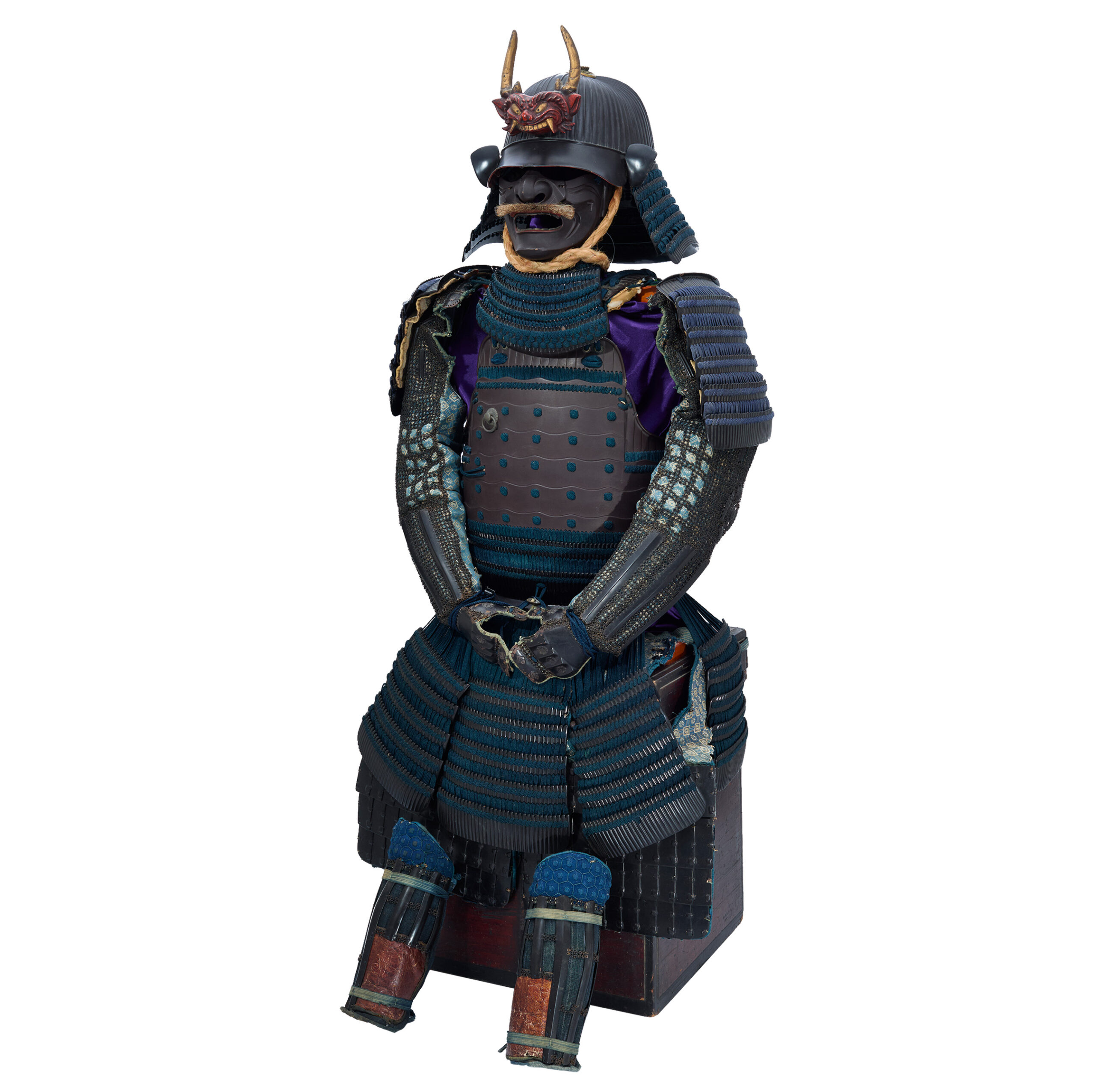
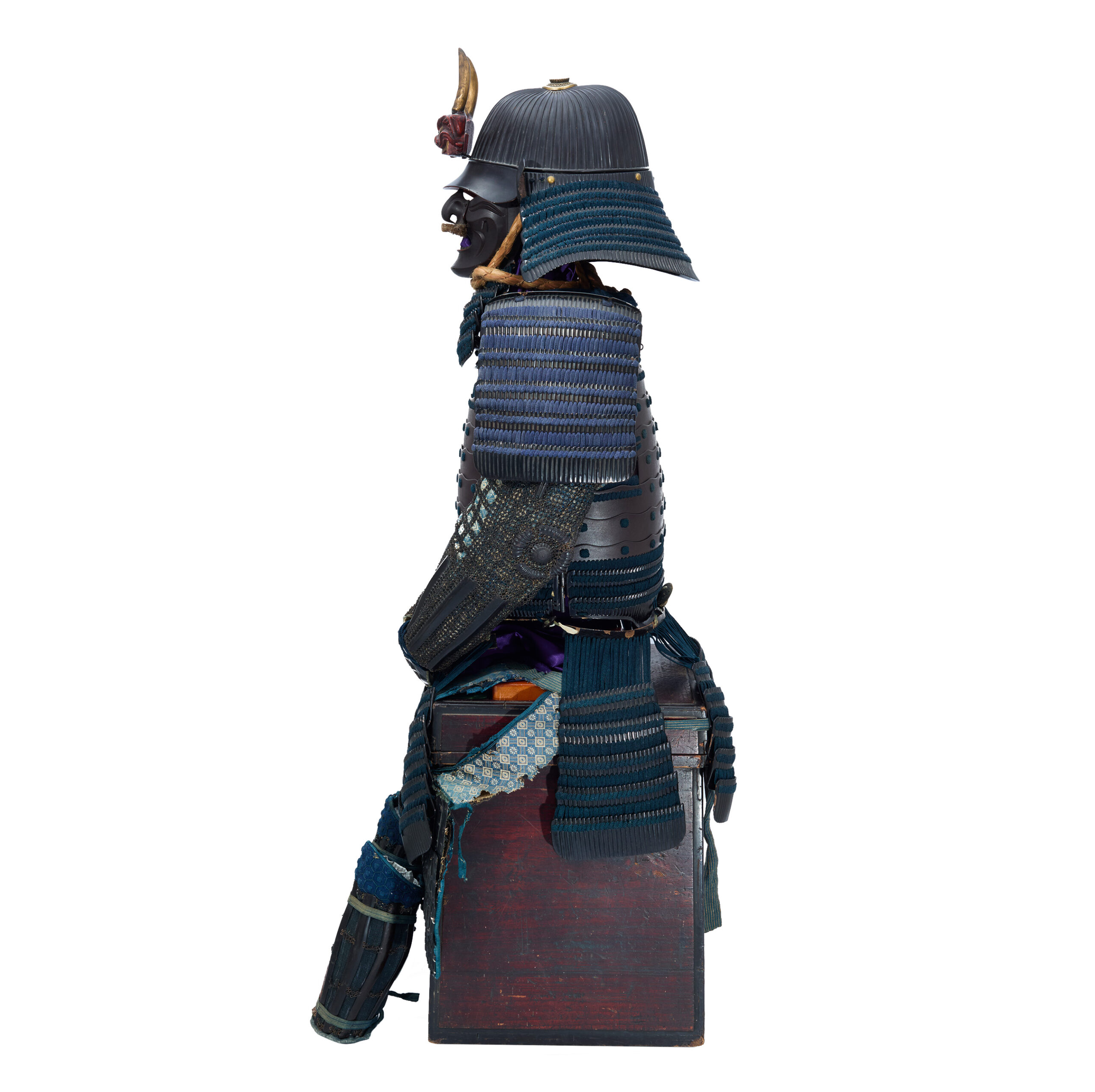
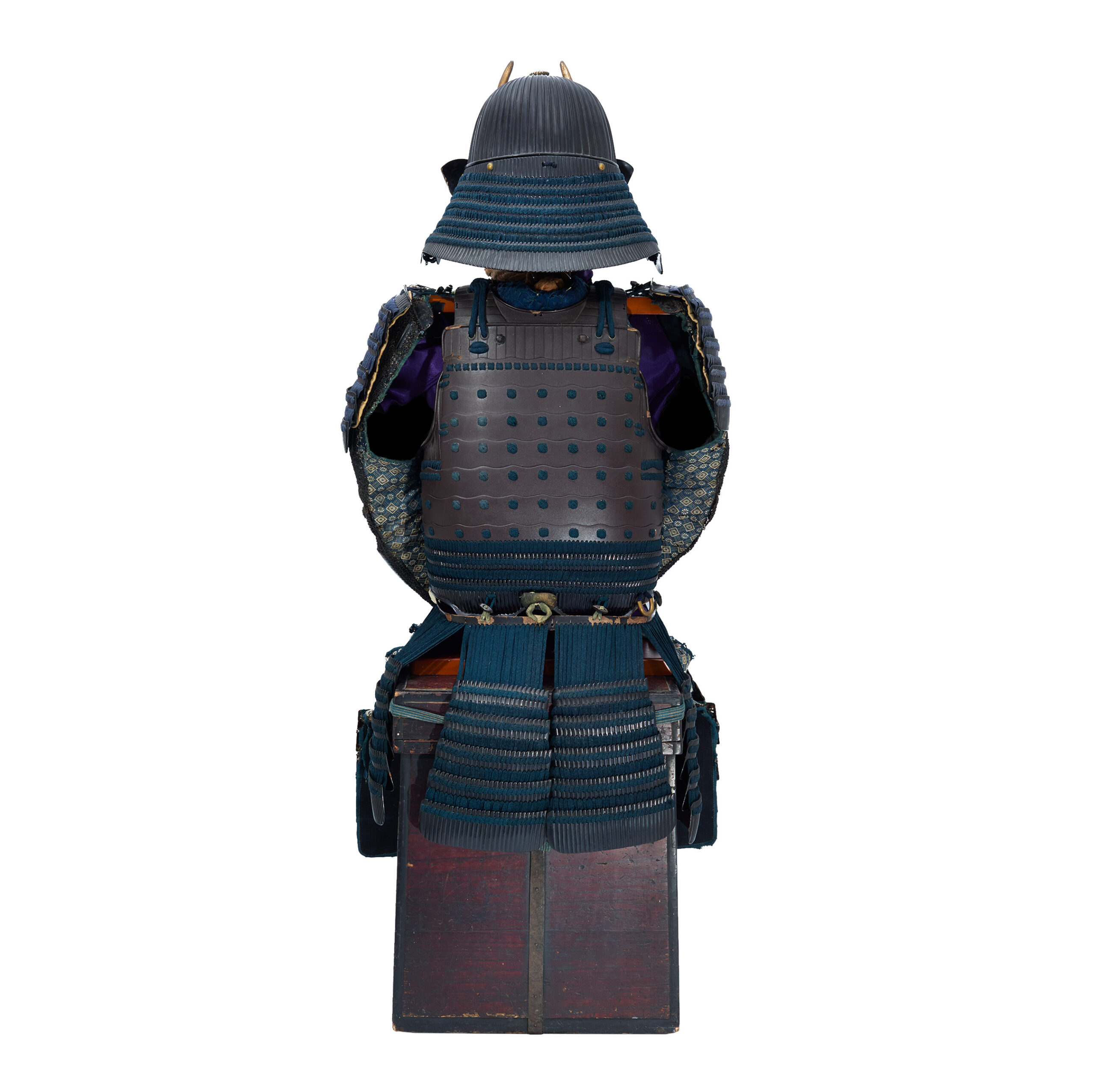
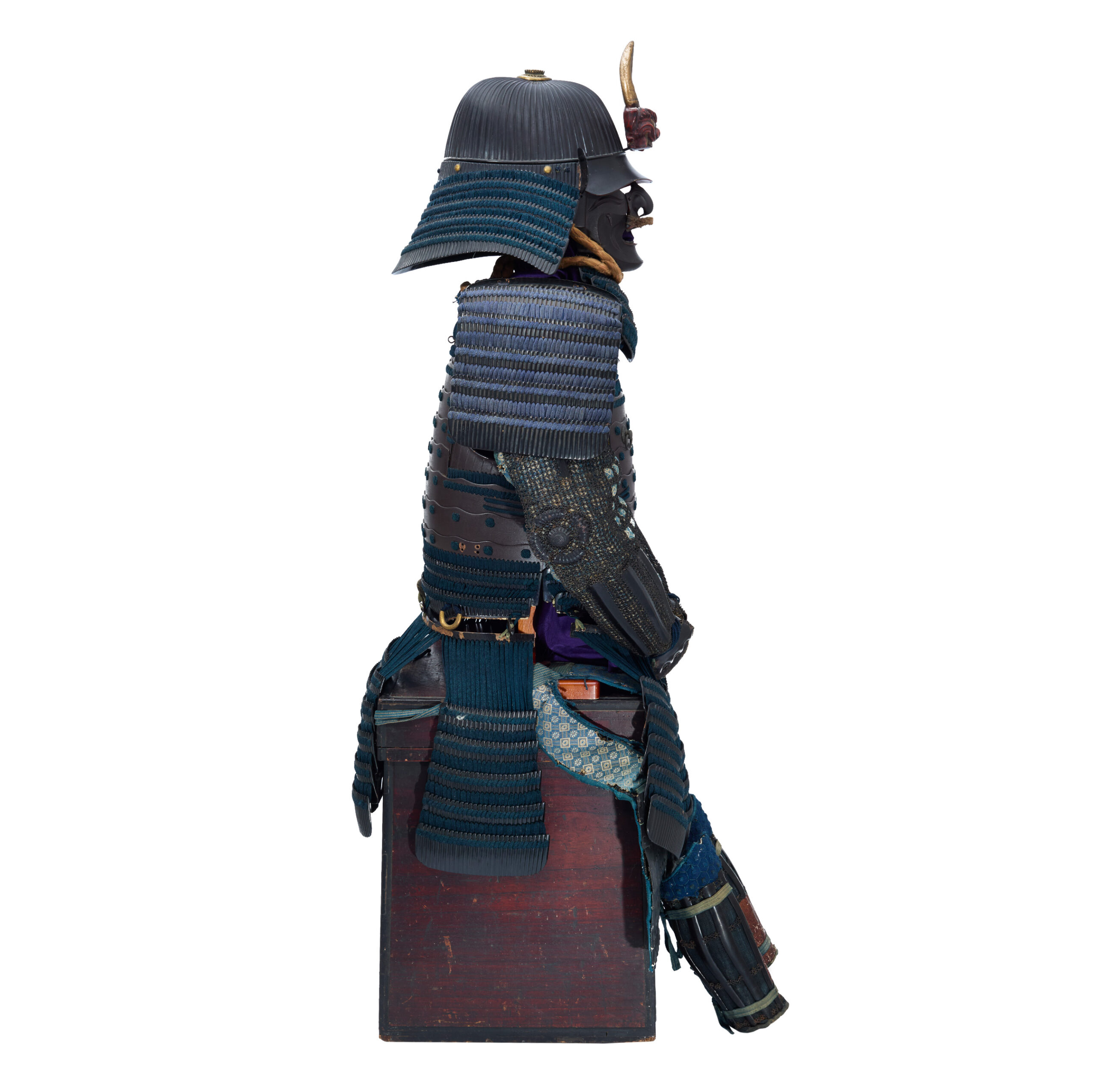
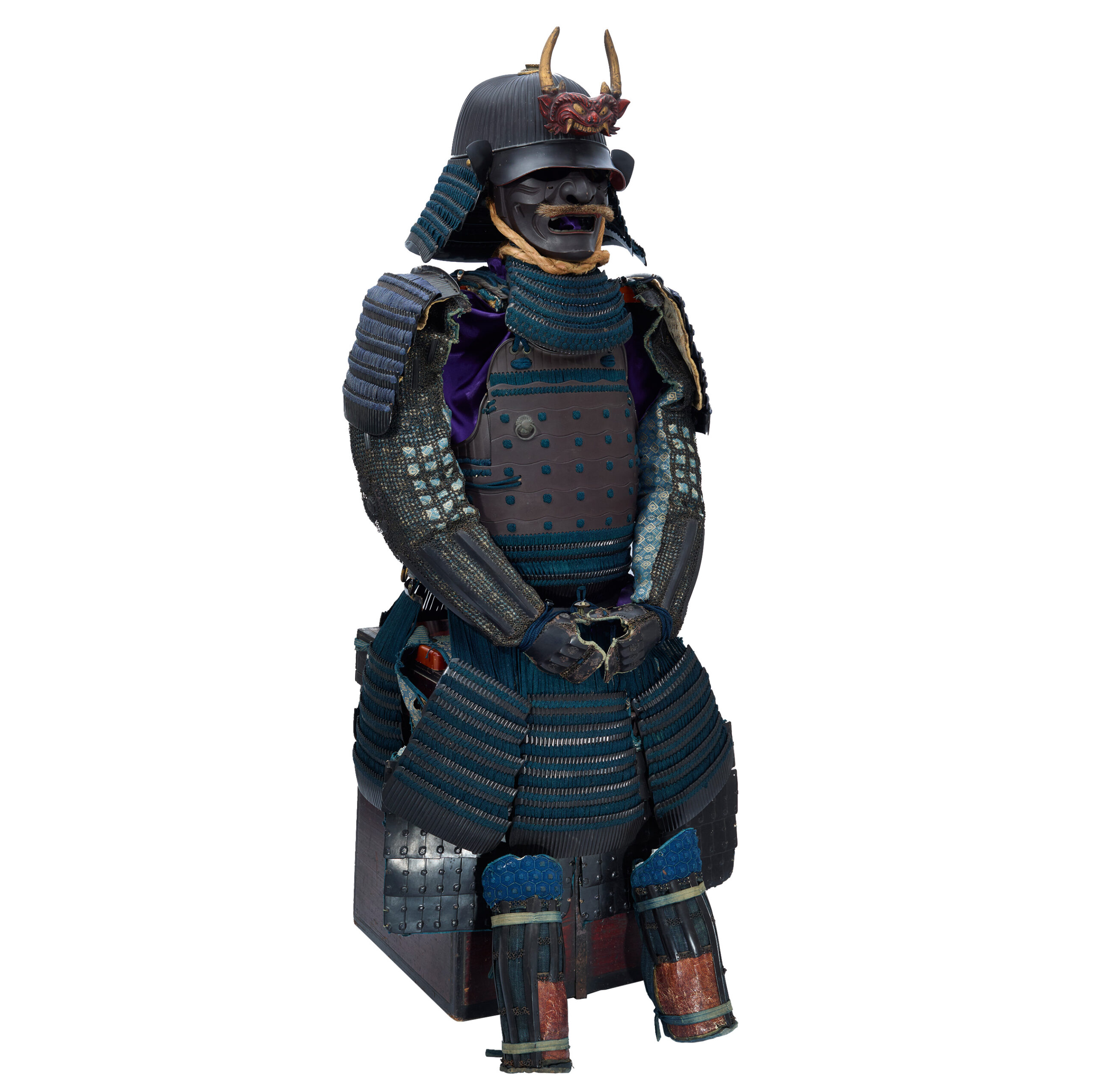


Antique Mid Edo Period Samurai Armor with Tokubetsu Kicho Shiryo Certificate (A-56)
Period: Mid Edo Period (1688-1800)
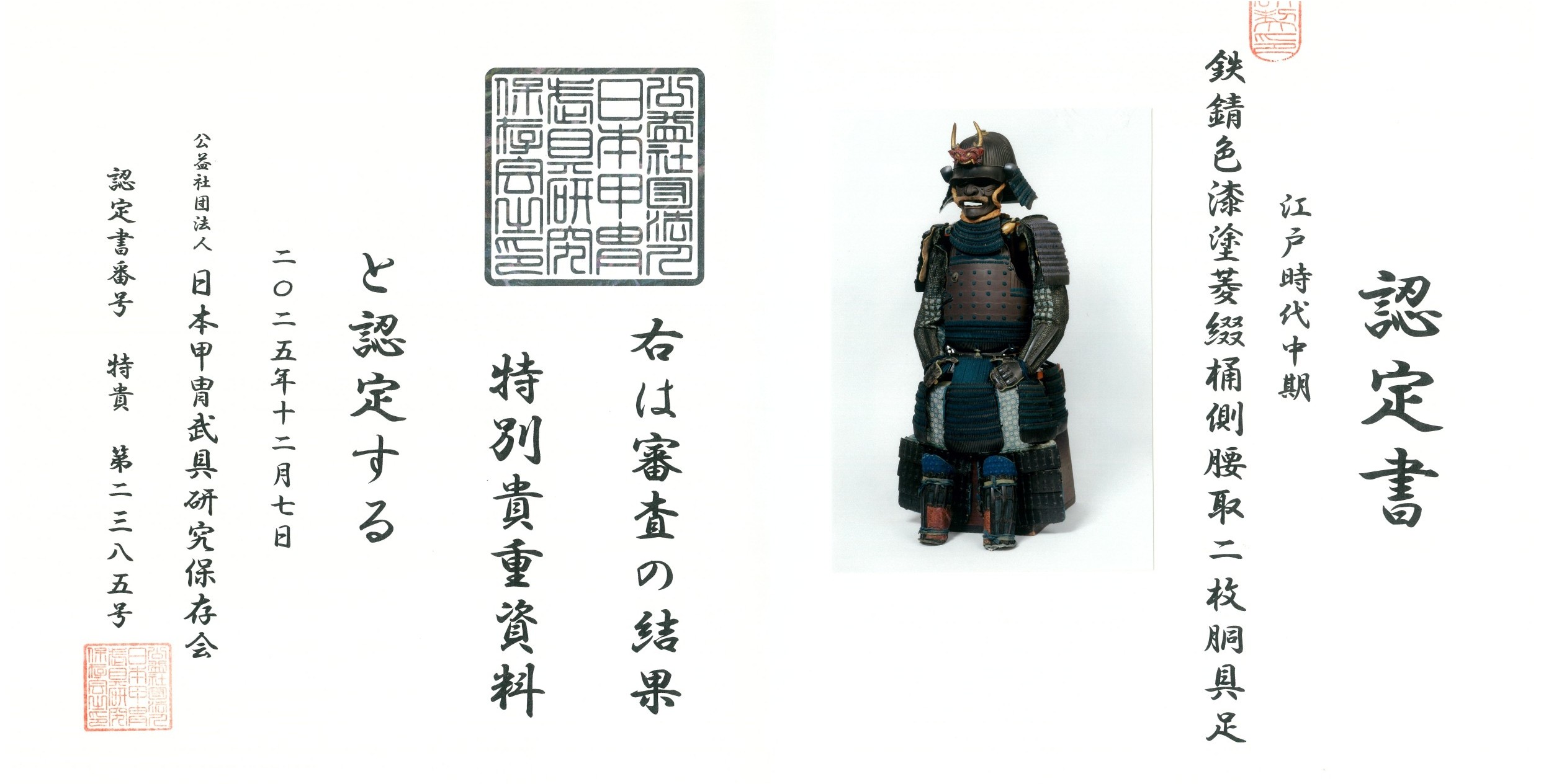
Appraised by The Association for the Research and Preservation of Japanese Helmets and Armor on December 7th 2025. We are expecting to receive its certificate in 2-3 months.
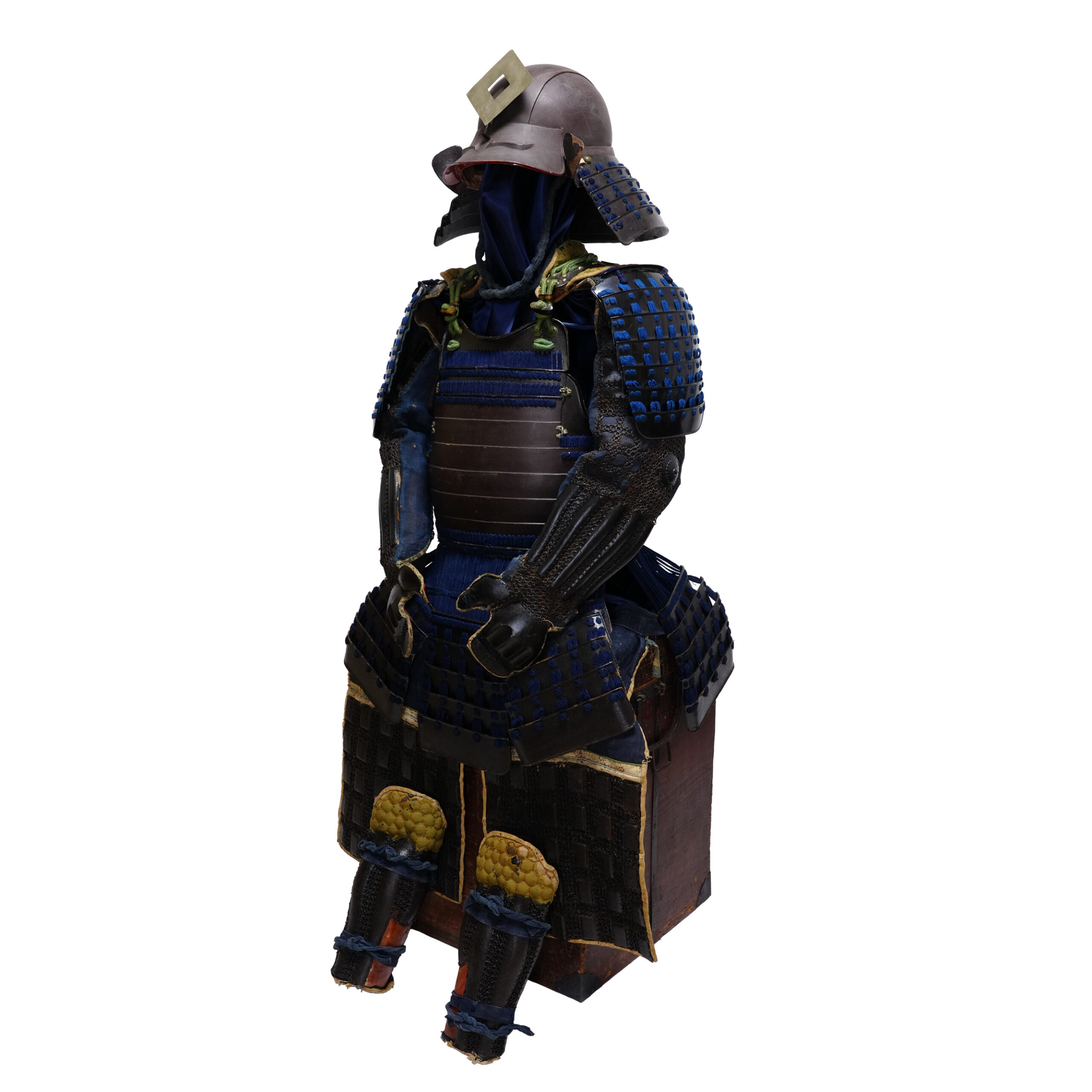
Kabuto (helmet)
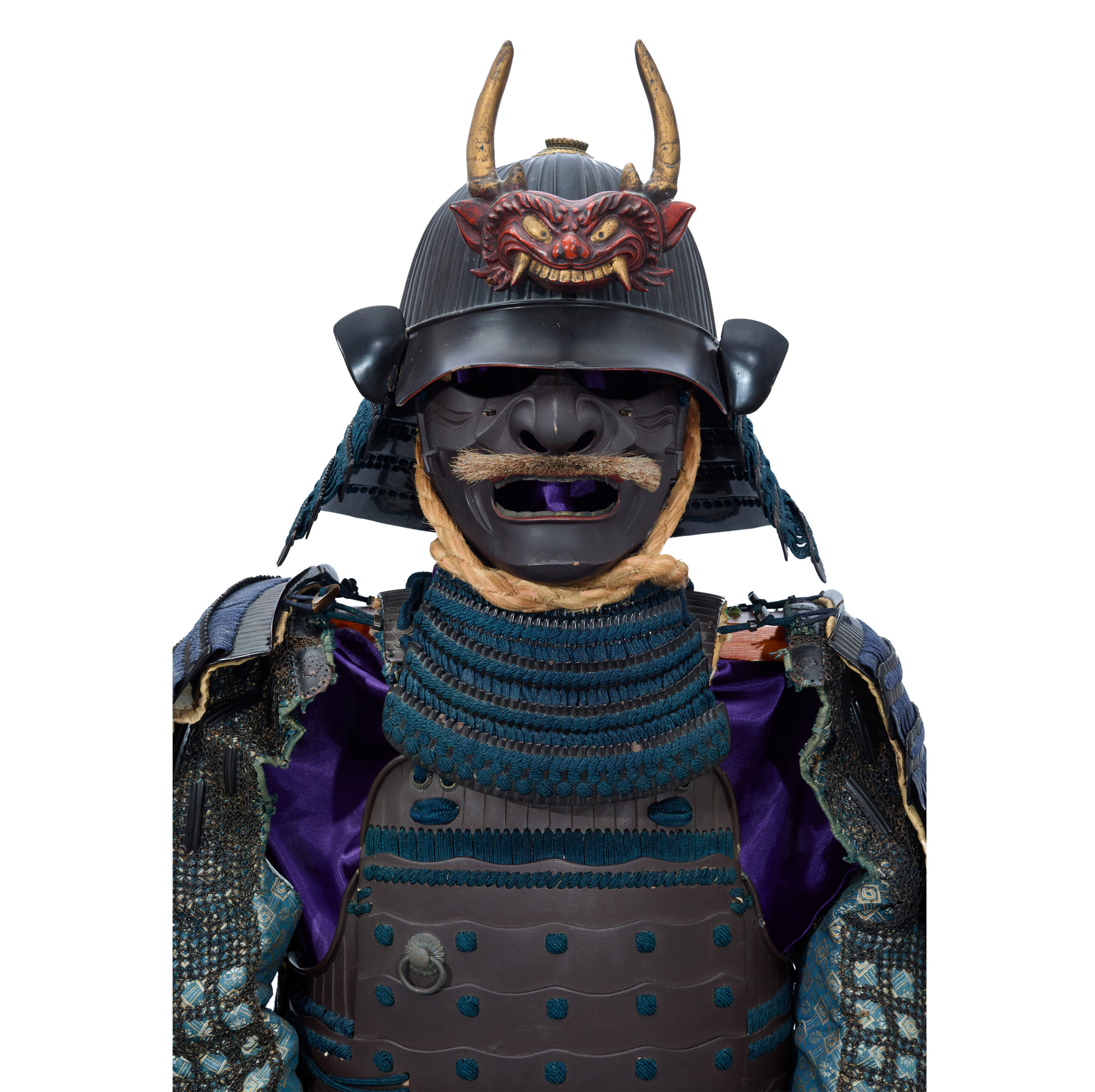
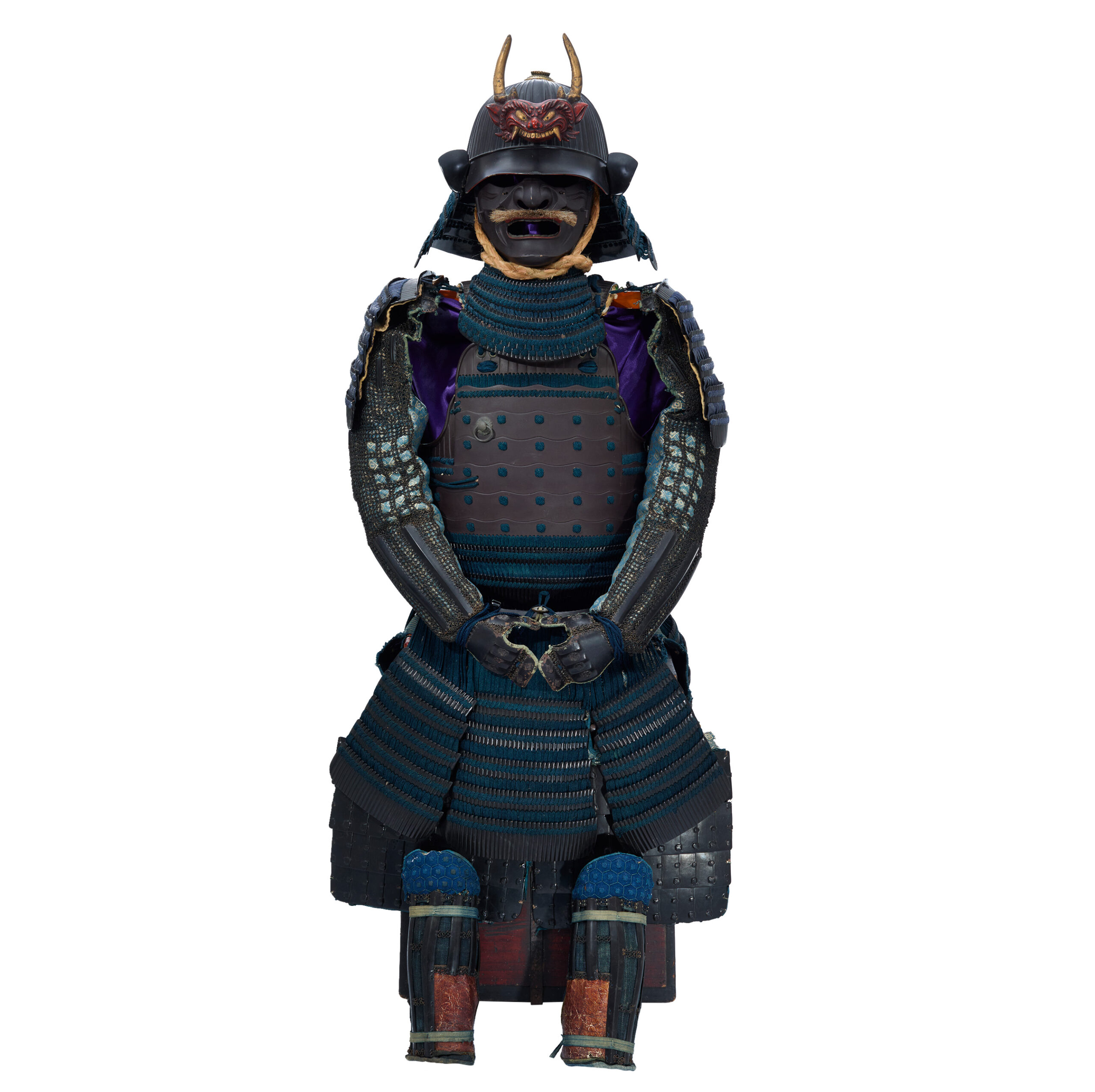
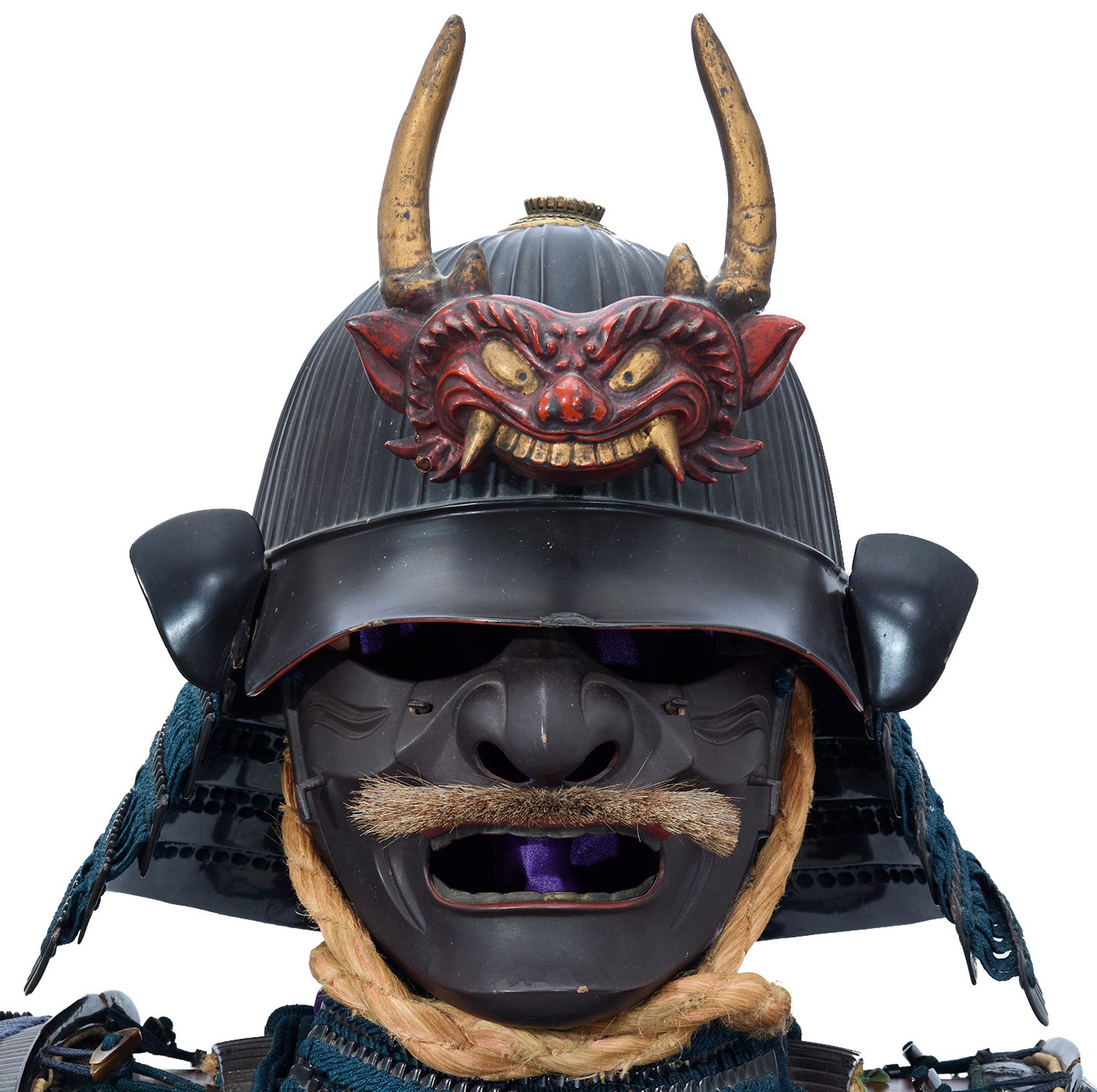
■Helmet bowl: Suji Kabuto
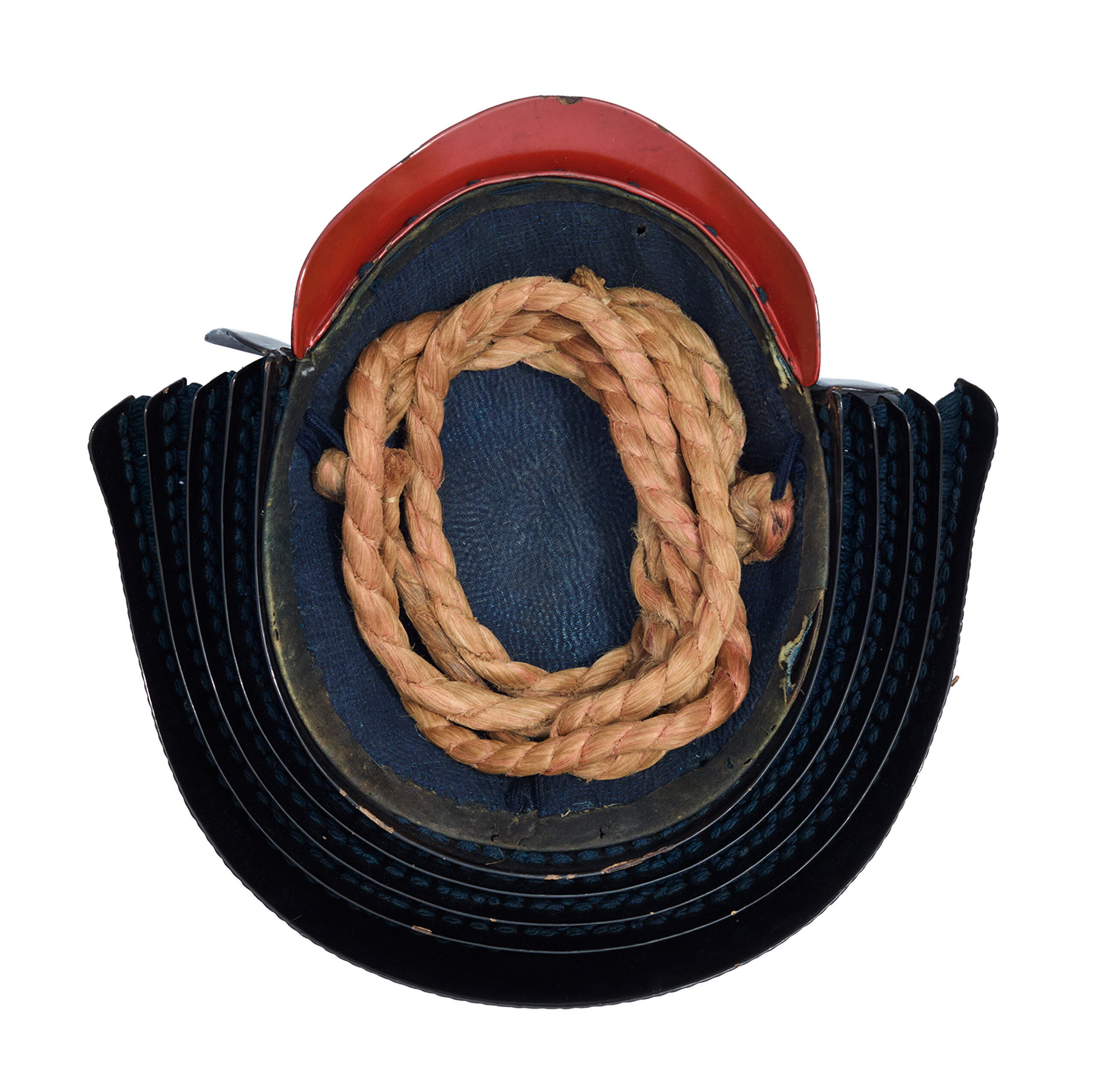
The kabuto (helmet) served as essential head protection for the samurai. While early helmets were designed primarily for practical use, over time they came to express the warrior’s dignity, individuality, and even religious beliefs. From the late Muromachi period to the Edo period, more decorative helmets known as kawari kabuto (unusual or exotic helmets) appeared, often adorned with materials such as animal fur, seashells, plants, or paper.
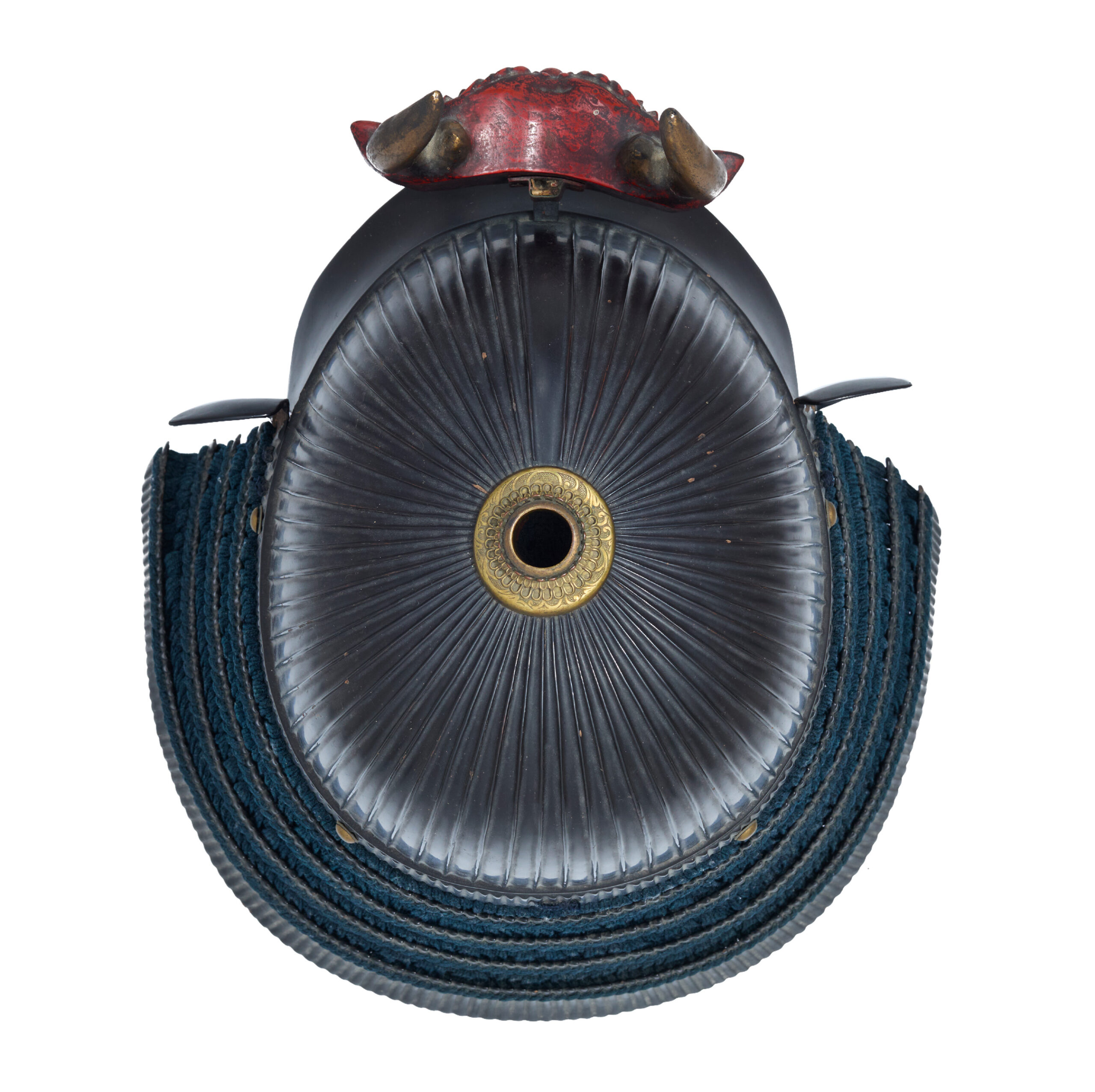
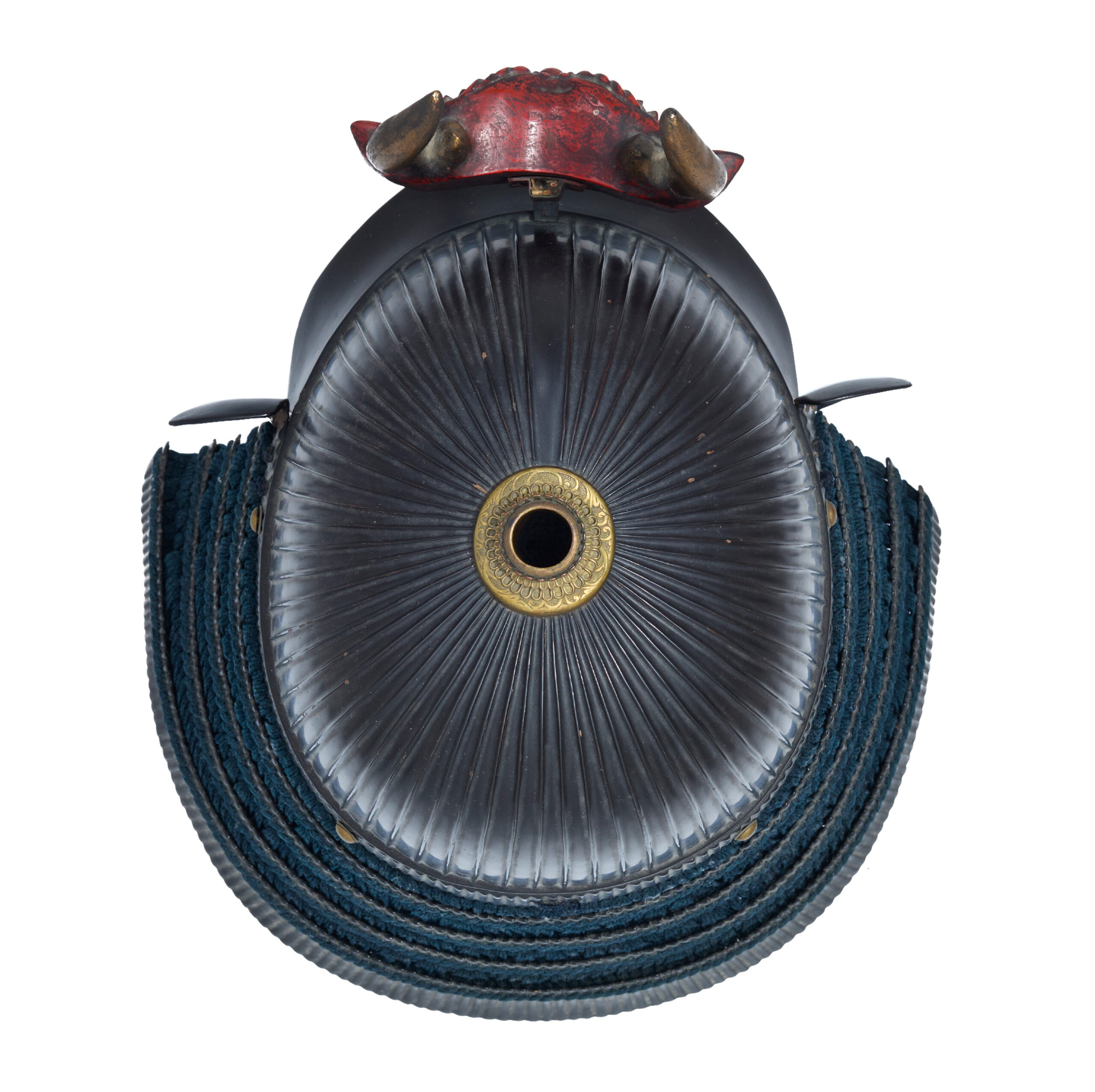
Among the more practical designs, the suji kabuto (ridged helmet) became highly valued. Its bowl was constructed with raised ridges designed to deflect the strikes of swords, reducing their impact. This innovation also contributed to weight reduction, meeting the demands of changing battle tactics in the 14th–16th centuries. Production of suji kabuto flourished during the Muromachi period. This example is a Rokujūyonken Suji Kabuto (Sixty-Four Plate Suji Kabuto), made by riveting together 64 individual iron plates to form the helmet bowl, with radiating ridges that combine both beauty and functionality. The use of such a high number of plates created a smoother, more rounded silhouette, showcasing the advanced craftsmanship of armorers of the time.
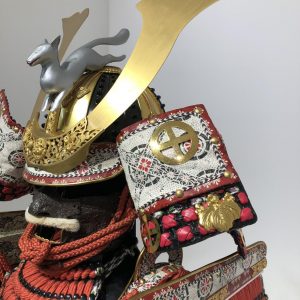
Furthermore, at the very top of the helmet bowl is the tehen-no-ana (天辺の穴, “top opening”), which in this piece is adorned with an intricate design: a chrysanthemum flower at the center surrounded by an arabesque (karakusa) pattern. In Japanese culture, the chrysanthemum is a symbol of nobility and longevity, famously associated with the Imperial family. The arabesque motif, depicting endlessly extending vines, represents vitality, prosperity, and the flourishing of descendants. Originally, the tehen-no-ana was a functional opening through which the warrior’s topknot (mage) would protrude. However, as it provided an easy target for enemy attacks, this practice gradually disappeared around the Kamakura period (1185–1333). Thereafter, the opening lost its practical use and instead became a space for elaborate decoration, as seen in this example.
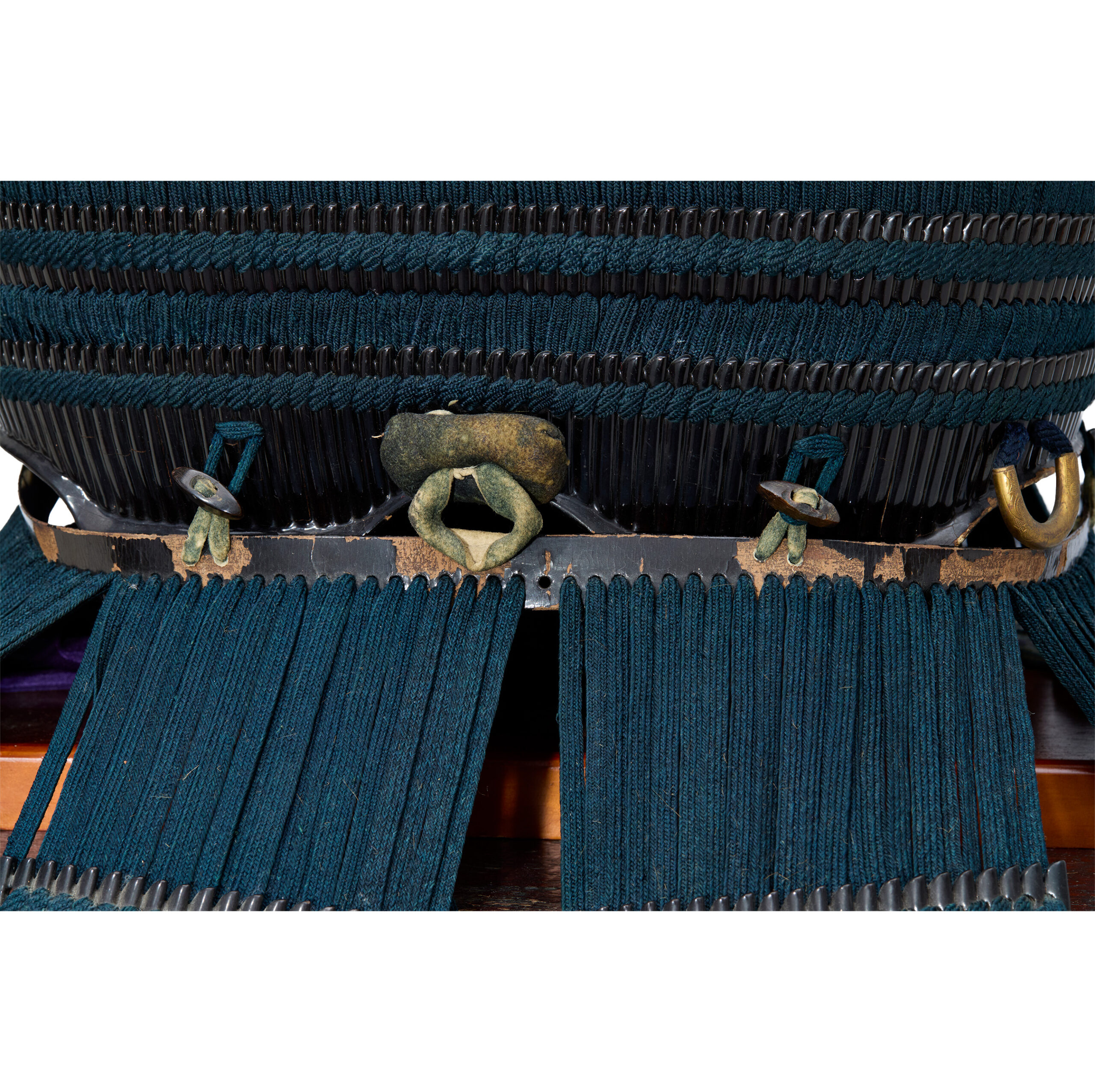
■Shikoro (side neck guard):
Black lacquered plates laced with navy blue threads.
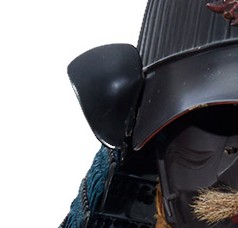
■Fukikaeshi (side neck guard)
The fukikaeshi are the side flaps attached to both ends of a samurai helmet (kabuto). They served a defensive function by protecting the face from sword strikes, while also providing space for decorative designs that indicated a warrior’s status and affiliation.
■Menpo (face guard): Ressēmen (烈勢面)
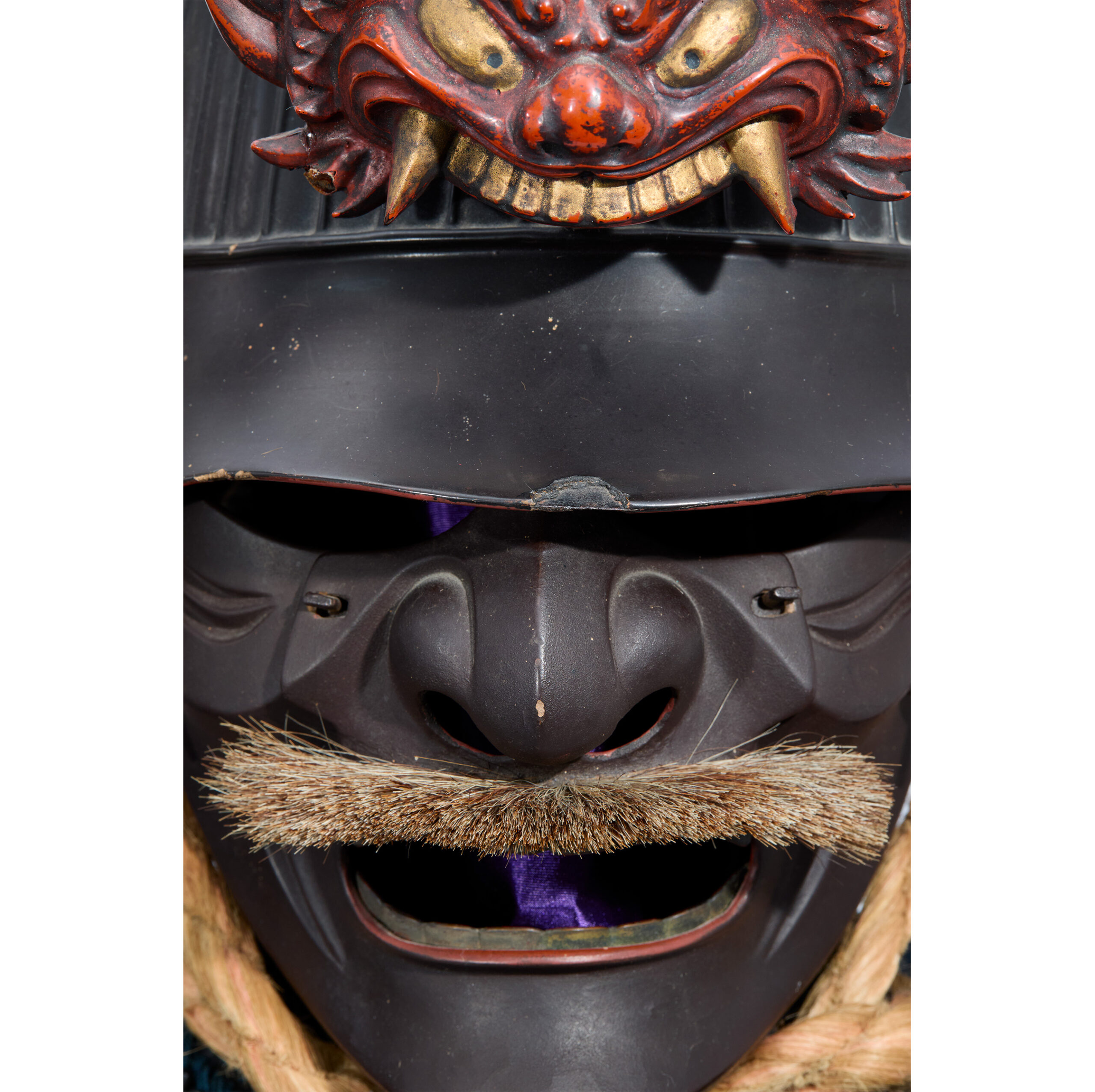
This type of menpō (face guard) is called a ressēmen (烈勢面). The name literally means “fierce expression mask.” As the term suggests, it was crafted to give the wearer a fearsome look on the battlefield. Such masks not only provided protection for the face but also served a psychological purpose—intimidating opponents and expressing the warrior’s spirit.
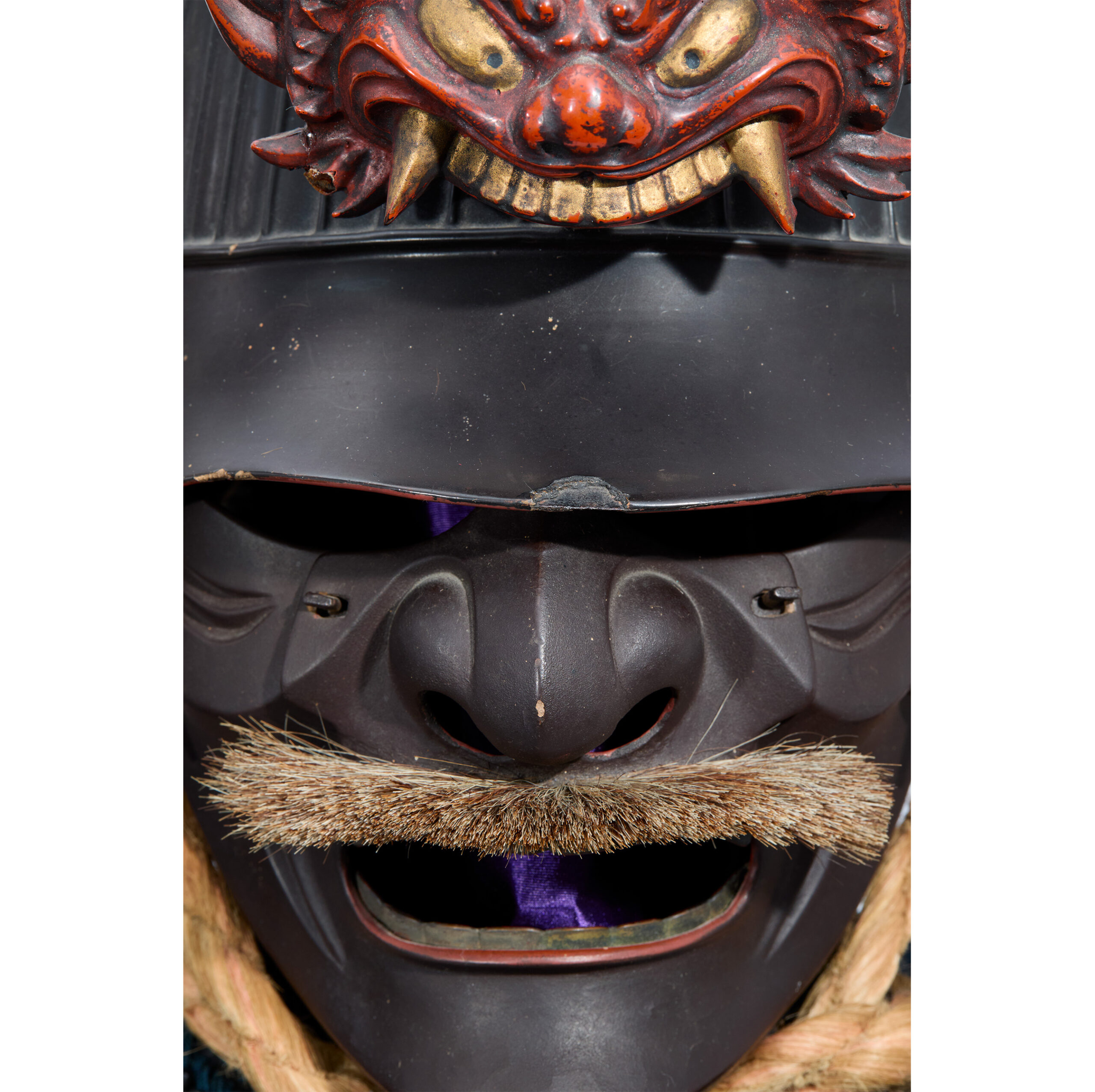
■ Maedatemono (Front decoration): (Shishi, a mythological lion-like creature)
This kabuto is fitted with a maedatemono (前立物, front ornament), an element traditionally used to dignify the helmet and enhance its visual presence. At the center of the maedatemono is a Shikami (獅子噛 or 魅) motif. The Shikami depicts the fierce visage of a shishi, a mythological lion-like creature imbued with demonic power, and was widely employed as a protective and intimidating symbol. This motif was among the most popular designs in samurai helmets and armor, embodying strength, authority, and the power to ward off evil.
Armor
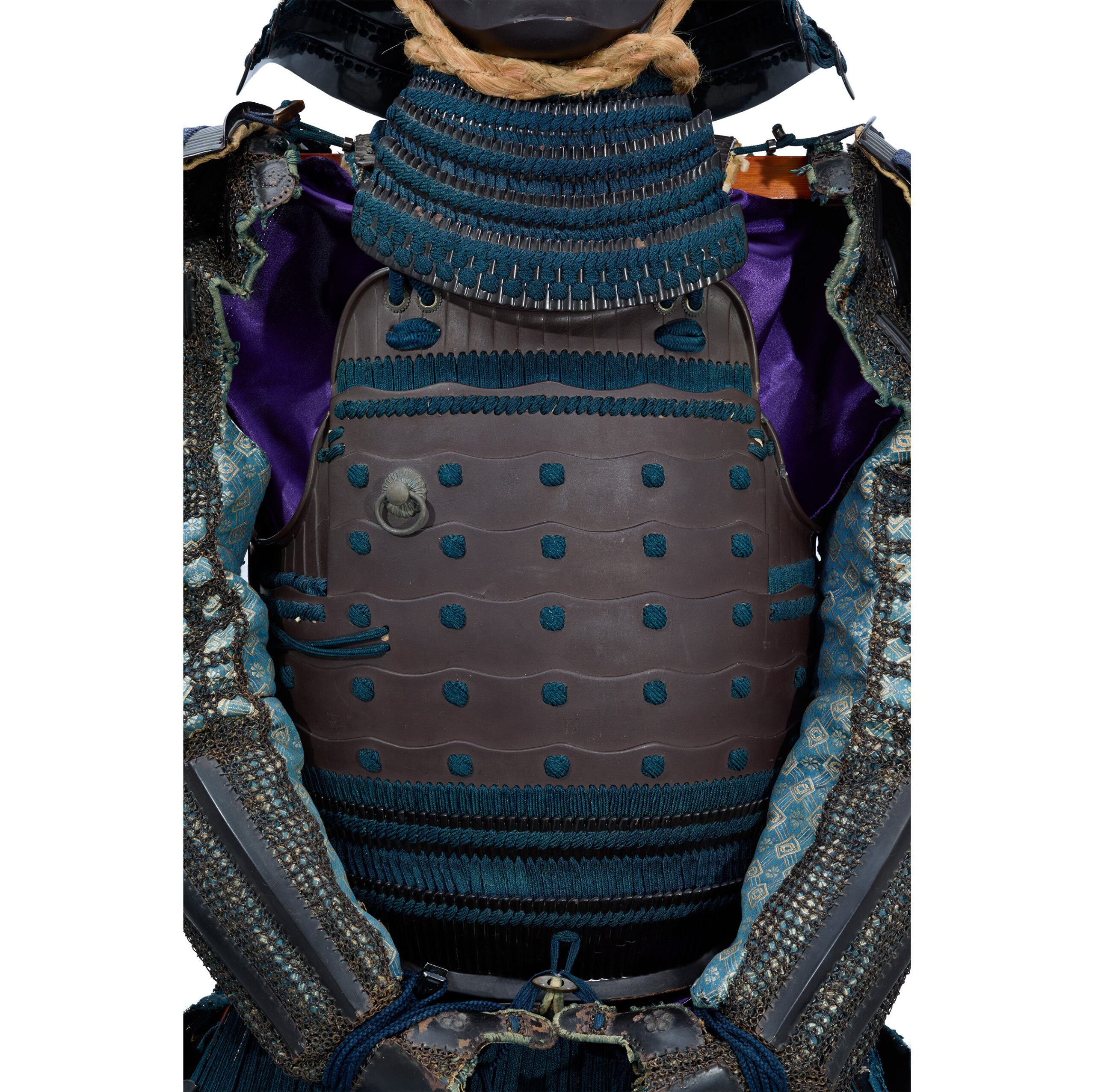
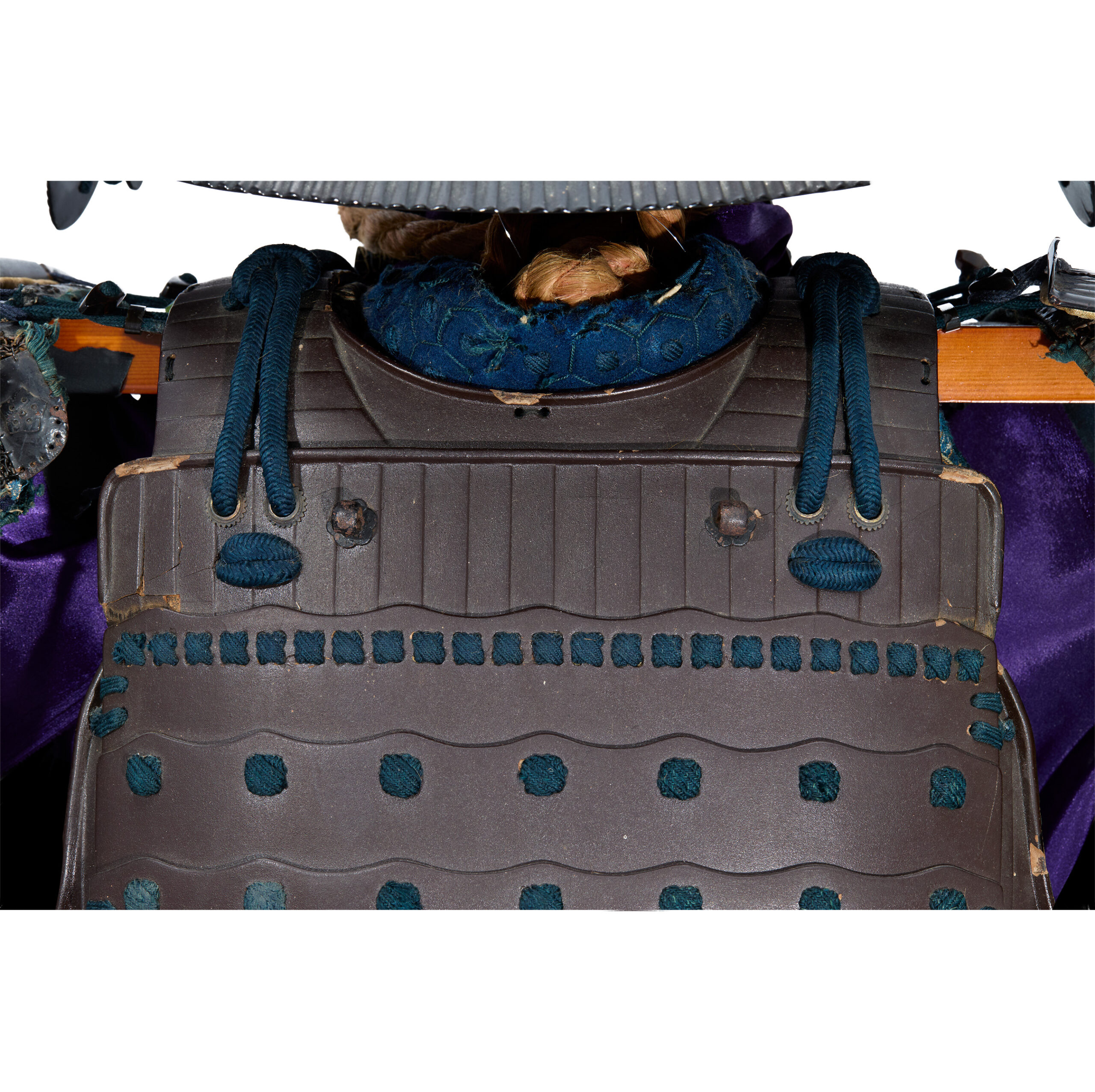
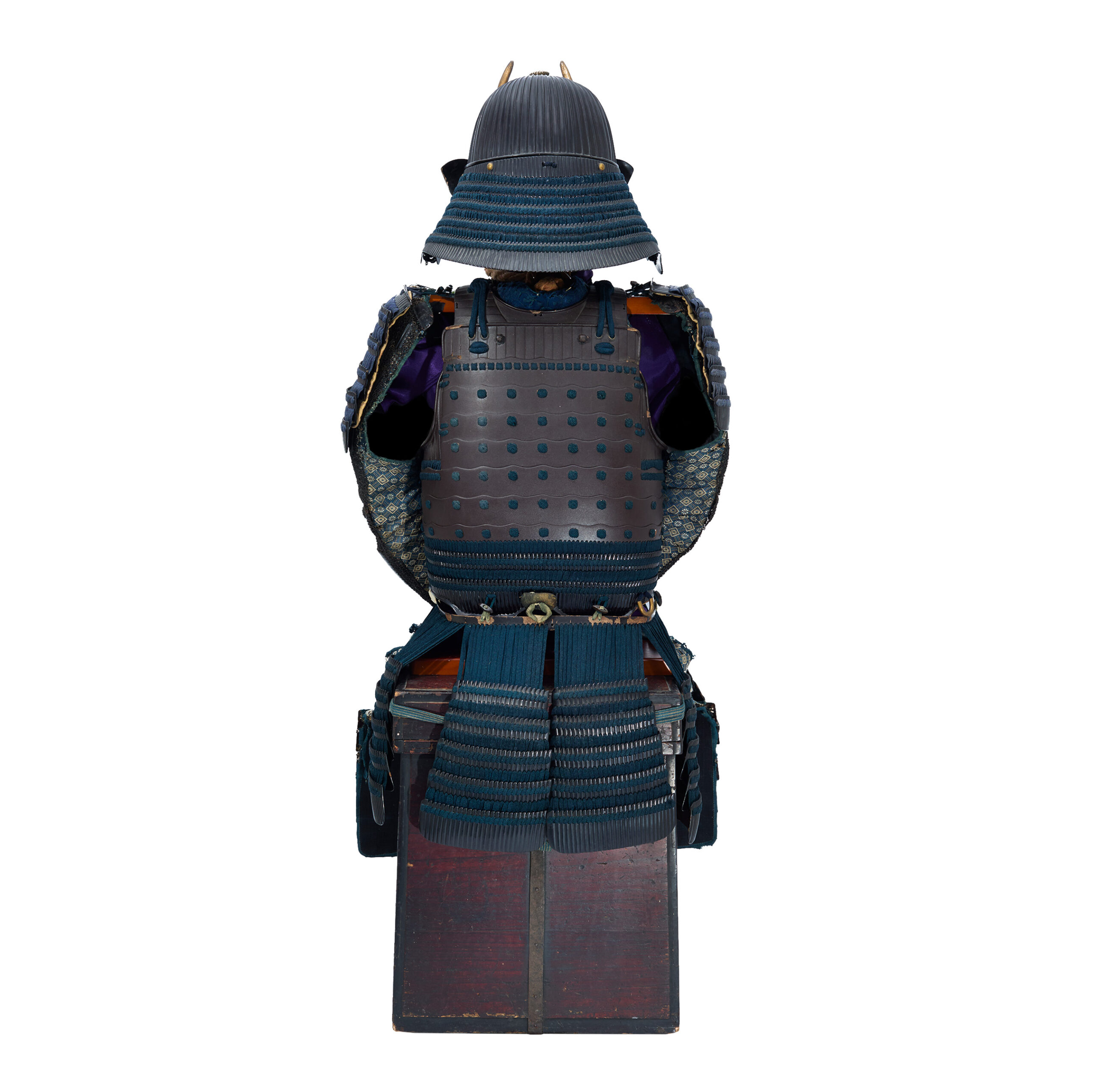
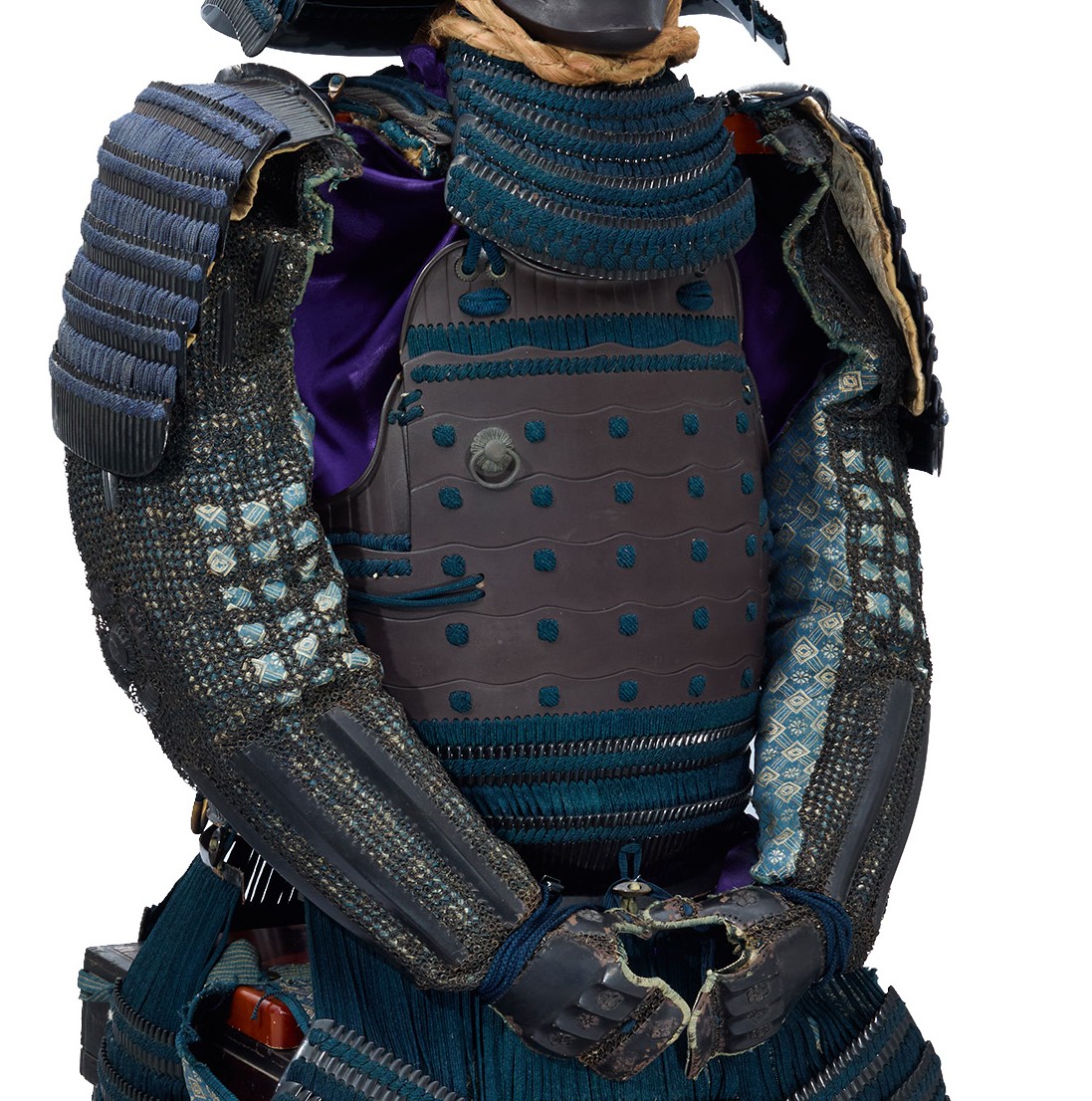
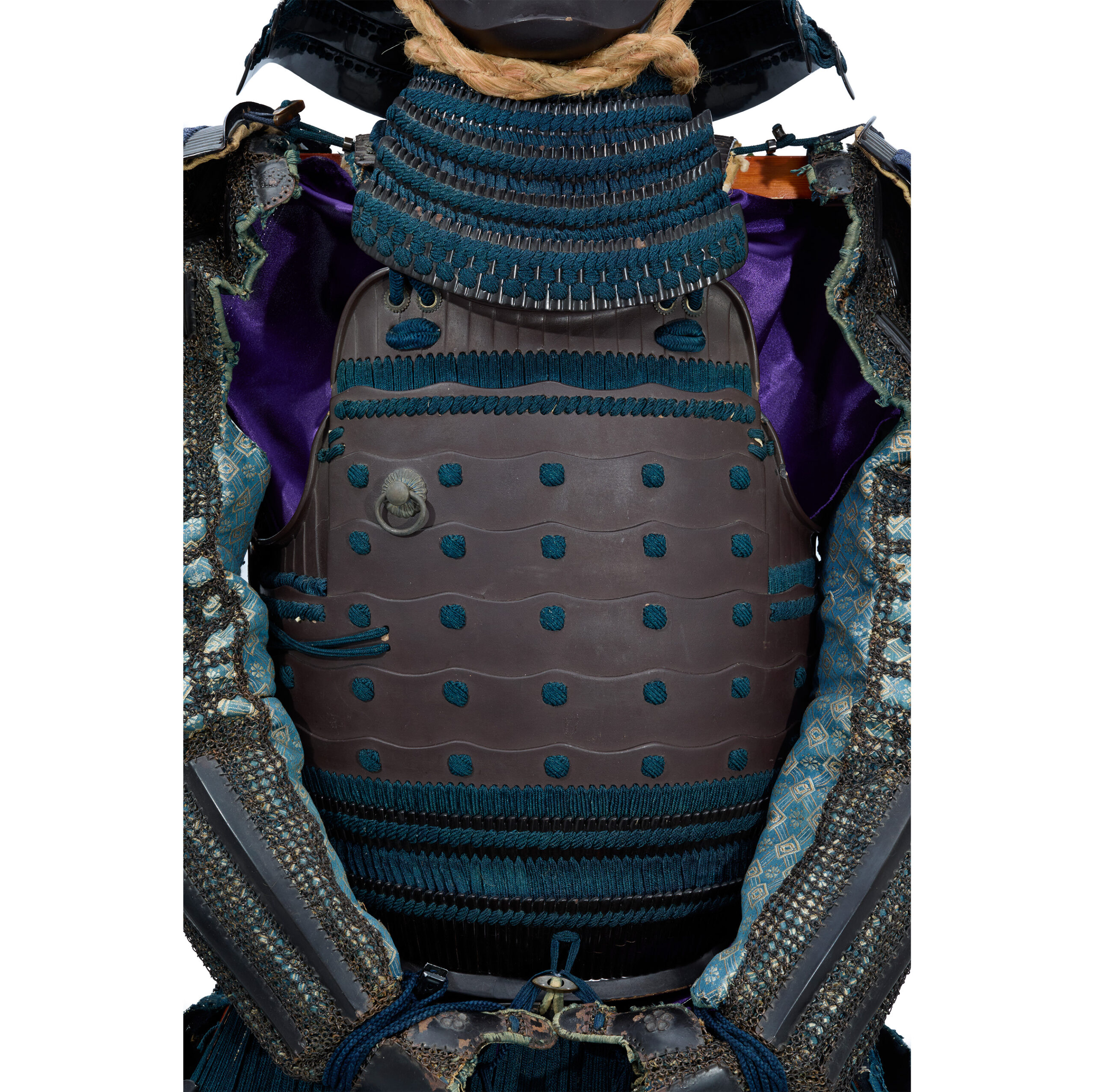
■ Dō (cuirass): Okegawa Nimai Dō (桶側二枚胴)
The Nimai Dō (二枚胴) is a type of cuirass used in Tōsei Gusoku (当世具足, “modern armor” developed during the Sengoku period). The term Nimai (二枚) means “two plates,” while Dō (胴) refers to the torso; hence, this cuirass is named for its two-piece construction. Unlike earlier armors made primarily from numerous small lamellar plates (kozane, 小札), this style uses larger iron plates to provide stronger and more practical protection.
The name Okegawa (桶側) derives from its resemblance to the staves of a wooden tub (oke), with gawa meaning “side.” The cuirass is divided into two parts joined by a hinge, usually placed on the left side, while the right side could be secured with cords or clasps. This particular example is made of black-lacquered iron plates, laced together with navy-blue silk cord.
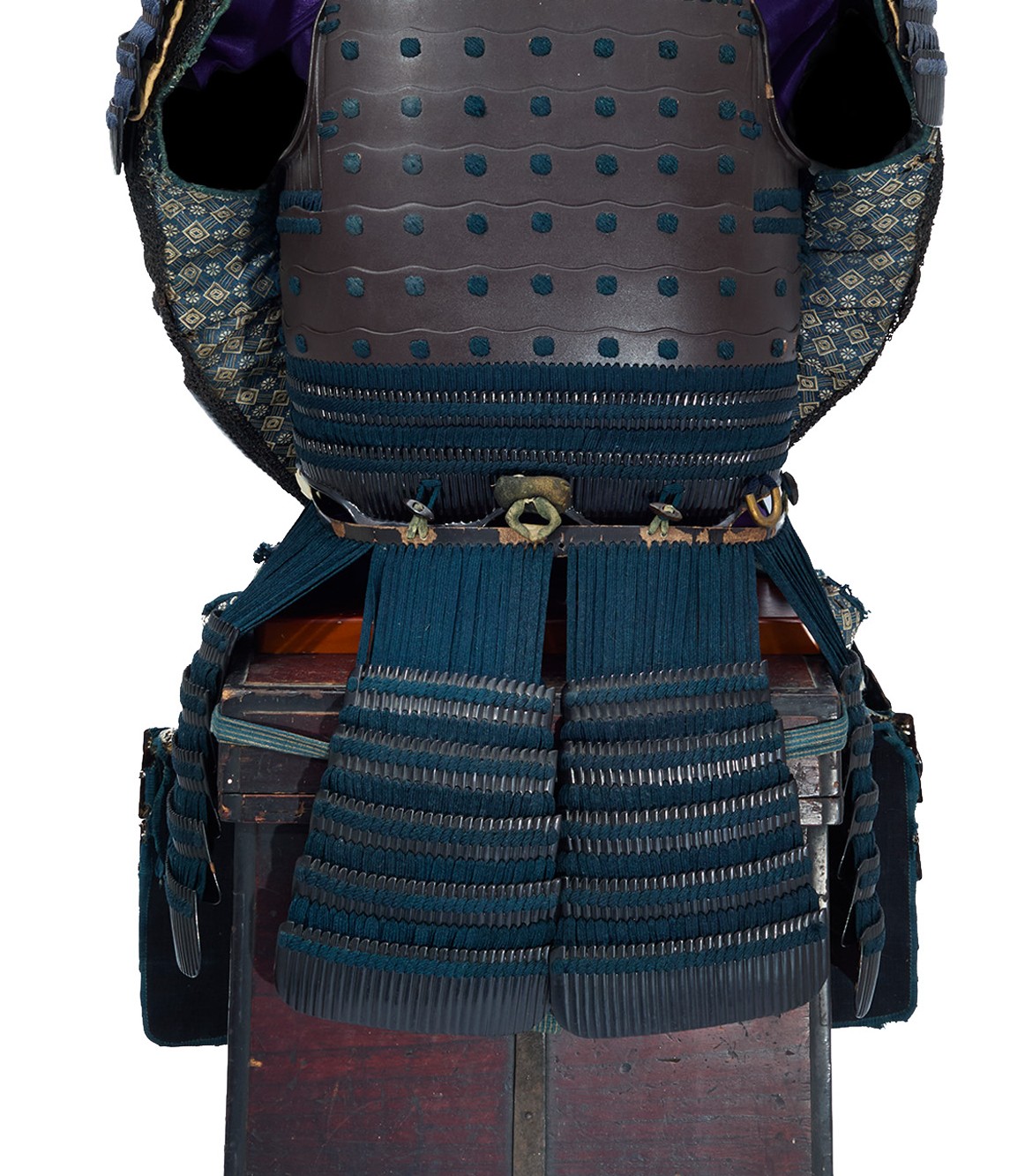
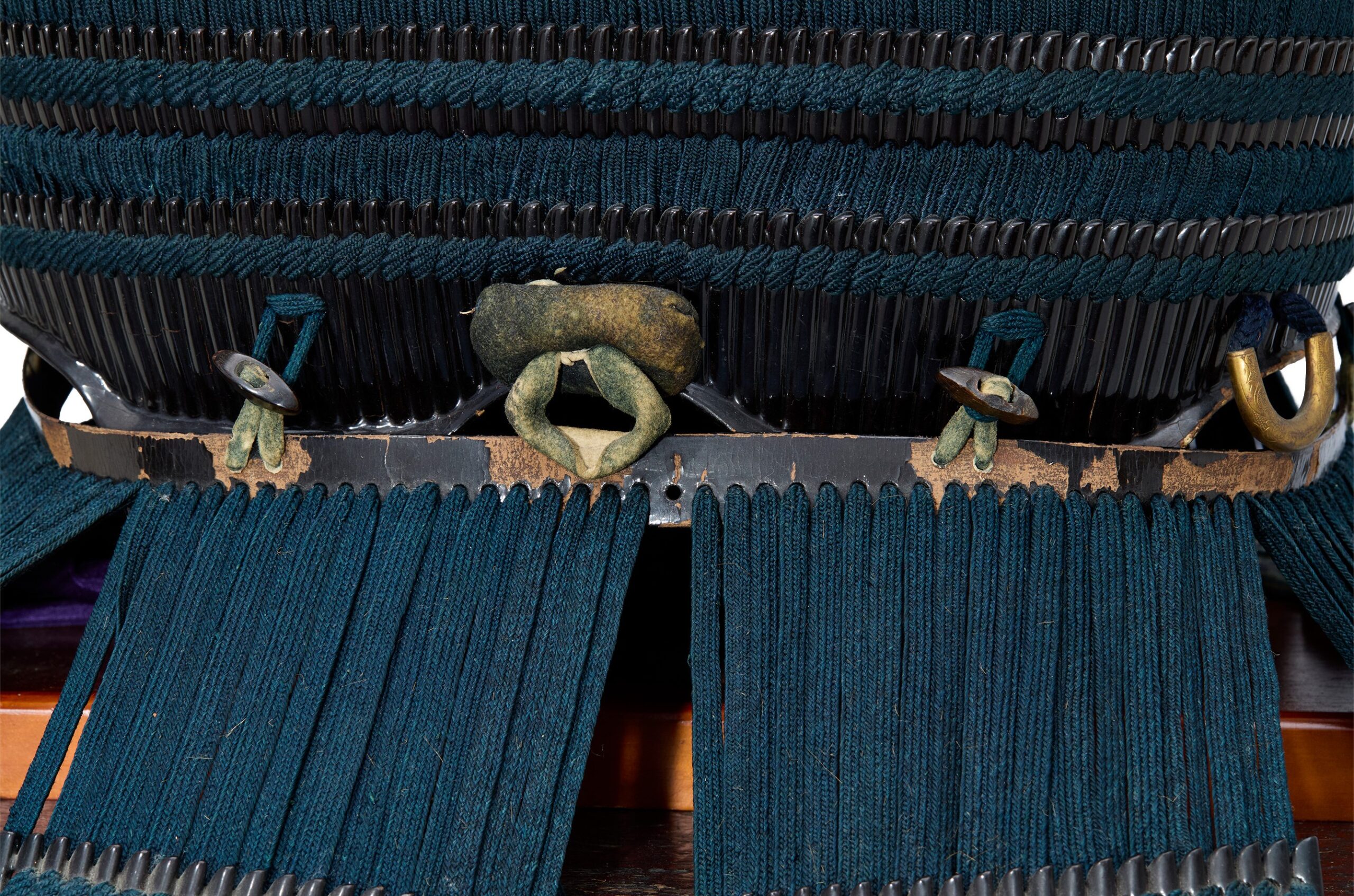
■Kusazuri (skirt of plates attached to the cuirass):
Lacquered iron Kusazuri laced with navy blue threads.
Small parts
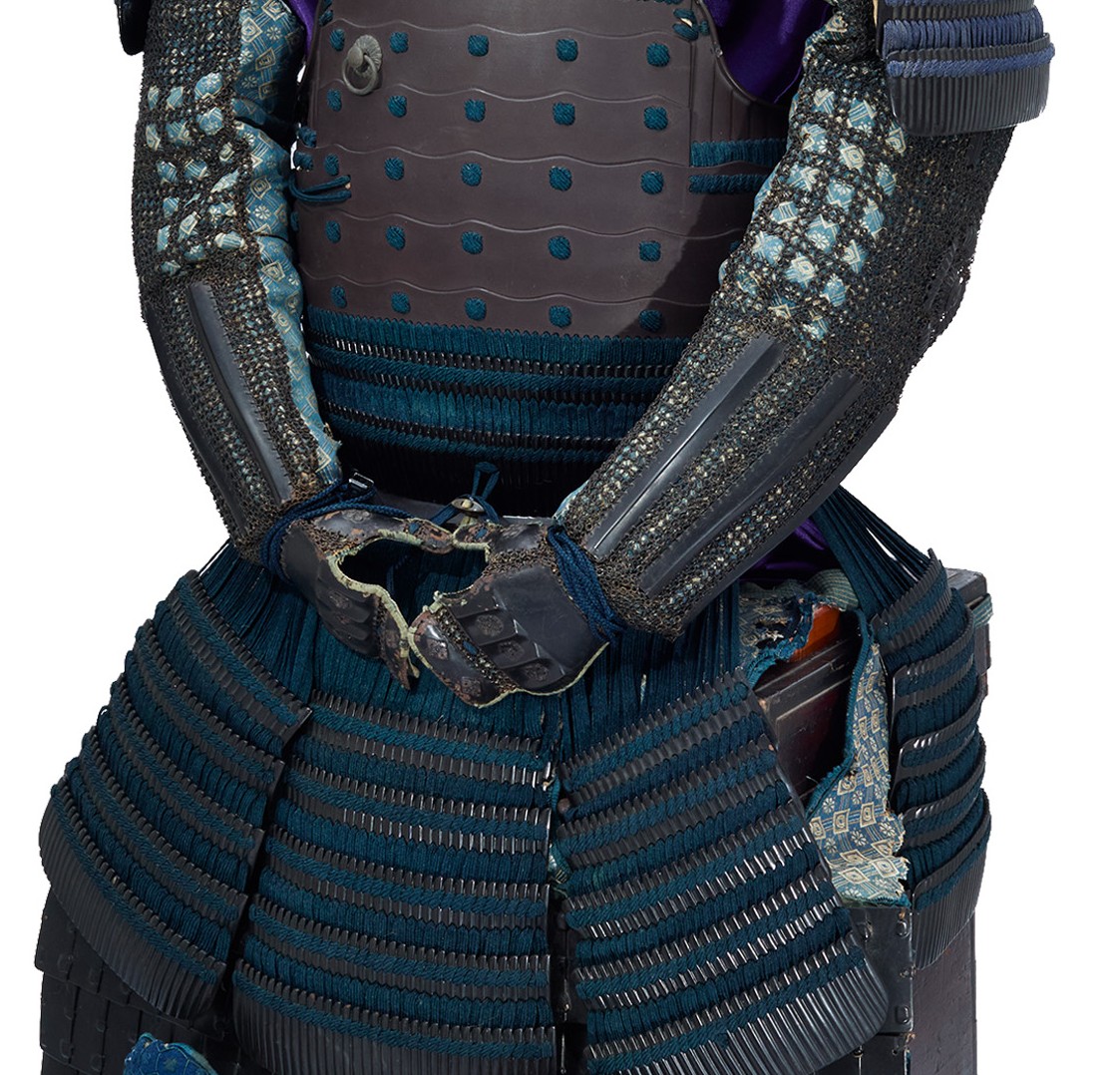
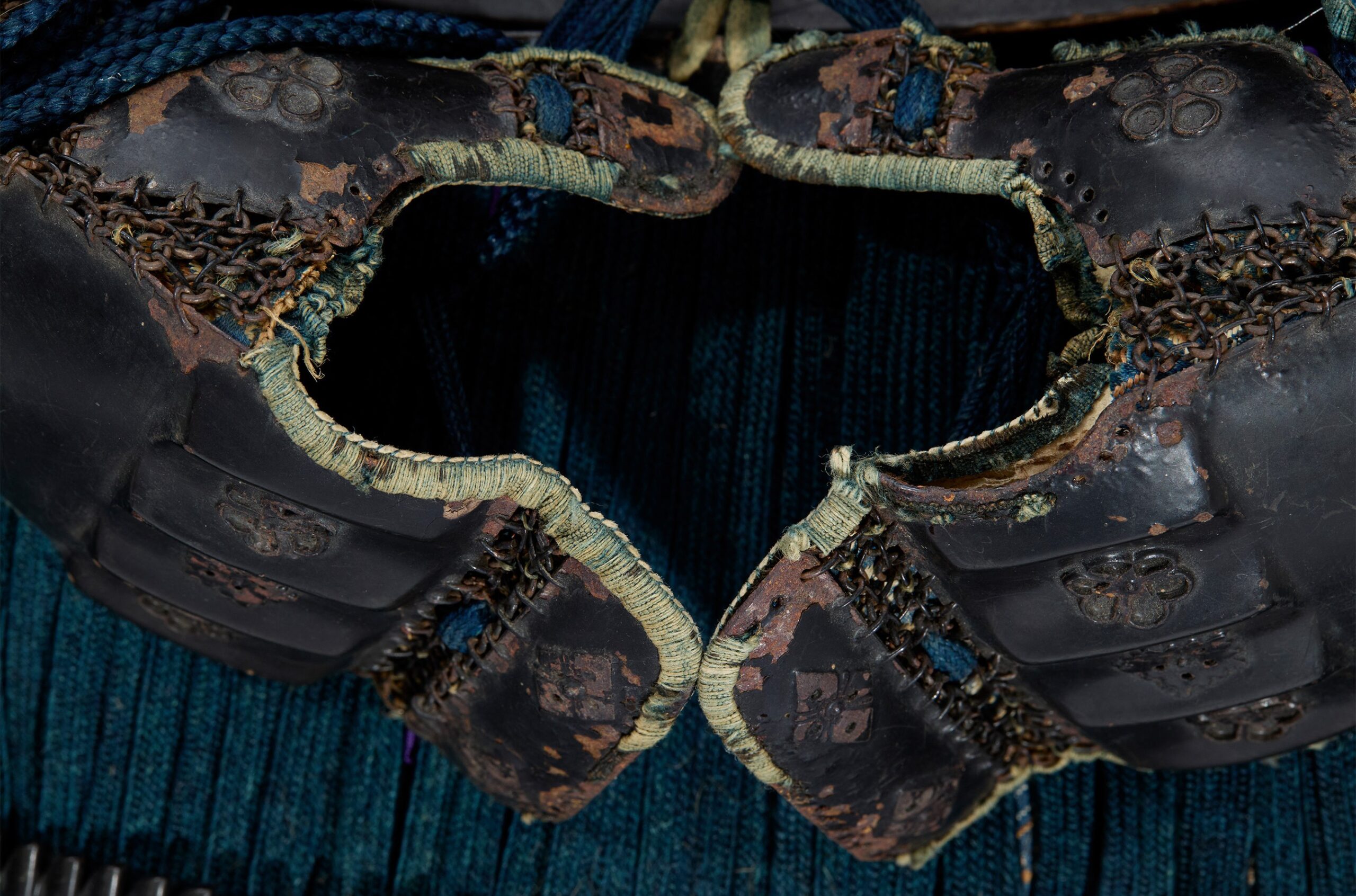
■Kote (armored sleeves):
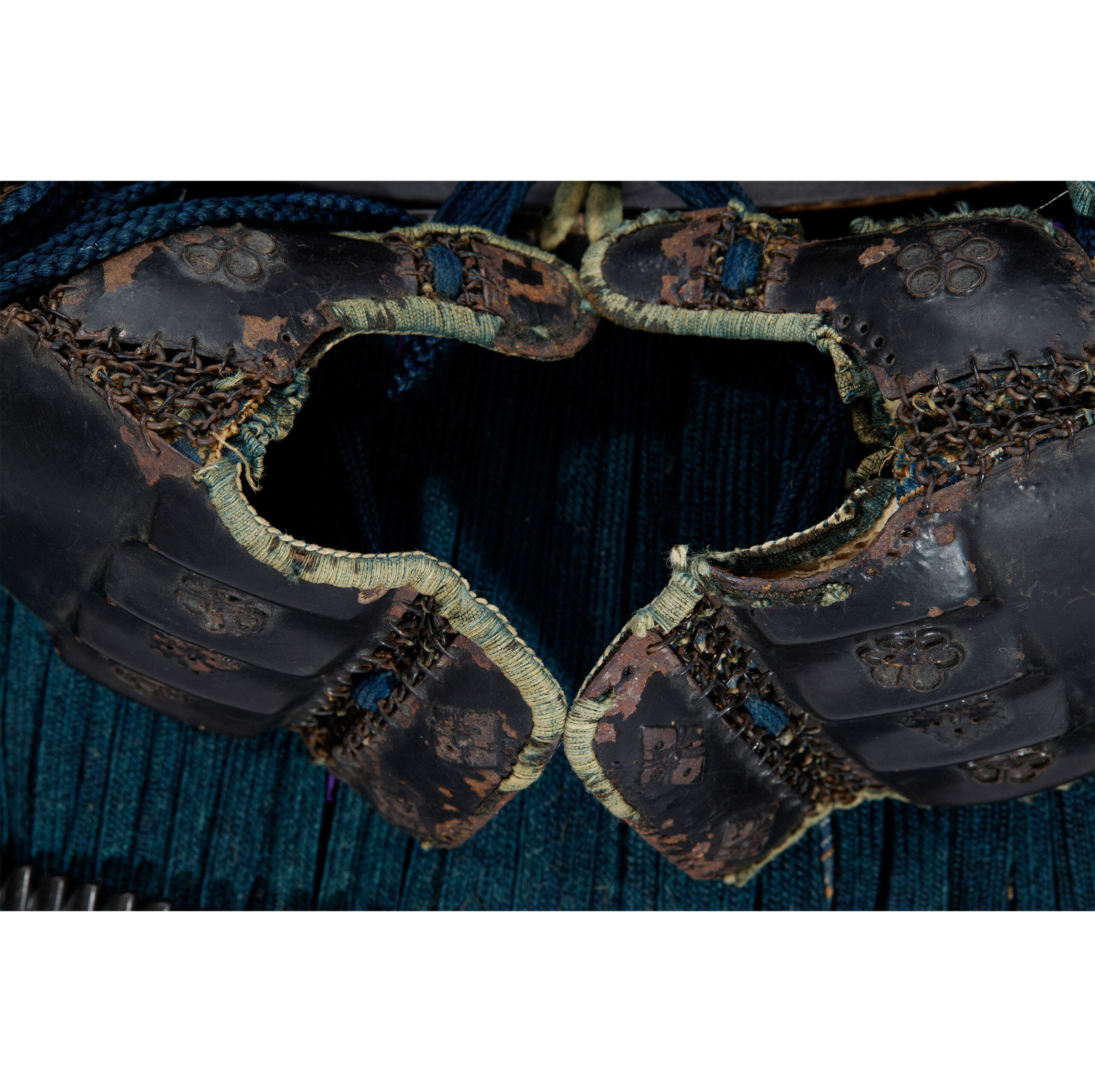
Intricately crafted with iron chain mail interwoven with silk. On the middle section of the back of the hand, a cherry blossom crest (sakura mon) is prominently featured. The finger-covering plates bear diamond-shaped (hishi) patterns, along with what appears to be a design associated with the Takeda family crest (武田菱, Takeda-bishi), a motif strongly connected to the famous Takeda clan of the Sengoku period.
■Haidate (thigh protection):
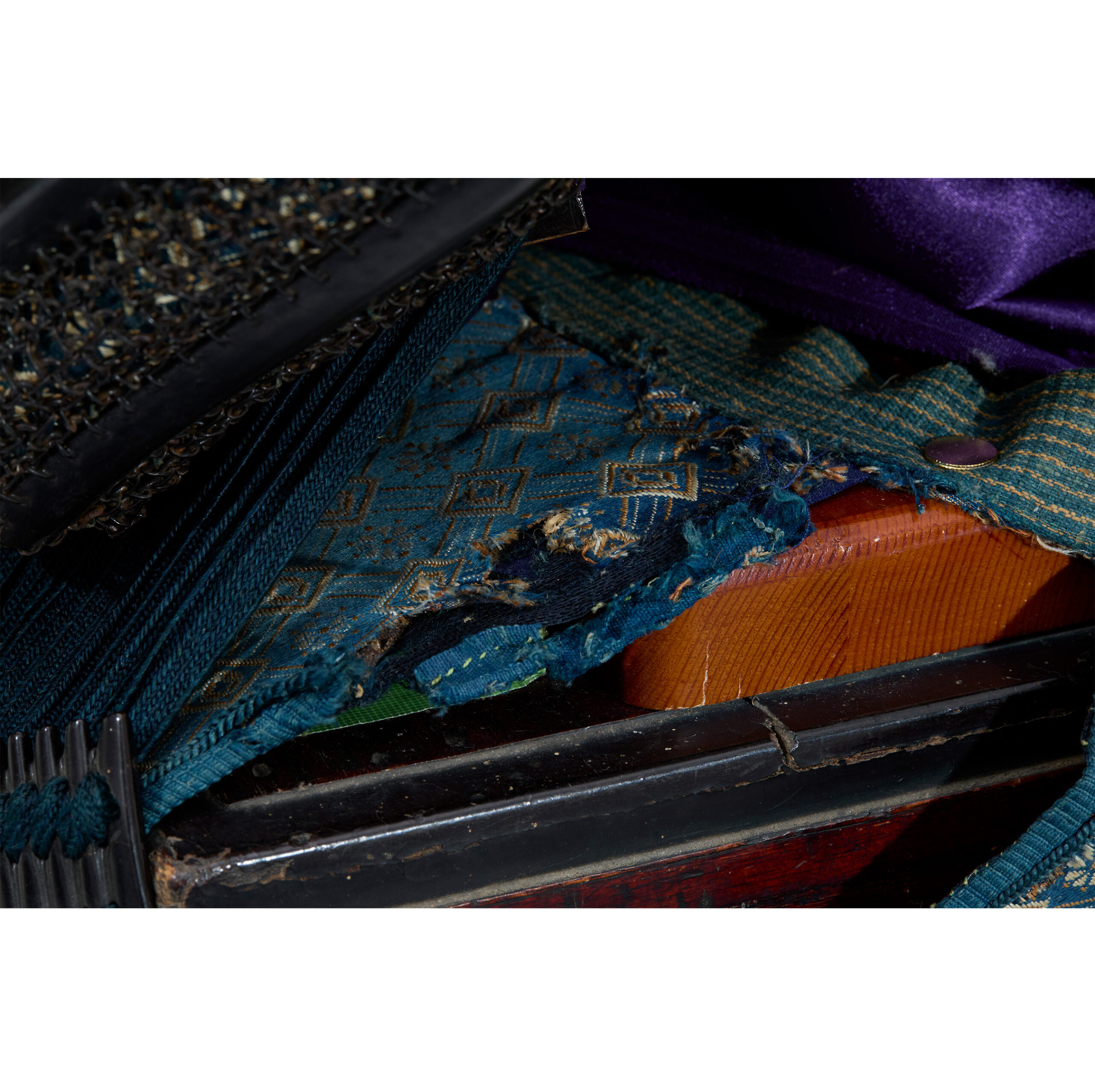
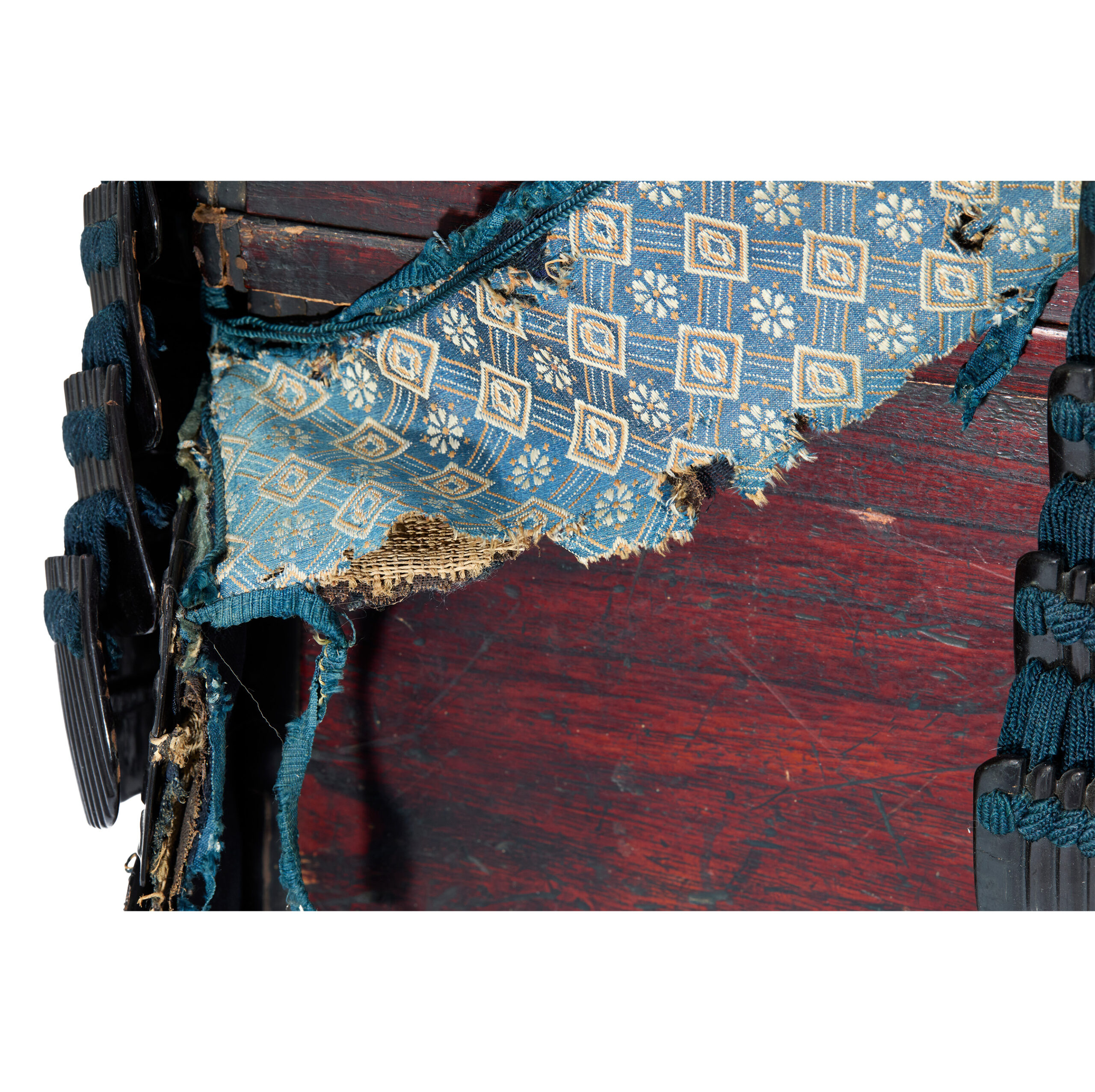
The haidate is a type of thigh guard, consisting of cloth backing reinforced with chain mail and iron plates.
*Please keep in mind that the inro plates on the Haidate is partially damaged while you can display it without any issues.
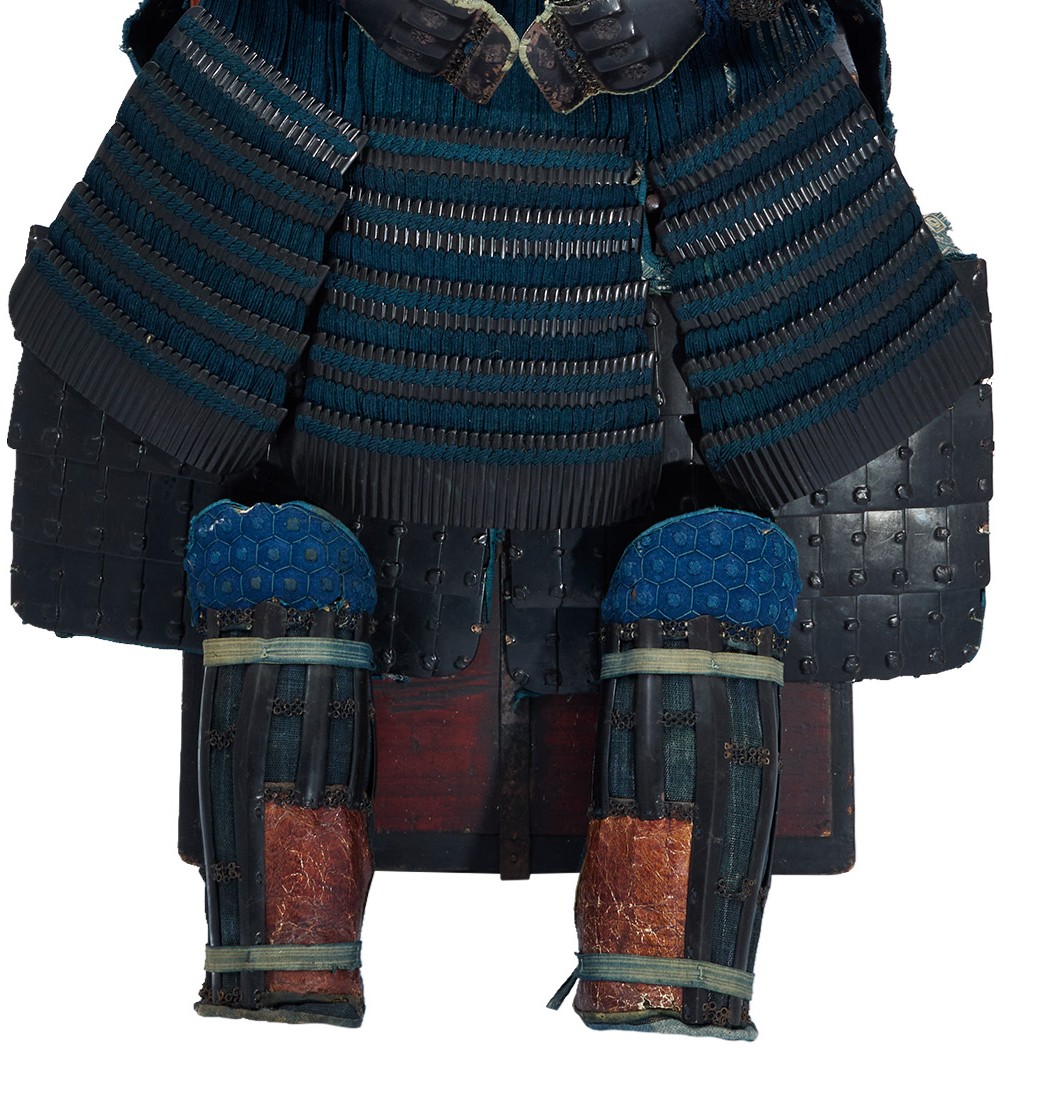
■Suneate (shin guard):
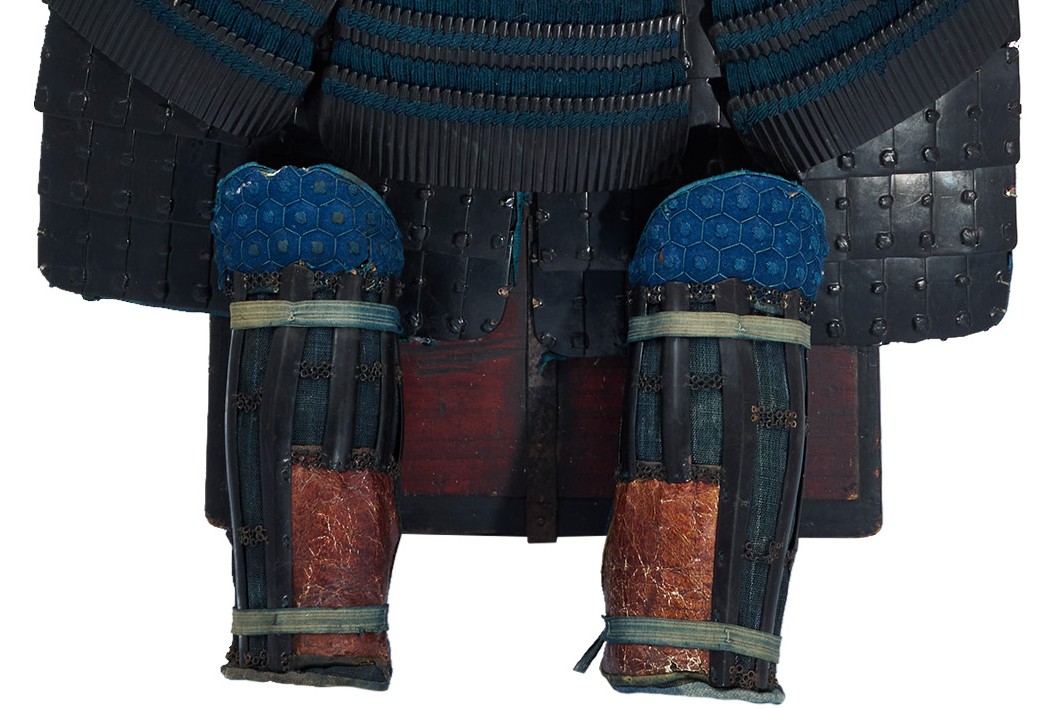
The Kikkou (亀甲, turtle’s shell) pattern is used for the cloth of the Suneate (脛当). It is a continuous geometric pattern connecting regular hexagons up and down. A theory says that this design was brought from China and the Korean Peninsula during the Asuka (飛鳥, 592-710) and Nara (奈良, 710-794) periods. A proverb says turtles live long lives; therefore, turtle and turtle shell patterns represent longevity. In addition, as this continuous hexagonal pattern does not get out of its shape, it is said people wished for eternal prosperity by using this design. This Suneate is a type called Kusari sunete (chain armor shin guard). It features chains attached to fabric, with minimal gaps between the metal links.
Certification: Tokubetsu Kicho Shiryo Certificate
On December 7th 2025, this armor was appraised as a Tokubetsu Kicho Shiryo by The Association for the Research and Preservation of Japanese Helmets and Armor, which is the most trusted Japanese armor appraiser in Japan. This association is also known as Nihon Katchu Bugu Kenkyu Hozonkai (日本甲冑武具研究保存会). Tokubestu Kicho Shiryo (特別貴重資料) means special rare article. It is ranked as the third highest of five rankings.
An English translation of the certificate is available on request. We won’t charge any additional fee.
【About us】
Samurai Museum is located in Tokyo, Japan, exhibiting antique artifacts related to the Samurai history. Samurai Museum Shop is the place for those who are interested in Japanese culture and craftsmanship. We deal with antique Samurai swords/armor, traditional crafts made in Japan and so on.

【Antique Japanese Armor and Export process】
After receiving the full payment from you, we will apply for its export permit from the agency for Cultural Affairs to legally export the antique Samurai armor to other countries. It normally takes around 2-4 weeks to receive this permit. And we would like you to expect at least 1-1.5 months for your order to arrive at your given address after you ordered.
【Payment method】
We accept payment through Stripe (Credit card), PayPal, Apple Pay or ChromePay, all of which are secure payment methods. Also, you don’t need to make an account on Stripe for the checkout. If you prefer other payment method, please contact us. You may either pay in JPY, USD, AUD, CAD, EUR, CHF or GBP. The price is set in Japanese Yen. Prices in other currencies are automatically calculated based on the latest exchange rate.

【Shipping duration】
We normally ship via EMS (Express Mail Service) provided by Japan Post. It usually takes at least 5-14 days to deliver the package after you place an order. We offer Free International Shipping as long as we can ship your order by EMS. If you prefer other shipping carriers, please contact us.
We will inform you of the order’s tracking number via email. Please make sure you fill out your valid email address correctly.

【How to make sure the condition】
Please keep in mind that what you are going to purchase is an antique item. We uploaded high resolution photos for you to check its condition thoroughly. If you like to see more photos with different angles, please feel free to contact us. We will be happy to send them to you so that you can make informed decision. It is essential for us to know that you are happy with your choice of a sword. and we are prepared to use the best of our ability to serve you.
【How To Contact Us】
Please contact us through email, Facebook Messenger or Live Chat if you have any questions. You can find each icon on the right side of the website. Please click one of them to reach us. We will reply to you within 1-2 business days.
【How To Preserve Antique Samurai Armor】
Dryness, humidity, and bad ventilation might deteriorate the condition of antique Samurai armor. The best temperature to preserve Samurai armor is around 20℃ in Celsius, and humidity should be about 60%. Direct sunlight should be avoided. We recommend storing armors in a room with good ventilation. If you like to display them outside the boxes for a prolonged time, we suggest using a glass case in order for dust not to be accumulated easily. In case you don’t use a glass case, please make sure to regularly dust off from the armor by using a soft brush made of delicate cloth or brush for painting.
If you like to know more about the preservation of this armor, please feel free to contact us.